 Bellingham Siding
 Sehome's Exterior Challenge: A Hill Neighborhood That Never Fully Dries Out
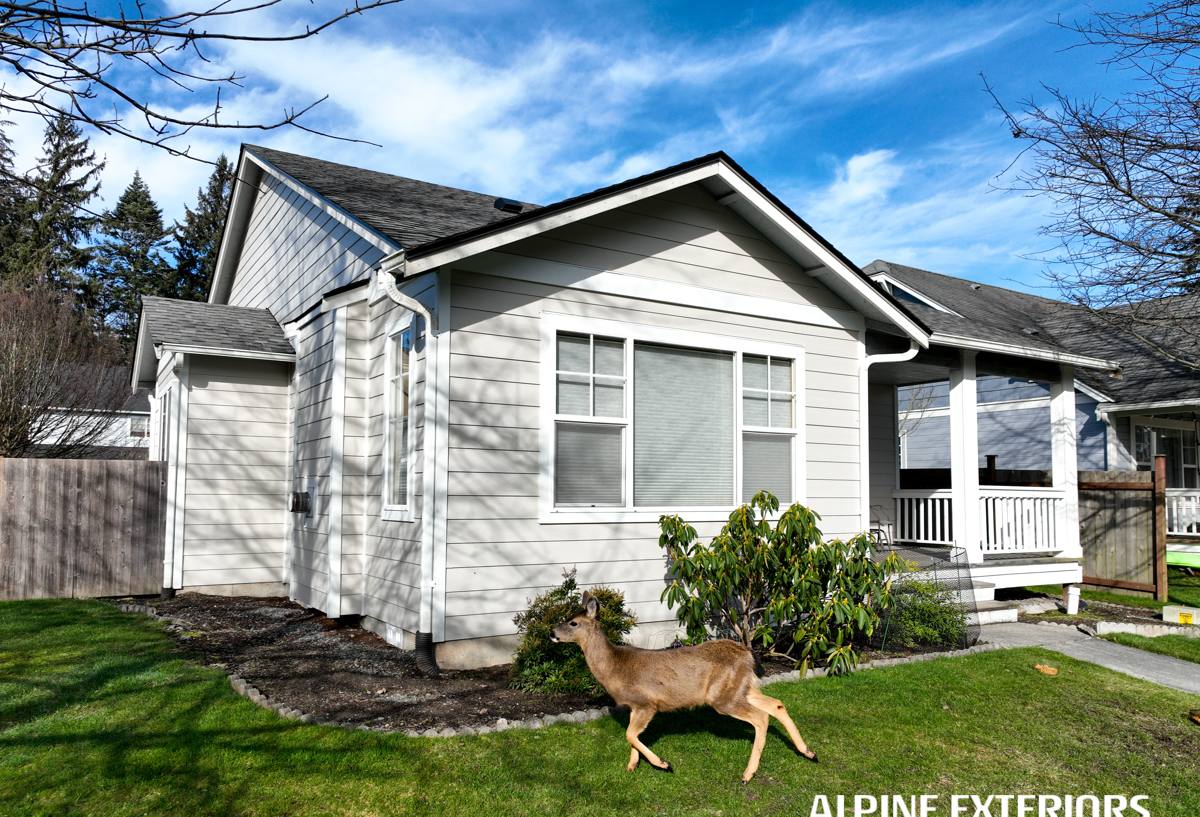
Sehome sits on one of Bellingham's defining hills, wrapped in mature trees and close enough to the bay that salt-tinged air is part of daily life. That combination shapes what happens to a home's exterior more than most homeowners realize. Tree canopy means shade lingers on north- and west-facing walls long after a storm passes. Elevation and proximity to Bellingham Bay mean wind-driven rain hits siding at an angle, not just straight down. And Whatcom County's mild, wet winters mean surfaces that stay damp for days at a stretch, not hours.
None of that is unusual for western Washington. But it adds up differently on a hillside lot shaded by cedars and firs than it does on an open, sunny parcel. Homes in Sehome tend to hold moisture longer, grow moss and algae faster, and show wear on siding, trim, and roofing sooner than the same materials would in a drier part of the state. That's not a reason to worry — it's just the baseline you're working with, and it's the baseline that should drive which exterior products you put on the house.
What "Moss Season" Actually Does to a Home
Around here, moss season isn't a metaphor — it's most of the year. Wherever moisture sits without enough sun or airflow to dry it out, moss and algae get a foothold. On a roof, that means granule loss and shortened shingle life. On siding, it means surface staining, and on some materials, moisture working its way into the substrate itself.
This is where the choice of siding material starts to matter a lot more than the color or the brand name on the box. Some products handle constant damp exposure well. Others depend on paint film and caulking staying perfect for years to keep water out — and on a shaded Sehome lot, that paint film is working overtime. When it fails, moisture gets behind the siding before anyone notices, and by the time there's a visible sign, there's often already damage underneath.
Signs a Sehome Home's Siding Is Losing the Battle
- Persistent green or black staining that returns within weeks of cleaning
- Soft or spongy spots when you press on siding near ground level or under eaves
- Paint that's peeling, bubbling, or chalking faster than it used to
- Visible swelling or delamination at panel seams and butt joints
- Gaps opening up around trim, window casings, or corner boards
- A musty smell near exterior walls inside the house, especially in closets or corners
Why We Install Only James Hardie Fiber Cement
We don't install every siding product on the market, and that's a deliberate call, not a limitation. Vinyl, engineered wood products like LP SmartSide, and primed spruce or cedar all have their place in the industry — but every one of them asks a homeowner to accept a trade-off that we think is a bad match for a climate like Bellingham's, and especially for a shaded, damp lot like the ones common in Sehome.
Vinyl is affordable and low-maintenance in the sense that it doesn't need painting, but it's a thin plastic product that can warp, crack in cold snaps, and fade unevenly over time — and it does nothing to slow moisture that gets behind it. Engineered wood siding performs well when installation and maintenance are perfect, but it's wood-based, which means the edges and any exposed cut ends are vulnerable to swelling if water finds a way in, and repeated wet-dry cycling is exactly what a shaded, moss-prone lot delivers. Primed cedar and spruce look great initially but require the most diligent upkeep of any option — repainting, caulking, and monitoring on a schedule most homeowners don't have time for.
James Hardie fiber cement is a different category of product. It's made from cement, sand, and cellulose fiber, which means it doesn't rot, doesn't support moss growth the way wood-based products can, and won't ignite — a real advantage during Washington's increasingly active wildfire seasons, even on the wet side of the state. It's engineered specifically for the Pacific Northwest's climate profile under Hardie's "HZ5" product line, and it comes from the factory with a baked-on ColorPlus finish that's dramatically more durable than field-applied paint. That matters most exactly where paint tends to fail first: shaded walls, north sides, and areas that stay damp longer between dry spells.
How the Options Compare
| Factor | Vinyl | Engineered Wood (LP SmartSide) | James Hardie Fiber Cement |
|---|---|---|---|
| Moisture tolerance | Sheds water but traps it behind panels | Vulnerable at cut edges and seams | Won't rot; engineered for wet climates |
| Moss/algae resistance | Moderate; surface only | Lower; organic material underneath | High; non-organic substrate |
| Fire performance | Melts/deforms under heat | Combustible | Non-combustible |
| Finish durability | Can fade, brittle over time | Depends on maintained paint film | Factory-baked ColorPlus finish |
| Typical lifespan with upkeep | 20-30 years | 20-30 years | 30-50+ years |
Installation Quality Matters as Much as the Product
Fiber cement siding is only as good as the installation behind it. Hardie's own specifications call for correct fastener placement, proper clearances at grade and roofline, factory-caulked or backer-taped joints, and flashing details that actually manage water rather than just hiding it. On a hillside Sehome property with drainage patterns shaped by slope and mature landscaping, getting the water management right — house wrap, flashing at windows and penetrations, kickout flashing where roof lines meet walls — is what determines whether the siding performs for decades or develops problems in five years regardless of the material.
This is also where a local crew earns its keep. A contractor who works Whatcom County day in and day out has seen how a given lot's exposure, tree cover, and drainage play out over multiple wet seasons — not just how a spec sheet reads. We install to manufacturer specification because that's what keeps the warranty intact and the wall assembly dry, not because it's the minimum we can get away with.
Beyond Siding: The Rest of the Exterior Envelope
Siding doesn't work in isolation. On a Sehome home, roofing, windows, and decking all face the same driving rain and moss pressure, and problems in one area often show up as damage in another — a failing roof valley can send water down behind siding, and a deck ledger board attached without proper flashing is a common source of hidden rot. We handle roofing, window replacement, and deck construction alongside siding so the whole exterior gets evaluated as one system rather than a patchwork of separate fixes.
- Roofing: proper ventilation and moss-resistant materials matter as much as the shingle itself in a shaded, damp neighborhood
- Windows: flashing and integration with the siding plane are what prevent leaks, not just the window unit's quality
- Decks: ledger flashing and end-grain sealing are the details that determine whether a deck lasts one decade or three
What Drives Cost on a Sehome Siding Project
Every home is different, and we won't quote a number without seeing the house, but a few factors consistently move the price on projects in this area:
| Factor | Why It Matters |
|---|---|
| Existing siding removal | Tear-off of old wood, vinyl, or damaged material adds labor and disposal cost |
| Hidden moisture damage | Rot found under old siding requires sheathing or framing repair before new siding goes on |
| Home height and access | Hillside lots and multi-story homes often need more scaffolding and staging time |
| Trim and detail complexity | Dormers, bay windows, and multiple rooflines increase cutting and flashing work |
| Siding profile and color | Lap width, shingle-style panels, and ColorPlus color selections vary in material cost |
What a Sehome Estimate Visit Looks Like
When we walk a property in this neighborhood, we're checking more than square footage. We look at how much shade and tree cover each wall gets, where the existing siding shows staining or softness, how water moves off the roof and away from the foundation, and whether trim, flashing, or window details need attention alongside the siding itself. That's how we build a scope of work and a quote that reflects the actual house, not a generic estimate.
A Straightforward Next Step
If your Sehome home's siding is showing moss staining, soft spots, or paint that won't hold up anymore, it's worth having a local crew take a look before small problems become expensive ones. We'll walk the exterior, answer questions honestly about what we find, and put together a no-pressure estimate — use the form below to get started.