 Bellingham Siding
 Exterior Work Built for South Hill's Position on the Hill
South Hill sits up and away from the flats of Bellingham, and that elevation cuts both ways. Homes here often get better views and a bit more breathing room between houses, but they also catch more of what comes off Bellingham Bay and the Strait — wind-driven rain that hits siding at an angle instead of falling straight down, and salt-laden air that works its way into anything not built to shed it. Add in the tree cover common on hillside lots, and you get long stretches of shade where moss and algae get a head start every fall and don't fully let go until late spring.
None of that is unusual for Whatcom County. It's just concentrated a little differently on South Hill than it is downtown or out toward the county line. When we bid a job here, we're accounting for exposure, slope, and shade on that specific lot — not applying a generic Bellingham estimate.
What We Typically Find on South Hill Homes
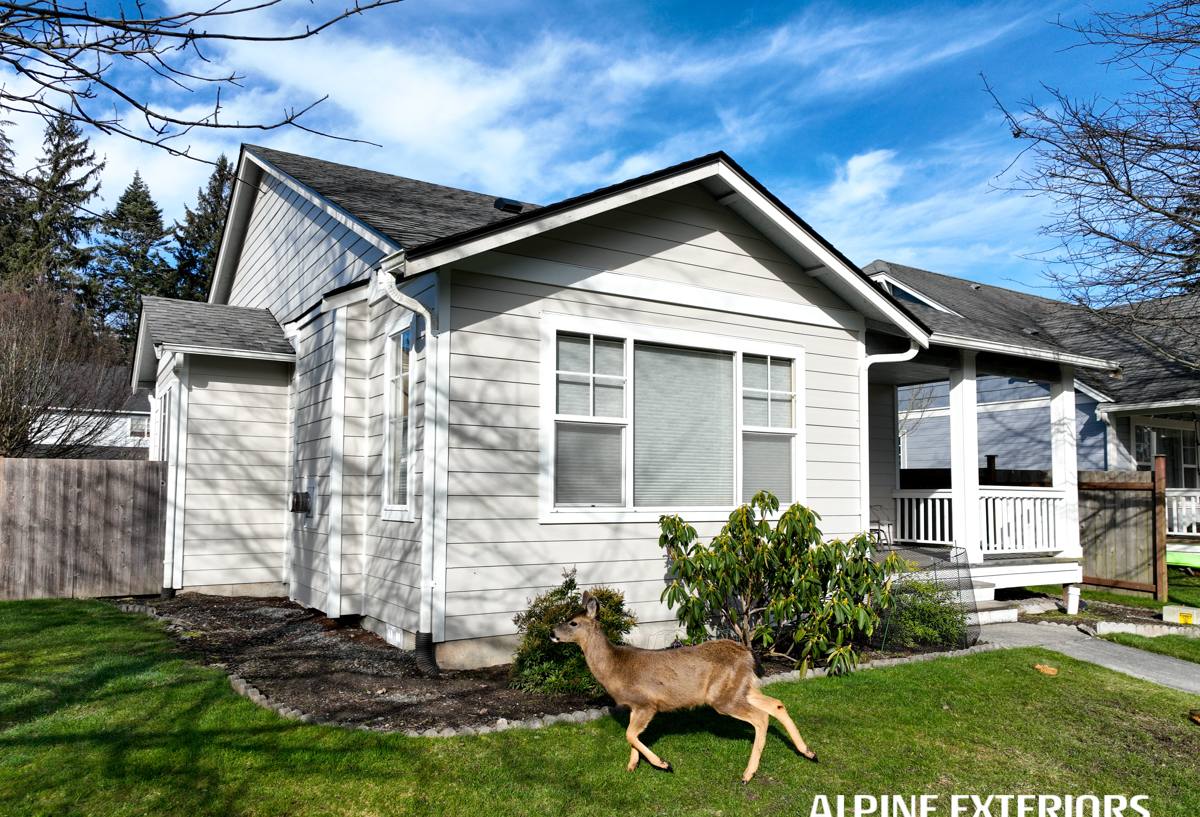
South Hill has a mix of older, established houses and newer infill construction, so the exterior condition we find varies more than in a subdivision built in a single decade. Common patterns we run into:
- Original wood or wood-composite siding on older homes, often painted many times over, with soft spots where moisture has been getting behind the paint film for years
- North- and west-facing walls carrying more moss, mildew staining, and slower drying times than south-facing walls on the same house
- Caulk and trim joints that have opened up from decades of expansion and contraction, giving wind-driven rain a path behind the siding
- Vinyl or older fiber cement products from previous remodels that are past or approaching the end of their practical service life
None of this means a house is in bad shape — it means the exterior has been doing its job under real conditions, and at some point every siding system needs to be evaluated honestly rather than just repainted again.
Why the Siding Material Itself Is the Real Decision
A lot of siding quotes focus on labor and color options and skip past the material question, which is the one that actually determines how the house performs in ten or twenty years. We install James Hardie fiber cement exclusively — no vinyl, no LP SmartSide, no Cemplank or Allura, no primed spruce or cedar — because in a marine climate like Bellingham's, the material has to hold up to constant moisture cycling, not just look good on install day.
| Material | How it handles driving rain & moisture | Where it struggles locally |
|---|---|---|
| James Hardie fiber cement | Non-combustible, dimensionally stable, engineered moisture resistance in the HZ product lines | Requires correct installation detailing to perform as designed |
| Vinyl siding | Sheds bulk water but can warp, crack, or fade with UV and temperature swings | Panels can loosen or rattle in sustained coastal wind exposure |
| LP SmartSide (engineered wood) | Treated to resist moisture but is still a wood-based substrate | Any breach in the factory coating or field-cut edge sealing invites swelling over time |
| Cedar / primed spruce | Natural material, breathes well when maintained | Needs ongoing refinishing; moss and mildew take hold quickly in shaded, damp spots |
We're not going to tell a homeowner that vinyl or engineered wood siding is junk — plenty of it is installed and performing fine elsewhere. Our position is narrower and more practical: for the moisture load and shade patterns we see on hillside Bellingham lots, we've standardized on a non-combustible fiber cement product with a factory-applied finish, because it removes the maintenance and moisture variables that cause the most callbacks in this climate. That's James Hardie, and it's the only siding we put our name behind.
What "Climate-Engineered" Actually Means
James Hardie makes region-specific HZ formulations, and the Pacific Northwest version is engineered around the wet, moderate-temperature conditions we actually have here — as opposed to a version built for dry heat or hard freeze-thaw cycles. Combined with the factory-baked ColorPlus finish, that means the color coat isn't relying on a field-applied paint job to hold up against UV and salt air, which is one less thing that fails first on a hillside, shaded, or bay-facing wall.
How We Approach a South Hill Project
Assessment
We start by walking the exterior wall by wall, not just from the street. Shaded and north-facing sides get extra attention for moisture intrusion, soft sheathing, and moss buildup, since those are the areas most likely to be hiding damage under old paint or siding.
Removal and Prep
Once old siding comes off, we inspect the sheathing and framing underneath before anything new goes up. Water-managed housewrap and correctly lapped, sealed penetrations around windows and vents matter as much as the siding itself — a good product installed over a compromised moisture barrier will still fail.
Installation
James Hardie has specific fastening, clearance, and joint-detailing requirements, and those specs exist for a reason in a climate like ours. We install to those specifications rather than cutting corners on flashing or caulk joints that will be the first thing to leak in driving rain.
Cleanup and Walkthrough
We finish with a full site cleanup and walk the completed work with the homeowner, covering care basics and what to expect over the first year as the home settles into its new exterior.
Beyond Siding: Roofing, Windows, and Decks
Siding doesn't work in isolation — a roof that's shedding water improperly onto a wall, windows with failed flashing, or a deck ledger board rotting into the rim joist will undermine even a well-installed siding job. Because we also handle roofing, window replacement, and deck construction, we can look at a South Hill home's exterior as one connected system rather than quoting siding in a vacuum and hoping the rest holds up. If we spot a roofing or window issue while we're up on the wall, we'll tell you, whether or not it's part of the current job.
Why a Local Crew Matters on a Job Like This
Anyone can quote a siding job off a set of photos. Knowing that a particular hillside lot in Whatcom County gets more shade-driven moss, or that a west-facing wall on South Hill takes more direct weather than the same wall three blocks downhill, comes from working in this area repeatedly — not from a national pricing formula. A few things worth asking any contractor you're considering for exterior work here:
- Are they licensed and insured to do exterior work in Washington State, and can they show proof without hesitation?
- Do they have manufacturer-specific training or certification for the siding product they're proposing?
- Will they put the siding brand and product line in writing on the estimate, not just "fiber cement" or "premium siding"?
- Do they inspect and address sheathing and moisture barrier issues, or just cover over what's there?
- Can they explain how their installation approach accounts for wind-driven rain specifically, not just general weatherproofing?
- Do they offer roofing, window, and deck work too, so problems that touch more than one system don't fall through the cracks between contractors?
Maintenance Once the New Siding Is Up
Fiber cement with a factory finish is low-maintenance compared to paint-grade wood siding, but "low-maintenance" isn't "no-maintenance" in a marine climate. A simple annual routine goes a long way:
- Rinse siding with a garden hose once or twice a year, paying extra attention to shaded, moss-prone walls
- Keep gutters clear so overflow isn't running down the face of the siding
- Trim back vegetation and tree limbs that keep a wall damp and shaded longer than it needs to be
- Walk the exterior after major windstorms to check for any loose trim, flashing, or caulk joints
Because James Hardie's color coat is factory-applied, you're not on a repainting schedule the way you would be with field-painted wood siding — that alone removes one of the biggest recurring costs of exterior maintenance in this climate.
Getting Started
If you're on South Hill and dealing with siding that's showing its age — soft spots, chronic moss, failing paint, or just a house that's ready for an upgrade — we're happy to come take a look and give you an honest read on what's going on, with no pressure to move forward. Reach out for a free estimate using the form below, and we'll walk your property in person before recommending anything.