 Bellingham Siding
 Ferndale's Exterior Climate: What Homes Are Really Up Against
Ferndale sits close enough to the Strait of Georgia and Bellingham Bay that salt-laden air is a real factor in how exterior materials age here, not just a coastal talking point. Combine that with Whatcom County's marine weather pattern — long stretches of low-intensity rain, wind-driven moisture off the water, and short, gray winter days — and you get an exterior environment that punishes anything that isn't built to shed water and resist rot. Add a moss and algae season that can run eight months or more in shaded, north-facing spots, and it's easy to see why siding, trim, and roofing take more of a beating in Ferndale than they would in a drier inland climate.
None of this means a home in Ferndale needs exotic materials or constant upkeep. It means the materials and the installation details have to match the actual conditions. A siding system that's rated for a dry climate, or installed with shortcuts that work fine somewhere else, tends to show its weaknesses here faster — swelling at the bottom edge, paint failure, soft trim, or moss creeping into seams that should have stayed sealed.
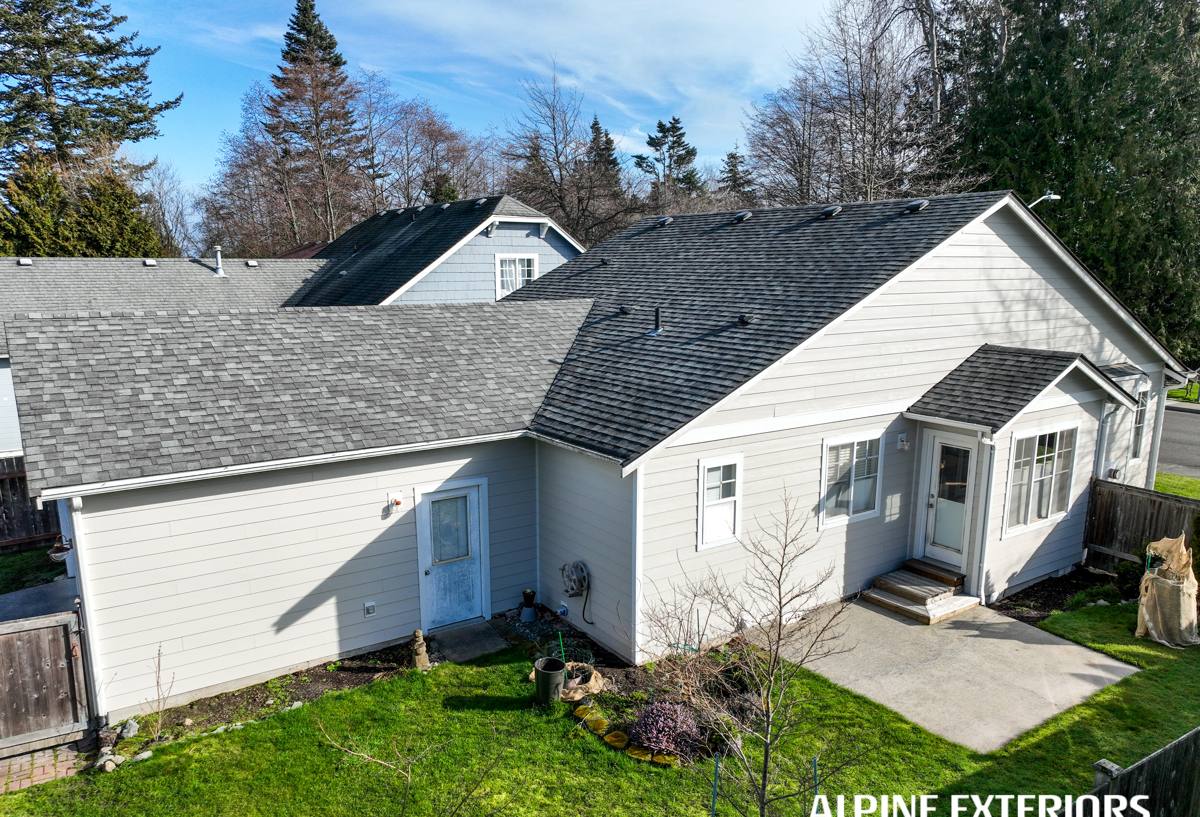
Why We Only Install James Hardie Fiber Cement
Bellingham Siding Contractors made a deliberate decision to install James Hardie fiber cement siding exclusively — not LP SmartSide, not vinyl, not Cemplank, not Allura, not primed spruce or cedar. That's not a marketing position; it's a standard we hold because we've seen how these products actually perform over years of exposure to the kind of weather Ferndale gets.
Fiber cement is non-combustible, dimensionally stable, and doesn't rely on a surface coating alone to keep moisture out — the material itself is engineered to resist swelling, cracking, and pest damage in ways that wood-based and vinyl products can't fully match. James Hardie backs its products with a factory-applied ColorPlus finish and a strong transferable warranty, and the company engineers regional HZ5 product lines specifically for the Pacific Northwest's wet, temperate climate. When it's installed correctly — proper clearances, correct fastening, sealed penetrations — it holds up to salt air and sustained rain better than most alternatives we've worked with.
We'll talk more below about the specific products we chose not to carry and why, but the short version is this: we'd rather install one system exceptionally well and stand behind it than juggle multiple product lines with different failure modes and warranty structures.
What We Deliberately Don't Install
- Vinyl siding — lightweight and inexpensive, but it expands and contracts with temperature swings, can warp under direct sun exposure, and isn't repairable in the same way fiber cement is; damaged panels typically need full replacement.
- LP SmartSide and other engineered wood products — treated to resist moisture, but they're still wood-based composites, meaning any breach in the coating or caulking gives water a path into the substrate, which is a real risk in a climate that stays damp for months at a time.
- Cemplank and Allura — other fiber cement brands with their own manufacturing processes and warranty terms; we standardized on James Hardie for the consistency of its HZ climate engineering and the strength of its transferable warranty.
- Primed spruce or cedar — real wood siding can look great, but it demands ongoing maintenance (recoating, caulking, spot repairs) to keep moisture out, and in a marine climate that maintenance schedule gets tighter, not looser.
How Salt Air and Moisture Actually Damage a Home's Exterior
It helps to understand the mechanics, not just the outcome. Salt air carries fine airborne particles that settle on exterior surfaces and accelerate corrosion of metal fasteners, flashing, and hardware. On painted or coated wood products, that same salt exposure can break down the finish faster than inland weathering would, which then exposes the substrate underneath to moisture. Once water gets behind siding — through a failed caulk joint, an unflashed window, or a warped panel — it doesn't dry out quickly in a climate where humidity stays elevated for weeks at a stretch.
Moss and algae growth compounds the problem. These organisms thrive on surfaces that stay damp, and they tend to establish first in shaded areas, under eaves, and along ground-level siding where splashback keeps the material wet longer. Left unaddressed, moss holds moisture directly against the siding surface, which accelerates whatever degradation process the underlying material is already prone to. On wood-based products, that's rot. On poorly sealed vinyl, it's trapped moisture and mold behind panels. On correctly installed fiber cement, it's mostly a cosmetic issue that periodic cleaning resolves.
Full Exterior Services for Ferndale Homes
We handle the full exterior envelope, not just siding, because these systems work together. A siding job that ignores what's happening at the roofline or around window openings is a siding job that will fail early.
Siding
James Hardie lap siding, panel siding, and shingle-style products installed to manufacturer specification, with attention to the details that matter most in a wet climate: proper starter strip placement, correct fastener spacing, rain-screen or drainage considerations where appropriate, and sealed transitions at windows, doors, and corners.
Roofing
A roof in poor condition undermines even the best siding installation, since water that gets past a compromised roofline often ends up running down behind the exterior wall assembly. We assess roof condition as part of any full exterior project and address flashing, underlayment, and drainage issues that affect how water moves off the house.
Windows
Window replacement and re-flashing done alongside siding work lets us integrate the window opening properly into the new siding's drainage plane — one of the most common failure points on homes where siding was installed around existing windows without addressing the flashing underneath.
Decks
Exterior decks in Ferndale face the same moisture and moss pressure as siding, just horizontally instead of vertically. We build and repair decks with materials and detailing suited to standing water exposure and the region's extended damp season.
What Correct Installation Looks Like
Fiber cement siding performs the way it's designed to only when it's installed correctly — this is where a lot of the horror stories about "siding that failed" actually originate, and it's rarely the material's fault.
| Installation Detail | Why It Matters in Ferndale's Climate |
|---|---|
| Minimum clearance above grade, decks, and roofing | Prevents constant moisture wicking from splashback and standing water common in a high-rainfall area |
| Correct fastener type and placement | Salt air accelerates corrosion of the wrong fastener material, leading to staining and loosened panels |
| Proper caulking and sealing at penetrations | Every unsealed gap is a potential entry point during months of sustained rain |
| Rain-screen or drainage gap where called for | Lets any moisture that does get behind the siding drain and dry instead of sitting against the wall assembly |
| Factory-finished ColorPlus panels vs. field-painted | Factory finish is more consistent and durable against UV and moisture than on-site painting |
Cost Factors for a Ferndale Siding Project
Every home is different, so we won't quote a number without seeing the project, but the factors that typically drive cost are consistent:
- Total square footage of exterior wall area and the home's overall complexity (corners, gables, dormers)
- Whether existing siding needs to be removed or there's damage to the sheathing underneath that needs repair first
- Product selection within the James Hardie lineup — lap siding, shingle-style, or panel systems, and trim/accent choices
- Whether roofing, window, or deck work is being bundled into the same project
- Site access and any staging or scaffolding needs
Because we only install one siding system, we're able to give homeowners a clear, apples-to-apples estimate rather than a menu of trade-offs between cheaper and more durable options.
Why a Local Crew Matters
Whatcom County's marine climate isn't uniform even within a small geographic area — a home a mile from the water deals with different exposure than one further inland, and shaded, tree-covered lots hold moisture longer than open ones. A crew that works in this region regularly understands those local variations and adjusts installation details accordingly, rather than applying a generic approach built for a drier climate. Local crews also know which details tend to get overlooked on homes in this specific weather pattern — an unsealed corner joint or a missed clearance gap that might not matter in Arizona but will matter within a year or two here.
There's also the practical matter of being available for follow-up. A contractor based in the region can respond to a warranty question or a post-storm check without the delays that come with an out-of-area company.
A Practical Checklist Before You Hire
- Ask what siding brand and product line will actually be installed — get it in writing, not just "fiber cement"
- Confirm the contractor is licensed and insured in Washington State
- Ask about clearance and flashing details specific to your home's site conditions, not a generic answer
- Find out whether the warranty is manufacturer-backed, transferable, and what voids it
- Ask how they handle moisture or sheathing damage discovered once old siding comes off
If you're considering new siding, roofing, window, or deck work on a Ferndale home, we're happy to take a look and walk you through what we see, with no pressure and no obligation. Reach out using the form below to schedule a free estimate.