 Bellingham Siding
 One Product, On Purpose
Most siding contractors in Whatcom County will install whatever a homeowner asks for — vinyl, LP SmartSide, cedar, primed spruce, one of the other fiber cement brands. We stopped doing that. Today we install James Hardie fiber cement siding and nothing else. That's not a marketing angle; it's the outcome of years of callbacks, warranty claims, and re-siding jobs on houses that were only 10 or 12 years old. We got tired of watching homeowners pay for a product twice, so we narrowed our offering to the one system that has consistently held up in this specific climate when installed correctly.
This page explains the reasoning in plain terms — what Bellingham's weather does to a wall, what James Hardie's system actually is, why the alternatives didn't make the cut for us, and what correct installation involves. None of this is meant to talk down the products we don't install. It's meant to explain a standard.
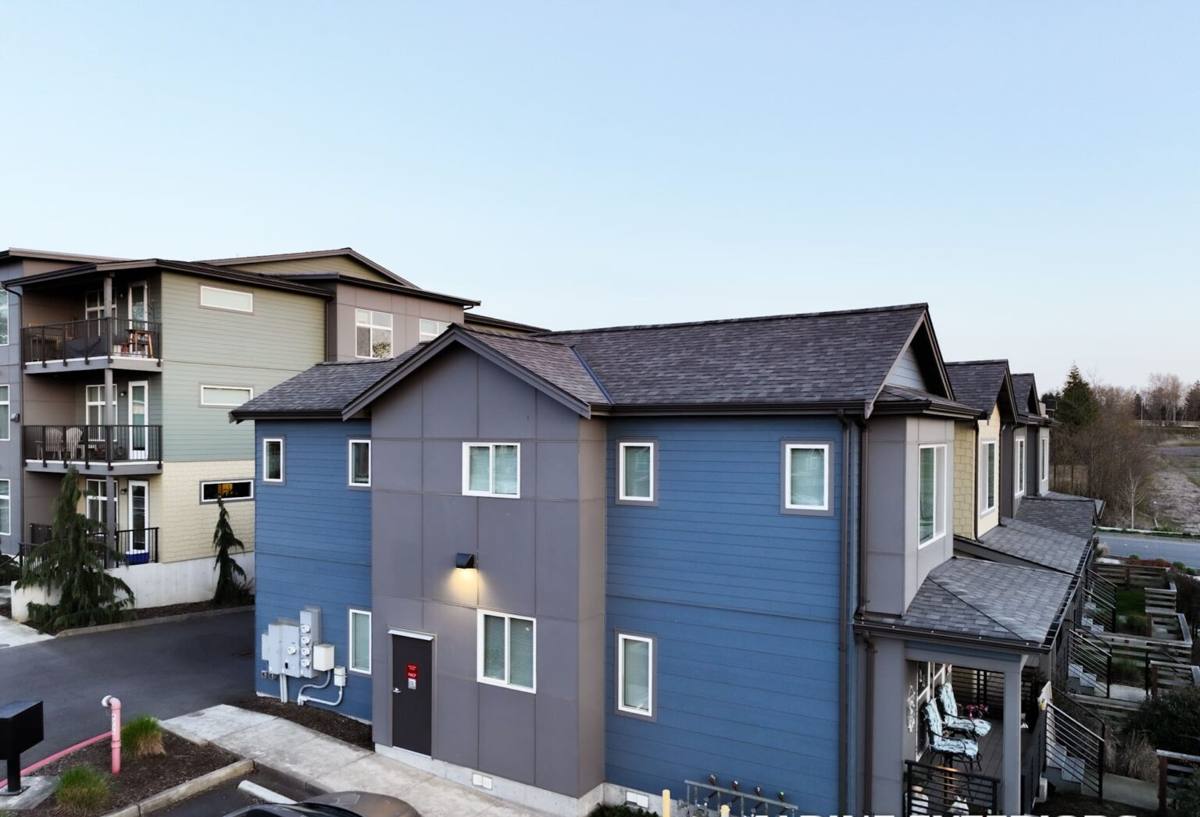
What Bellingham and Whatcom County Weather Does to a Wall
Siding here doesn't fail because of one dramatic event. It fails from constant, low-grade exposure that most of the country doesn't deal with.
Salt Air
Homes near Bellingham Bay and along the county's shoreline take on airborne salt that settles on exterior surfaces. Salt is corrosive to fasteners and hard on paint film, and it accelerates the breakdown of anything that relies on a surface coating to keep moisture out.
Driving Rain
Whatcom County doesn't just get rain — it gets sideways rain, pushed by wind off the Strait and the Sound, for months at a stretch. That means siding here isn't just shedding water off a vertical surface; it's absorbing wind-driven moisture at seams, laps, and butt joints far more often than siding in a drier climate.
Moss and Shade
Between the tree cover typical of Bellingham lots and the long stretch of overcast, damp months, north-facing and shaded walls stay wet longer than they dry. That's exactly the environment moss and mildew need, and it's exactly the environment where a moisture-sensitive siding material struggles.
Put those three together — salt, driving rain, and a moss season that can run eight or nine months — and you have a climate that's genuinely tougher on exterior cladding than most of the country experiences. The siding choice matters more here than it does in a dry inland climate.
The James Hardie System We Install
James Hardie siding is fiber cement — a mix of cement, sand, and cellulose fibers pressed and cured into planks, panels, and trim. It's not a coating over wood, and it's not a plastic extrusion. That composition is the whole reason it behaves differently than the alternatives in a wet climate.
Climate-Engineered Product Lines
James Hardie manufactures different formulations for different climate zones under its HZ5 and HZ10 designations, tuned for moisture exposure and freeze-thaw conditions. Western Washington, including Whatcom County, falls into the range where the moisture-focused formulation is the right call — this isn't a one-size-fits-all product, and that regional engineering is part of why we standardized on it.
ColorPlus Factory Finish
Most of what we install uses Hardie's ColorPlus finish — a multi-coat, baked-on finish applied at the factory under controlled conditions, rather than field-painted on site after installation. It carries its own finish warranty separate from the substrate warranty, and it holds color and adhesion better over time than a job-site paint job applied in Bellingham's damp working season.
Non-Combustible Material
Fiber cement doesn't burn. That's not the primary reason we chose it for a coastal, rainy climate, but it's a real advantage over wood-based and some engineered wood siding products, and insurers increasingly recognize it.
Why We Don't Install the Alternatives
We get asked why we won't quote vinyl or LP SmartSide on a job, especially when a homeowner has a specific budget in mind. Here's the honest version of that conversation.
| Product | What it gets right | Where it struggles in this climate |
|---|---|---|
| Vinyl siding | Low material cost, no field painting needed | Can warp or crack in temperature swings, seams and butt joints are a common water entry point, thin panels show impact damage, appearance reads less substantial on higher-end homes |
| LP SmartSide (engineered wood) | Lighter weight, easier to cut and install than fiber cement | Wood-strand core is vulnerable if the factory seal is compromised at a cut edge or fastener hole — a real risk in a climate with this much sustained moisture |
| Cedar siding | Real wood, classic look many homeowners want | Needs ongoing refinishing, absorbs moisture directly, is a food source for the moss and mildew this climate produces in abundance, and is combustible |
| Primed spruce / finger-jointed board | Lower upfront cost than cedar | Primer is not a finish coat — it needs paint promptly and repainting on a regular cycle, and end grain at cuts is a weak point for water intrusion |
| Other fiber cement brands (Cemplank, Allura) | Same base material category as Hardie, generally lower cost | Different factory finish systems and warranty structures than James Hardie; we simply have more field history and a longer track record with Hardie specifically |
None of these products are unusable everywhere. Vinyl works fine in plenty of climates. Cedar looks great on the right house if the owner is committed to maintaining it. Our decision isn't that these products are bad — it's that after years of installing several of them in this specific climate, the maintenance burden, moisture risk, or installation sensitivity landed on the homeowner more often than we were comfortable with. James Hardie, installed correctly, moved that risk down significantly.
How Hardie Performs in Whatcom County Conditions
Fiber cement doesn't absorb and swell the way wood-based products can, and it doesn't rely on an unbroken factory seal around every cut edge to stay dry the way some engineered wood products do. That matters directly here:
- It holds up to sustained, wind-driven rain without the panel itself absorbing water and swelling
- It doesn't provide the organic food source that accelerates moss and mildew growth the way untreated wood surfaces do
- Its factory finish resists the fading and chalking that salt air and UV exposure cause faster on field-applied paint
- It holds paint and caulk adhesion at trim and joint details better over the long term, which matters when those joints are wet as often as they are here
None of that means Hardie siding is maintenance-free. It still needs inspection, caulking upkeep at joints and penetrations, and gutters and grade that actually direct water away from the wall. No siding material overcomes bad flashing detail or a downspout dumping water against a wall. But the material itself gives you a much bigger margin for error in a climate that doesn't forgive small mistakes.
Correct Installation Is Not Optional
Fiber cement is more installation-sensitive than people expect, and this is a big part of why we standardized on one product — it lets our crews get genuinely good at installing it correctly, every time, instead of switching techniques between five different materials.
What Correct Installation Actually Involves
- Proper clearance between the siding's bottom edge and the roofline, deck, or grade — Hardie specifies minimum clearances for a reason
- Correct fastener type, spacing, and depth — over-driven or under-driven nails are a common source of early failure
- Weather-resistant barrier and flashing installed behind the siding at every window, door, and penetration, not just caulk on the surface
- Butt joints and panel seams properly flashed or gapped per manufacturer spec, not just butted tight and caulked
- Field-cut edges sealed before installation, since a factory finish only protects what the factory actually coated
A homeowner can buy the right material and still end up with a wall that fails early if any of those steps get skipped. That's true of every siding product, but the margin for error is smaller with fiber cement than with a forgiving product like vinyl. This is also why the installer matters as much as the material — a manufacturer's product warranty typically doesn't cover damage caused by installation error.
Warranty and Long-Term Value
James Hardie backs its fiber cement products with a transferable limited warranty on the substrate, and ColorPlus-finished products carry a separate finish warranty covering the factory coating. Transferability matters more than people initially think — if you sell your home within the warranty period, that coverage can pass to the next owner, which is a genuine selling point in a market where buyers are increasingly asking about exterior materials and maintenance history.
Warranty terms and what they cover are detailed in the manufacturer's documentation, and we walk through the specifics for your project during an estimate. The broader point is this: a strong, transferable warranty on both the substrate and the finish is part of what we're actually selling when we say we only install one product. We'd rather stand behind one system we know thoroughly than offer five and hope each one holds up.
What This Costs and What Actually Drives the Number
James Hardie siding costs more upfront than vinyl and generally more than engineered wood siding. We're not going to pretend otherwise. What we will say is that the total number on a quote is driven by more than the material itself.
| Cost factor | Why it moves the price |
|---|---|
| House size and wall complexity | More corners, dormers, and cutouts mean more cutting, more flashing detail, and more labor hours |
| Removal of existing siding | Tear-off and disposal of old material, plus repair of any sheathing damage found underneath |
| Plank vs. panel vs. shingle profile | Lap plank is generally the most economical Hardie profile; shingle-style and board-and-batten panel systems cost more in material and labor |
| ColorPlus finish vs. field paint | Factory-finished material costs more per square foot than primed material you'd paint on site, but eliminates a full paint job and its recurring cost |
| Trim and detail work | Window and door trim, corner boards, and fascia detail all add labor beyond the flat wall area |
We price every job from an actual measurement and inspection of the house — square footage figures from a listing are never accurate enough to quote from. What we can say honestly: the gap between Hardie and a cheaper alternative narrows considerably once you account for the repainting cycle a field-painted or wood product requires over 15-20 years, and it narrows further when you factor in what a re-side costs if a cheaper product fails early.
Questions to Ask Before You Hire Any Siding Contractor
Whether you go with us or someone else, these are the questions that actually separate a solid installer from one who'll cause you problems in a few years:
- Are you a certified or preferred installer for the siding brand you're proposing, and can you explain that certification?
- What clearance and flashing details will you use at the roofline, deck, and grade?
- Who is responsible if the manufacturer denies a warranty claim due to an installation issue?
- Will you remove and inspect the sheathing underneath the existing siding, or side over it?
- Can you walk me through why you're recommending this specific product for my house and its exposure?
- What does your written estimate include — permits, disposal, trim, paint or factory finish — and what's excluded?
A contractor who can answer all of those clearly, without hedging, is a contractor who actually knows the material they're installing. That's the standard we hold ourselves to, and it's fair to hold any contractor to it.
Talk to Us About Your Siding
If you're weighing a siding replacement or new construction siding in Bellingham or elsewhere in Whatcom County, we're happy to walk your house, point out what your specific exposure looks like, and explain exactly what a James Hardie installation would involve — no pressure, no obligation. Use the form below to request a free estimate.