 Bellingham Siding
 Exterior Contracting for Sudden Valley Homes
Sudden Valley sits along Lake Whatcom in a heavily wooded, hilly stretch of Whatcom County, and homes out here deal with a different set of pressures than a house on a flat lot in town. Mature tree canopy, lake-effect moisture, steep driveways and lots, and long stretches of shade all shape how an exterior holds up over time. We work throughout Bellingham and the surrounding Whatcom County communities, and Sudden Valley is one of the areas where the difference between a generic install and one planned around the actual site really shows up ten years down the road.
This page covers siding, roofing, windows, and decks as they apply to Sudden Valley specifically — what the climate and terrain do to exteriors here, and how we approach the work differently because of it.
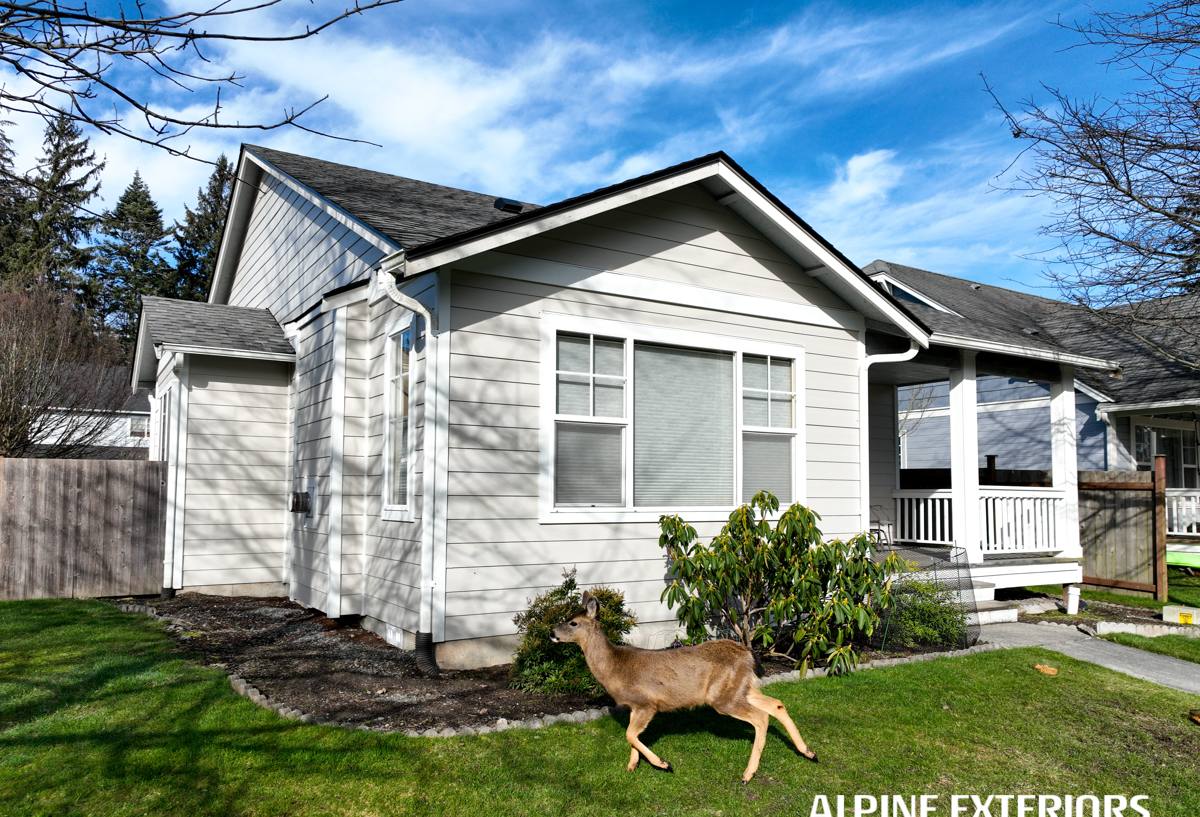
What the Sudden Valley Climate Does to a House
Shade, Moisture, and a Long Moss Season
A lot of Sudden Valley properties sit under significant tree cover, close to the lake, on lots with limited direct sun exposure on at least one side of the house. That combination — shade plus persistent moisture — is exactly what moss, algae, and mildew need to establish themselves on roofing and siding. In many parts of western Washington, moss growth is seasonal. In shaded, lake-adjacent settings like this, it can be closer to a year-round maintenance item, especially on north-facing roof slopes and the sides of a house that never see afternoon sun.
Driving Rain and Wind Off the Water
Whatcom County gets a steady diet of rain through fall, winter, and spring, and properties near Lake Whatcom pick up wind patterns off the water that can drive rain sideways into wall assemblies rather than just falling straight down. That matters more than people expect — a siding product or installation detail that's fine in a sheltered, dry climate can fail years earlier when it's fighting wind-driven moisture on a regular basis.
Terrain and Debris
Sloped lots and heavy tree cover mean gutters, roof valleys, and ground-level siding clearances deal with more organic debris — needles, leaves, seed pods — than a house on an open, flat lot. Debris that collects and holds moisture against wood trim, roofing, or the bottom courses of siding accelerates rot and decay in exactly the spots that are hardest to inspect from the ground.
Siding: Why We Only Install James Hardie Fiber Cement
We install one siding product on every job, in Sudden Valley and everywhere else we work: James Hardie fiber cement. That's a deliberate standard, not a lack of options. In a setting like Sudden Valley — shaded, damp, tree-heavy — the weaknesses of other common siding materials show up faster than they would in a drier, more open part of the county.
What Rules Out the Alternatives
- Vinyl siding expands and contracts with temperature swings, can warp or bow with age, and offers little structural resistance to impact from falling branches or debris — a real consideration on tree-covered lots.
- Wood siding (cedar, primed spruce) looks great new but requires an ongoing paint and caulk maintenance cycle to resist rot in a climate this damp, and shaded wall sections are the first to show wood decay.
- Engineered wood siding (LP SmartSide) improves on raw wood but is still a wood-based substrate — it depends on unbroken paint film and correctly sealed cut edges to keep moisture out over the long run.
- Other fiber cement brands (Cemplank, Allura) are dimensionally similar to Hardie but generally come without the factory-baked ColorPlus finish and the manufacturer-specific engineering Hardie has developed for Pacific Northwest moisture conditions.
Why James Hardie Fits Sudden Valley
Fiber cement is non-combustible and dimensionally stable — it doesn't expand, contract, warp, or absorb water the way wood-based products do. Hardie's ColorPlus finish is baked on at the factory under controlled conditions, which gives it better fade and moisture resistance than field-applied paint, and it holds up to the pressure-washing that shaded, moss-prone siding periodically needs. Hardie also builds region-specific HZ product lines engineered for climates like ours, and backs the product with a strong transferable warranty. Installed correctly — proper flashing, clearances, and fastening — it's a siding system built for exactly the conditions Sudden Valley delivers.
Siding Product Comparison
| Material | Moisture Behavior in Shade/Lake Climate | Maintenance Burden | Our Position |
|---|---|---|---|
| James Hardie fiber cement | Dimensionally stable, non-combustible, resists moss/algae staining better than wood substrates | Occasional wash; no repainting cycle with ColorPlus | What we install |
| Vinyl | Doesn't rot, but can warp/crack; seams and gaps under wind-driven rain | Low, but limited lifespan and impact resistance | Not installed |
| Wood (cedar/spruce) | Prone to rot and moss growth in persistent shade/moisture | High — recurring paint/seal cycle | Not installed |
| LP SmartSide | Better than raw wood, still substrate-dependent on sealed edges and paint film | Moderate — inspection and touch-up needed | Not installed |
Roofing for Tree-Covered, Lake-Adjacent Properties
Roofing in Sudden Valley has to deal with two things most other parts of Bellingham don't face to the same degree: heavy shade and heavy debris load. We look at ventilation, underlayment, and moss-resistant details as standard practice on jobs out here, not upgrades. A roof that drains well but traps moisture under a bed of needles in a valley will still develop soft spots and moss colonies over time. Gutter and edge detailing that actually sheds debris instead of collecting it matters more on a shaded, tree-lined lot than it does on an open one.
We also pay attention to how a new roof interacts with the siding and trim below it — proper kickout flashing where roof lines meet walls is one of the most commonly missed details on older homes, and it's a direct path for water intrusion behind siding if it's wrong.
Windows: Sealing Out Moisture and Cutting Heat Loss
Older windows in a shaded, damp environment are prone to seal failure, fogging between panes, and frame rot at the sill — problems that show up earlier here than in drier, sunnier parts of the county. Replacement windows done right address the whole opening, not just the glass: correct flashing integration with the siding, sill pans that direct water out rather than trapping it, and insulation that keeps energy bills reasonable through a long, damp heating season. Window work is also a natural pairing with a siding project, since the flashing details around each opening get rebuilt correctly at the same time rather than patched around old, potentially failed material.
Decks Built for a Damp, Shaded Environment
Decks in Sudden Valley — especially ones under tree cover or facing the lake — deal with slower drying times than a deck in full sun. That affects material choice, board spacing, and substructure detailing. Composite decking sheds moisture and resists the rot that a shaded wood deck is prone to, but even composite decking needs a substructure built with proper drainage and airflow underneath — trapped moisture under any deck surface, composite or wood, is what eventually causes structural problems in ledger boards and joists.
What a Sudden Valley Exterior Estimate Looks Like
Every property here is a little different depending on tree cover, lot slope, and orientation to the lake, so we walk the site before quoting anything. That includes checking for:
- Existing moss or algae growth patterns, and which sides of the house see the least sun
- Signs of moisture intrusion at trim, window sills, and siding butt joints
- Gutter and roof valley condition, especially in areas with heavy needle or leaf accumulation
- Deck substructure condition, ledger board flashing, and drainage underneath
- Access and staging logistics for sloped driveways or limited lot access
Why a Local Crew Matters Here
A crew that mostly works flat, open lots in town will approach a Sudden Valley property the same way — and that's how you end up with siding installed without enough clearance from grade, or a roof detail that doesn't account for how much debris that valley is going to collect every fall. We work throughout Whatcom County and see this terrain regularly enough to plan for it up front: material choices, flashing details, and maintenance expectations that match what the site actually does, not a generic install.
If you're planning siding, roofing, window, or deck work on a Sudden Valley property, we're happy to walk the site and put together a straightforward, no-pressure estimate — just fill out the form below.