 Bellingham Siding
 Lynden's Climate Is Harder on Siding Than It Looks
Lynden sits inland from Bellingham Bay, out in the Nooksack River valley, and that gives it a slightly different weather pattern than the coastline a few miles west. Winters bring more fog and frost pockets, summers run a bit warmer and drier, but the core problem for exterior materials is the same one every community in Whatcom County deals with: months of low-intensity rain, high humidity, and long stretches where surfaces simply do not fully dry out. That's the climate that matters most for siding, not the occasional heavy storm.
Whatcom County as a whole sits in a marine-influenced weather band. Areas closer to Bellingham Bay and the Salish Sea deal with salt-bearing air working into seams, fasteners, and trim. Lynden is far enough inland that direct salt exposure is a smaller factor than it is for waterfront homes, but the broader regional pattern of driving rain off the water, persistent damp air, and a moss season that can run from October well into spring still shapes how siding performs here. Homes in Lynden are not immune to the moisture problems that show up across the county — they just get there by a slightly different route: valley fog, ag-country humidity, and shaded north walls that never get a chance to dry.
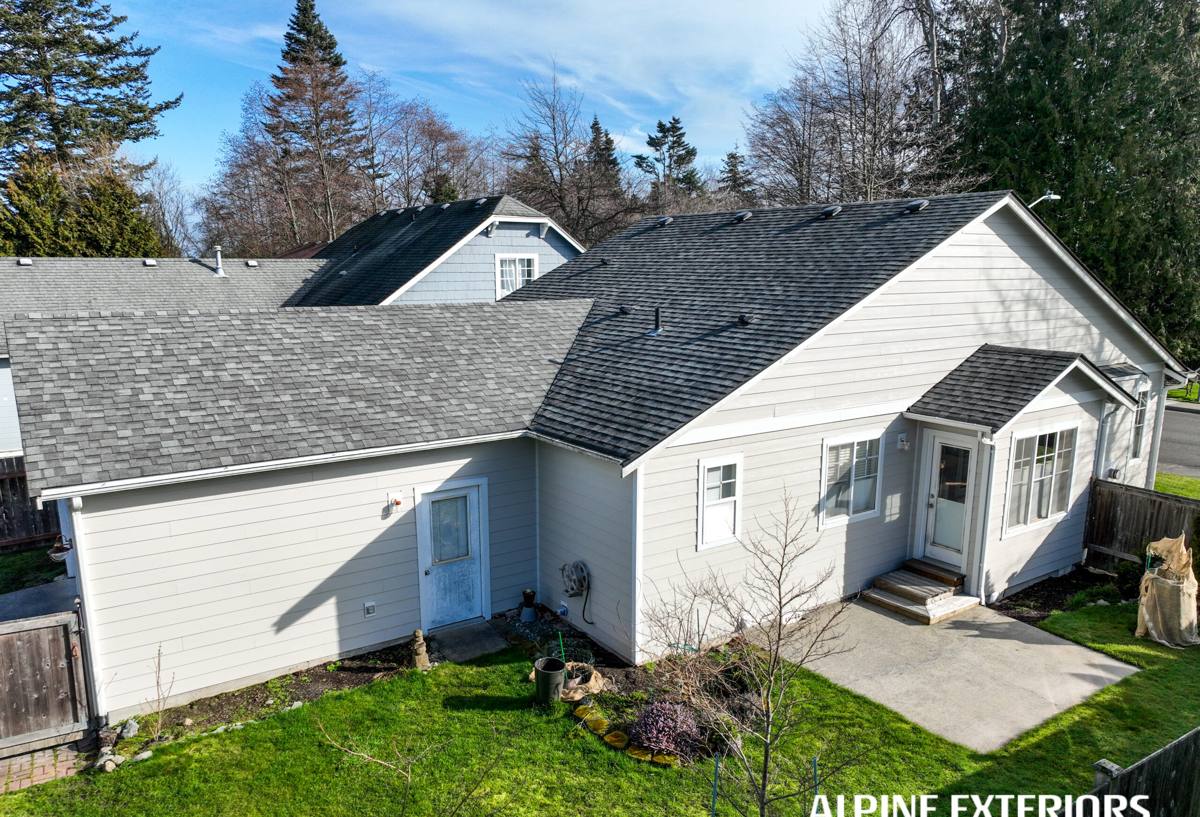
What We See on Lynden Homes
Working across Whatcom County, the failure patterns on Lynden properties tend to fall into a short list. None of it is dramatic — it's slow, cumulative damage that homeowners often don't notice until a repaint job reveals what's underneath.
- Moss and algae buildup on north- and east-facing walls that stay shaded most of the day
- Paint failure and soft spots on wood-based siding where moisture has been getting behind the surface for years
- Swelling or delamination at butt joints and corners on OSB-based or non-Hardie fiber cement products
- Caulk and trim failure around windows, where seasonal expansion and contraction opens gaps for water
- Fading and chalking on lower-grade paint finishes that weren't built for this many wet-dry cycles per year
Most of these issues trace back to two things: the underlying material's tolerance for sustained moisture, and how carefully the siding was installed — flashing, gaps, fastener pattern, and clearances matter as much as the product itself.
Why We Only Install James Hardie
We install James Hardie fiber cement siding exclusively. We don't install vinyl, LP SmartSide, Cemplank, Allura, primed spruce, or cedar, and that's a deliberate standard rather than a limitation of what we're capable of installing. In a climate like Whatcom County's, the material matters more than almost anywhere else in the country, and we'd rather stand behind one product system we trust completely than offer a menu of options with very different long-term outcomes.
What Fiber Cement Gets Right
James Hardie siding is a cement-based composite, not wood and not vinyl. It doesn't absorb water the way wood-based products can, it doesn't soften or delaminate the way some OSB-core siding does when moisture gets behind it, and it doesn't warp or buckle the way vinyl can with temperature swings. It's also non-combustible, which is a real advantage during wildfire smoke seasons that have become more common in the Pacific Northwest.
Where Other Products Fall Short Here
Vinyl siding is inexpensive and low-maintenance in dry climates, but it expands and contracts significantly with temperature, and in a wet climate the seams and laps are a long-term entry point for moisture behind the panel — where it can sit against the sheathing for months at a time. LP SmartSide and similar engineered-wood products use resin-treated strand board; they perform reasonably well when the finish is maintained perfectly, but any breach in that finish (a nail pop, a scuffed edge, a caulk failure) lets moisture into the wood fiber core, and in a marine climate that damage doesn't get a chance to dry out between rain events. Primed spruce and raw cedar are honest, attractive materials, but they require a repainting and recaulking discipline that most homeowners don't keep up with for 25+ years, and Whatcom County's rain schedule doesn't forgive lapses.
What Hardie Adds on Top of the Material
James Hardie's ColorPlus finish is baked on at the factory under controlled conditions, which gives a more consistent, fade-resistant result than field-applied paint and comes with its own finish warranty. Hardie also engineers regional product lines (HZ5 for our climate zone) specifically for freeze-thaw cycling and moisture exposure, rather than selling one generic board nationwide. Combined with a substantial transferable product warranty, it's the system we're comfortable putting our name behind on every job.
Comparing the Options
| Material | Moisture Tolerance | Maintenance | Typical Lifespan Here |
|---|---|---|---|
| James Hardie Fiber Cement | Excellent — cement-based, doesn't rot or delaminate | Occasional wash, repaint on a long cycle | 30+ years with correct install |
| Vinyl | Fair — seams and laps trap moisture behind panel | Low, but panels can crack/fade over time | 15-25 years |
| LP SmartSide / Engineered Wood | Good if finish stays intact, poor once breached | Regular finish inspection required | 15-25 years, less if finish is neglected |
| Cedar / Primed Spruce | Poor without diligent upkeep | High — repaint/reseal every few years | Highly variable, often 10-20 years in wet climates |
Roofing, Windows, and Decks Play the Same Game
Siding doesn't work in isolation. On a lot of the Lynden homes we look at, the exterior envelope only fails at one weak point — a roof edge that's not shedding water past the wall line, a window that's not flashed correctly, or a deck ledger that's trapping moisture against the house. We handle roofing, windows, and decks alongside siding because they all interact with the same water management system. A perfect siding installation can still fail if the roof above it is dumping water down the wall, or if a window is letting moisture behind the cladding at the frame.
When we quote a siding project, we're looking at the whole envelope — not just the walls — because that's the only way to actually solve the moisture problems this climate creates instead of just moving them around.
What Correct Installation Looks Like
- Proper flashing and weather-resistive barrier behind every panel, not just at obvious joints
- Manufacturer-specified fastener pattern and clearance from grade, decks, and roof lines
- Caulking only where Hardie's installation guidelines call for it — not as a substitute for correct flashing
- Butt joints and corners detailed to shed water rather than collect it
- Ventilation gaps maintained so the wall assembly can actually dry between rain events
Fiber cement siding installed off-spec can still develop problems, which is why installation quality is as much a part of our standard as the material choice itself.
Why a Local Crew Matters in Whatcom County
A contractor who only works occasionally in this region can miss the details that matter here — how much shade a north wall gets in a valley town like Lynden, how long moss season actually runs, or which details need extra attention because of how many wet-dry cycles a wall assembly goes through in a year. We work across Whatcom County regularly, which means we're accounting for local conditions in the planning and installation process, not applying a generic approach and hoping it holds up.
Being local also means we're accountable after the job is done. If a warranty question comes up or something needs a look years down the road, we're not a crew that passed through once and moved on.
Planning a Siding Project in Lynden
Every home is different, but a few factors consistently shape scope and cost on Lynden projects: how much of the existing siding needs to come off versus can be built over, how much trim and window flashing work is involved, wall height and roof access, and whether there's hidden moisture damage to the sheathing that needs to be addressed before new siding goes on. We won't know the real scope until we've looked at the house, but those are the variables that move a quote up or down.
Questions Worth Asking Before You Commit
- What's actually happening behind the current siding — is the sheathing sound?
- Is the quote based on James Hardie's published installation specs, or a generic approach?
- Who handles flashing details at windows, roof lines, and decks — the same crew, or subcontractors?
- What does the warranty cover, and is it transferable if you sell the home?
- Does the estimate account for this climate's freeze-thaw and moisture cycling, or just national averages?
If you're weighing a siding, roofing, window, or deck project on a Lynden home, we're happy to take a look and put together a clear, no-pressure estimate — no obligation, just a straight assessment of what your home actually needs.