 Bellingham Siding
 Lynden sits inland from Bellingham Bay, but it doesn't escape what the rest of Whatcom County deals with every winter: long stretches of saturated air, driving rain that comes in sideways off Pacific storm systems, and a moss season that seems to start earlier and last longer each year. Homes here don't fail because of one big storm. They fail slowly, from siding that was never quite matched to this climate in the first place, or from an installation that let moisture find its way behind the cladding instead of shedding it.
This page covers what siding installation actually means for a Lynden home — not a generic overview, but the specific conditions this area creates, what a correct installation looks like, and how we handle the job from first estimate to final caulk line.
Why Lynden's Climate Is Harder on Siding Than It Looks
Lynden doesn't get coastal storm surge, but it sits inside the same marine air mass that moves across all of Whatcom County. That means long periods of damp, still air, frequent drizzle that never quite turns into a hard rain, and driving rain events during fall and winter that push moisture horizontally into wall assemblies rather than straight down. Add in surrounding farmland and tree cover that keep humidity lingering longer after a storm passes, and you get ideal conditions for moss, algae, and slow moisture intrusion.
None of this is dramatic on its own. The problem is cumulative: siding that's marginal in a dry climate becomes a real liability here after five or ten wet seasons in a row.
What This Means Practically
- Siding needs to shed water fast, not just tolerate it
- Any gaps, poor caulking, or missing flashing become moisture entry points within a season or two
- North-facing and shaded walls need extra attention — they dry slowest and grow moss first
- Ground-level and low-clearance siding sees the most splash-back and standing moisture
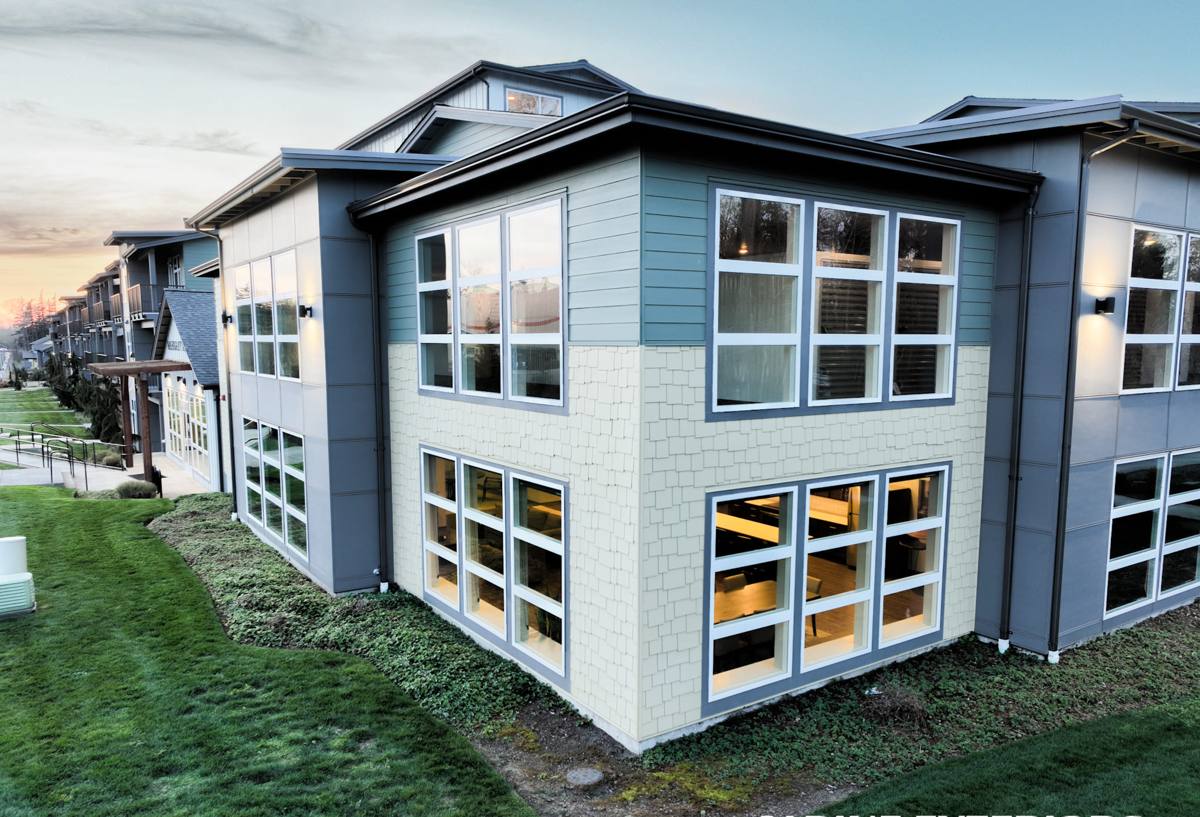
What a Correct Siding Installation Involves
A siding job is really a water-management system with a finish layer on top. The visible board is the last five percent of the work. The other ninety-five percent — the parts nobody sees once the job is done — is what determines whether the house is still dry and solid in fifteen years.
Water-Resistive Barrier and Flashing
Before a single piece of siding goes up, the wall needs a continuous water-resistive barrier, properly lapped so water always drains downward and outward, never into a seam. Every window, door, and penetration gets flashed so water is directed out onto the surface of the siding, not behind it. This step is invisible in the finished product and is exactly the step that gets rushed on a low-bid job.
Rainscreen and Drainage Gap
In a climate that sees this much sustained moisture, a drainage gap behind the siding matters. It lets any water that does get past the outer layer drain and dry instead of sitting against the sheathing. This is one of the clearest differences between an installation built for Lynden's climate and one built to a generic national spec.
Fastening and Joints
Fiber cement siding has specific fastening patterns, nail spacing, and joint treatment requirements. Butt joints need to be flashed or sealed correctly, corners need proper trim details, and fasteners need to be set to the manufacturer's depth — not over-driven, not proud. Get this wrong and you get cracking, popped fasteners, or water tracking behind the board within a few years.
Clearance and Grade
Siding installed too close to grade, a deck, or a roofline is one of the most common causes of rot we see on older Lynden homes. Manufacturer clearance minimums exist for a reason, and we hold to them even when it means a harder conversation about site conditions before work starts.
Why We Only Install James Hardie Fiber Cement
We install James Hardie exclusively — not vinyl, not LP SmartSide, not Cemplank, Allura, primed spruce, or cedar. That's a deliberate standard, not a sales preference, and it matters more in a climate like this one than almost anywhere else in the state.
Fiber cement doesn't absorb water the way wood-based products can, and it doesn't warp, buckle, or expand the way vinyl does with temperature swings. It holds paint and factory finish far longer than wood substrates, which matters when a house is going to spend half the year damp. It's also non-combustible, which is a real advantage during the dry season and wildfire smoke events that have become more common across Western Washington summers.
James Hardie's HZ5 product line is engineered specifically for climates with freeze-thaw cycling and sustained moisture exposure — which describes Whatcom County well. The ColorPlus factory finish is baked on under controlled conditions, which holds up better against the kind of prolonged damp, low-light weathering Lynden gets than a field-applied paint job ever will. And the warranty is transferable, which matters to homeowners who plan to sell.
We're not going to tell you every other siding product is junk — most of them work fine somewhere. But we've made a call about what performs reliably in this specific climate over a 20-30 year horizon, and we only put our name on jobs using material we trust to hold up here.
Moss, Algae, and Long-Term Maintenance
Moss doesn't damage fiber cement siding directly, but it holds moisture against the surface longer than bare siding would see on its own, and it's unattractive enough that most homeowners want it gone. The real defense against moss is design, not just material: adequate roof overhangs, correct siding clearance from grade and landscaping, and a drainage gap that lets the wall assembly actually dry between wet spells.
James Hardie's factory finish resists mildew and algae growth better than field-painted wood siding, but no exterior surface in this climate is maintenance-free. Expect to rinse siding periodically, especially on shaded north walls, and keep gutters and downspouts directing water away from the base of exterior walls.
Cost Factors for a Lynden Siding Installation
Every home is different, but the factors that move a siding installation estimate up or down are consistent. Here's what typically drives the number:
| Factor | Why It Matters |
|---|---|
| Existing siding removal | Tear-off and disposal of old siding, especially if it's layered over a prior installation |
| Sheathing condition | Rot or moisture damage found once old siding is removed adds repair scope |
| Home size and wall complexity | Cut-up walls with lots of corners, gables, and trim take more labor per square foot than simple rectangular walls |
| Siding profile and accessories | Lap width, trim details, and factory-finish color selection affect material cost |
| Access and site conditions | Tight lot lines, landscaping, or two-story sections affect staging and labor time |
| Flashing and drainage upgrades | Bringing an older wall assembly up to current water-management standards during the tear-off |
We give a firm number after a real walk-around of the house, not a phone estimate — sheathing condition especially can't be judged from the driveway.
Why Hiring a Crew That Already Works Lynden Matters
Local experience shows up in details a homeowner would never think to ask about: knowing which older Lynden and Whatcom County homes commonly have undersized overhangs, which subdivisions tend to have drainage issues at grade, and how the local building department handles siding permit inspections. It also means we're not guessing at what this climate does to a wall assembly over a decade — we've seen what happens when flashing is skipped, when clearance isn't held, and when a lower-cost material starts to show its age after a few wet winters in a row.
A crew unfamiliar with the area might install to a generic spec that works fine in a drier climate and quietly underperforms here. That gap doesn't show up on install day — it shows up in year six or seven, in the form of soft trim, moss buildup that won't rinse off, or paint that's failed on the south wall while the rest of the house still looks new.
What to Ask Before Hiring Anyone for Siding Work
- Do they install to manufacturer specifications for fastening, clearance, and flashing, and can they explain those specs specifically?
- Do they include a drainage gap / rainscreen detail, or just nail siding directly to the water-resistive barrier?
- Are they a James Hardie-certified or experienced installer, and can they speak to product lines and warranty terms in detail?
- Do they inspect and address sheathing condition before re-siding, rather than covering over existing damage?
- Do they carry proper licensing and insurance for exterior work in Washington?
- Will they put the scope, material, and warranty terms in writing before work starts?
If you're planning a siding installation in Lynden, we'll walk the house, look at what the current siding and sheathing are actually telling us, and give you a straightforward, no-pressure estimate for doing the job right the first time. There's no cost and no obligation to get a real number.