 Bellingham Siding
 Vinyl siding shows up all over Whatcom County, and it's not hard to understand why. It's inexpensive, it's available at every lumberyard in the region, and a lot of contractors will hang it without a second thought. We don't install it. This isn't a scare tactic to sell you something more expensive — it's an honest explanation of what vinyl does and doesn't hold up to in a marine climate like Bellingham's, and why we've built our entire business around a different product instead.
What Vinyl Siding Actually Gets Right
Fair is fair. Vinyl siding is affordable up front, it's widely available, and for a lot of the country it performs adequately for what homeowners pay. It never needs to be painted, it goes up quickly, and in drier, more temperate climates plenty of vinyl-clad homes get by for years without major issues. If price is the only factor on the table, it's easy to see the appeal.
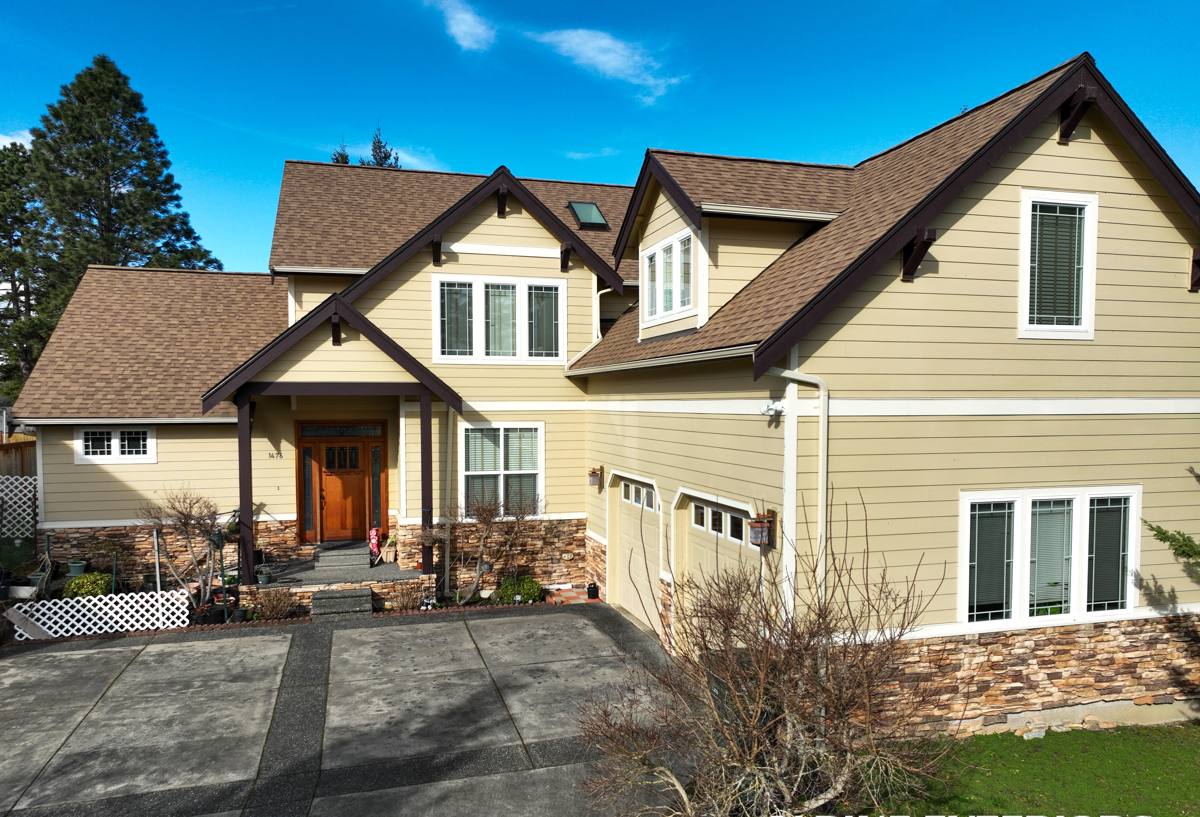
Bellingham's Climate Is a Tougher Test
Bellingham sits right on Bellingham Bay, and that proximity to salt water changes what a siding product has to deal with over its lifetime. Add in Whatcom County's pattern of driving rain off the Strait of Georgia and a moss season that can run nearly year-round in the shaded, damp corners so common here, and you get a set of conditions that push vinyl's weaknesses to the surface faster than they'd show up somewhere drier and further from the water.
Salt Air and Marine Exposure
Salt-laden air accelerates the breakdown of a lot of exterior materials, and vinyl isn't immune. Over years of exposure, the plastic can become more brittle, especially on south- and west-facing walls that take the brunt of sun and salt spray off the bay. Brittle vinyl cracks more easily from impact — a thrown rock, a ladder bump, a wind-driven branch — and once that happens, a repair job begins.
Driving Rain and Wall Assemblies
Vinyl siding is a "loose-hung" cladding by design. It's not fastened rigidly to the wall; it hangs so it can expand and contract with temperature. That's normal for the product, but it also means the panels themselves aren't doing much to stop water. Vinyl depends almost entirely on the weather-resistant barrier and flashing behind it to keep a home dry. In a climate with as much driving, wind-blown rain as Bellingham sees, any gap in that underlying system — a poorly lapped barrier, a missed flashing detail, a loose J-channel — gives water a path behind the siding, where it can sit against sheathing for months before anyone notices.
Whatcom County's Long Moss Season
Between shade from mature trees, persistent damp air off the water, and mild year-round temperatures, Whatcom County grows moss and mildew on almost anything that holds moisture. Vinyl's seams, J-channels, and butt joints are natural collection points for organic growth, and because vinyl can't be refreshed with a coat of paint the way fiber cement or wood can, once staining or fading sets in on a shaded wall, cleaning is often the only option — and cleaning vinyl aggressively risks driving water behind the panels or damaging the surface itself.
Installation Sensitivity and Temperature Behavior
Vinyl siding has to be installed with room to move. Nail it too tight and it can't expand and contract with temperature swings, which leads to buckling, warping, or panels popping out of their track. Nail it too loose and wind — which Bellingham gets plenty of coming off the water — can rattle or dislodge panels over time. It's a product that looks simple to install but is genuinely sensitive to get right, and a lot of the vinyl failures we see on service calls trace back to installation shortcuts rather than the material itself failing outright.
Cold weather adds another wrinkle. Vinyl becomes more brittle as temperatures drop, and impact damage — hail, debris, an errant ladder — is more likely to crack a panel outright in winter than in summer. None of this makes vinyl a bad product everywhere. It means the margin for error is narrow, and in a climate that combines salt air, sustained rain, and a real winter chill, that narrow margin gets tested constantly.
The Repair and Replacement Reality
"Maintenance-free" is the phrase most associated with vinyl, and in a narrow sense it's accurate — you'll never need to repaint it. But maintenance-free isn't the same as worry-free, especially once a panel is damaged or discolored:
- Vinyl fades unevenly under UV exposure, and manufacturers regularly discontinue or shift color runs, so matching a replacement panel to a five- or ten-year-old installation is often difficult or impossible
- A single cracked or warped panel usually means pulling several courses apart to get the damaged piece out, since panels interlock top to bottom
- Moss and mildew on shaded sections need regular attention, and pressure-washing vinyl incorrectly can force water behind the panels rather than remove growth from the surface
- Seams, corners, and trim transitions are where water intrusion problems tend to start, and those weak points don't improve as the siding ages
None of this means every vinyl-clad home in Bellingham has problems — plenty get by fine, particularly on walls that are sheltered from direct salt exposure and prevailing wind. It means the tradeoffs stack up differently here than they would in a drier, inland climate, and we'd rather be upfront about that than install something we're not confident will perform the way a homeowner expects over the long run.
Vinyl vs. Fiber Cement: A Side-by-Side Look
| Factor | Vinyl Siding | James Hardie Fiber Cement |
|---|---|---|
| Moisture handling | Loose-hung; relies entirely on the barrier behind it | Engineered to resist moisture absorption; installed with manufacturer-spec flashing |
| UV and color stability | Fades unevenly; color runs are often discontinued | Factory-baked ColorPlus finish, warrantied against fading |
| Impact and cold-weather durability | Can crack or become brittle in cold temperatures | Resists impact damage; not temperature-brittle |
| Combustibility | Plastic-based; can melt or ignite under heat exposure | Non-combustible fiber cement core |
| Typical lifespan | 15-25 years, highly install-dependent | 30+ years with correct installation |
These are general industry patterns, not guarantees for any specific home — actual performance always comes down to installation quality, site exposure, and upkeep.
Cost Factors Worth Understanding
We don't publish flat prices because every home is different, but the variables that actually drive the cost of a siding project in Bellingham are consistent regardless of which product you're considering:
- Total square footage and the complexity of the home's shape — dormers, gables, and multiple stories all add labor
- Condition of the existing sheathing and whether water damage needs repair before new siding goes on
- Amount of trim, corner detail, and custom work involved
- Access and site conditions, including tree cover and staging space on the property
- Whether the project is a full tear-off or an overlay — we only recommend a full tear-off, since covering existing damage doesn't fix it
Vinyl's lower material cost is real, but it's worth weighing against the fact that a fiber cement installation, done once and done to spec, typically outlasts two vinyl replacement cycles in a demanding coastal climate like this one.
Why We Install James Hardie Instead
We install one siding product: James Hardie fiber cement. It's non-combustible, it doesn't share vinyl's brittleness or impact concerns, and it holds up to sustained moisture exposure without the same reliance on a perfectly executed barrier system behind it. Hardie's ColorPlus factory finish is baked on under controlled conditions and backed by its own warranty against fading and chalking — a real advantage against the UV and salt exposure that comes off Bellingham Bay.
Hardie also builds climate-engineered HZ product lines specifically for regions dealing with sustained moisture, salt air, and temperature swings, rather than selling one generic product nationwide. Paired with a strong transferable warranty — which matters if you sell the home down the road — it's the product we're willing to install to manufacturer spec and stand behind, year after year, through a full Whatcom County wet season.
Signs Your Current Siding Needs a Second Look
- Visible moss or dark staining that returns quickly after cleaning
- Cracked, warped, or buckled panels, especially on south- or west-facing walls
- Gaps or separation at seams, corners, or J-channels
- Soft or spongy spots when pressing near the base of the wall or around window trim
- Fading or chalkiness that doesn't respond to washing
If you're weighing siding options for a home in Bellingham or elsewhere in Whatcom County, we're glad to take a look at your specific property — sun exposure, wind direction off the bay, tree cover, current condition — and give you a straight answer about what makes sense. This is our professional standard, not a sales pitch: we've chosen to put our name behind one product because we believe it's the one that actually performs here. Reach out for a free, no-pressure estimate using the form below.