 Bellingham Siding
 What Board & Batten Actually Is
Board and batten is one of the oldest siding patterns in the Pacific Northwest, and it never really went out of style — it just goes in and out of fashion for new construction, then comes back every decade or so because it looks good on everything from a Fairhaven craftsman to a Bellingham hillside farmhouse. The pattern is simple: wide vertical panels (the boards) with narrow strips (the battens) covering the seams between them. What's not simple is what happens behind that pattern once weather starts working on it.
The Look vs. The System
Homeowners usually come to us describing board and batten as a look. We think of it as a system — a specific set of panels, battens, fasteners, flashing details, and gap tolerances that all have to work together. Get the look right and skip the system, and you end up with a wall that photographs well for about five years and then starts telling on itself with staining, cupping, or soft spots at the seams. That gap between "looks right" and "performs right" is the entire reason this page exists.
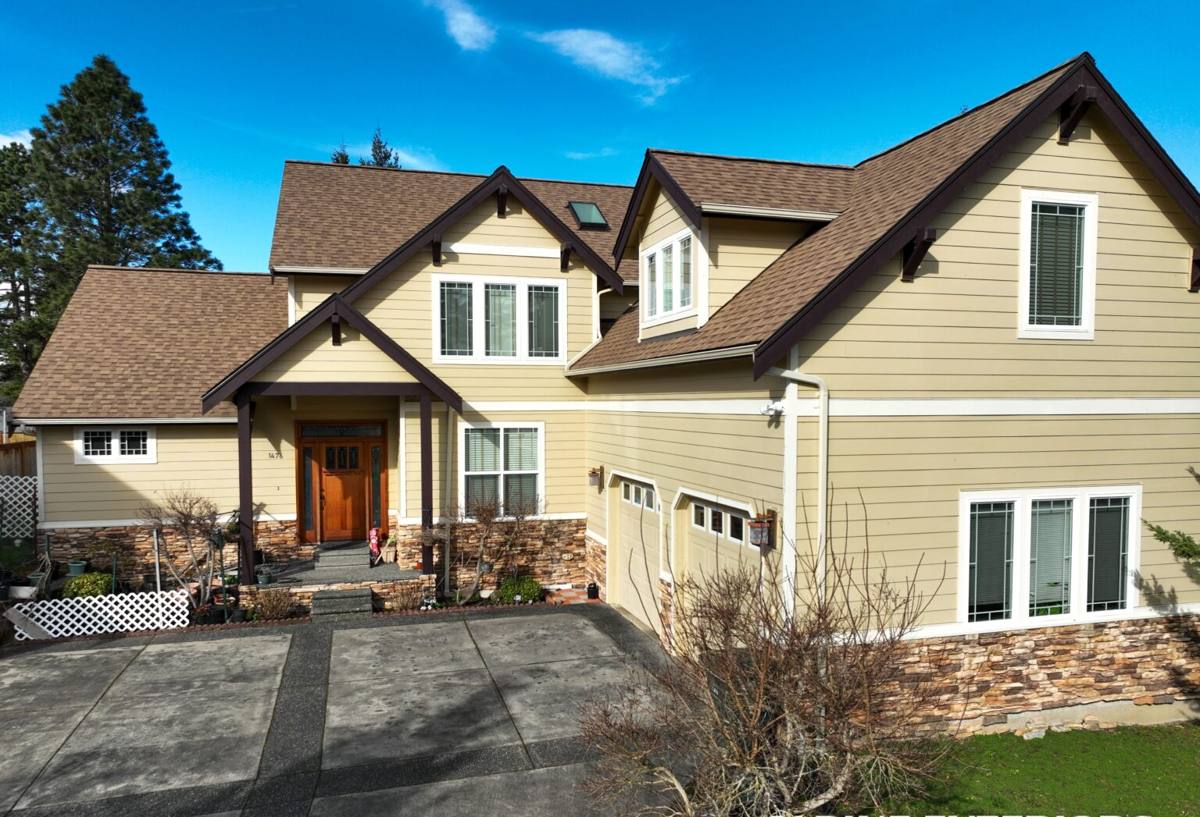
Why Board & Batten Is Unforgiving on the Coast
Every siding pattern has a weak point where water wants to get in. On lap siding, it's the horizontal overlaps. On board and batten, it's the vertical seams and the horizontal cuts at trim, windows, and the transition to the foundation. Bellingham and the rest of Whatcom County give those seams a real workout — we get driving rain off Bellingham Bay that hits walls sideways rather than falling straight down, salt-laden air along the waterfront and out toward Fairhaven and Boulevard Park, and a long stretch of gray, damp months where a north-facing or shaded wall may not fully dry out between storms.
Add moss to that list. Whatcom County's moss season is not a cosmetic issue — moss holds moisture against a surface for weeks at a time, and on the wrong material that moisture migration is what causes swelling, delamination, or rot at seams and panel edges. A board and batten wall with tight, well-flashed seams sheds that moisture. One with undersized gaps, wicking-prone material, or caulked-instead-of-flashed seams holds onto it. Over a few winters, the difference shows.
James Hardie's Board & Batten Options
We install James Hardie exclusively, so when a homeowner asks for board and batten, we're working from Hardie's fiber cement panel and trim lines rather than mixing in other manufacturers. Fiber cement doesn't absorb water the way wood-based products can, and it doesn't expand and contract with humidity swings the way vinyl and some engineered wood products do — both of which matter a lot on a pattern built around narrow, closely spaced seams.
HardiePanel Vertical Siding
The board portion of the system is typically HardiePanel, Hardie's vertical panel product, available in a smooth or cedar-textured finish and manufactured in Hardie's climate-specific HZ formulation for our region. The panels come in consistent widths and thicknesses, which matters more than it sounds like it should — consistent stock is what lets an installer hold true, even batten spacing across an entire elevation instead of fudging gaps to make mismatched boards line up.
Battens: HardieTrim and Engineered Options
The battens covering the seams are usually HardieTrim boards, cut and fastened over the panel joints. Because the battens carry the reveal and shadow line that defines the whole look, their spacing and fastening pattern get more attention during layout than almost anything else on the job — even a quarter-inch of drift across a wall is visible from the street.
The Installation Details That Make or Break Board & Batten
This is the section that separates a board and batten wall that lasts thirty-plus years from one that needs partial replacement in ten. None of it is exotic. All of it takes time, and all of it is easy to skip if a crew is moving fast.
| Detail | Done correctly | Common shortcut we won't take |
|---|---|---|
| Panel seams | Flashed or lapped per Hardie spec, with battens providing a rain-screen gap | Seams caulked and battens nailed tight against the panel with no drainage path |
| Fastener placement | Hardie-specified nailing pattern, corrosion-resistant fasteners set to correct depth | Standard nails overdriven, cracking the fiber cement at the fastener point |
| Clearance at grade | Minimum clearance maintained above hardscape, decks, and soil per Hardie install guide | Panels run tight to grade, wicking moisture from below |
| Window and door flashing | Integrated flashing and house wrap sequencing before panels go on | Panels butted to trim and sealed with caulk alone |
| Batten spacing layout | Full elevation measured and dry-laid before the first batten is fastened | Battens installed left to right, adjusting the last one to fit |
The rain-screen gap behind the battens is worth a second mention on its own, because it's the detail most likely to get skipped and least visible once the job is done. A true rain-screen assembly leaves a small air gap behind the siding so any moisture that does get past the outer layer can drain and the wall can dry. On a house exposed to Bellingham's wind-driven rain, that gap is doing real work every winter, not just satisfying a spec sheet.
ColorPlus Finish vs. Field Painting for Board & Batten
Board and batten has more seams and edges per square foot than almost any other siding pattern, which means more places for a field-applied paint film to fail first. That's a strong argument for Hardie's factory-applied ColorPlus finish on this particular pattern. ColorPlus is baked on under controlled conditions, resists fading and chipping better than most field paint jobs, and comes with its own finish warranty separate from the substrate warranty.
Field-painted Hardie is still a legitimate option, particularly for custom colors, but on board and batten it puts more pressure on caulking and paint maintenance at every seam and batten edge — exactly the joints that see the most water exposure in our climate. We'll talk homeowners through both, but for board and batten specifically, ColorPlus is usually the lower-maintenance path.
Cost Factors on a Board & Batten Job
Board and batten generally costs more per square foot than standard lap siding on the same house, and it's worth understanding why before you're comparing bids.
| Factor | Why it affects cost |
|---|---|
| Material volume | Battens are additional material and fasteners on top of the base panel, roughly a 15-25% material increase over lap siding |
| Labor time | Precise batten layout, dry-fitting, and consistent reveal spacing take meaningfully longer than hanging lap boards |
| Waste factor | More cuts at corners, windows, and trim transitions than a horizontal pattern |
| Finish choice | ColorPlus vs. field-painted changes both material cost and long-term maintenance cost |
| Wall complexity | Dormers, gables, and mixed-material accents multiply layout time disproportionately |
We don't quote board and batten off a flat per-square-foot number pulled from a lap siding job — the layout and detailing time is real and it belongs in an honest estimate, not a surprise change order once the crew is on the wall.
Maintenance Checklist for Board & Batten Homes in Whatcom County
A correctly installed Hardie board and batten system is low-maintenance, not no-maintenance. Given our moss season and coastal exposure, a short annual check goes a long way.
- Rinse siding and battens with a garden hose (not a pressure washer) once or twice a year to clear salt residue and organic buildup, especially on north-facing and shaded walls
- Check batten seams and caulked joints near windows and trim for cracking or gaps each spring
- Keep gutters clear so runoff isn't sheeting down wall sections and concentrating water at specific seams
- Trim back landscaping and tree cover that keeps a wall section shaded and damp longer than the rest of the house
- Watch for early moss or algae growth at the base of battens and along the foundation line — catching it early is a rinse, catching it late is a scrub
- Inspect field-painted finishes (if not ColorPlus) for chalking or thinning paint every few years, particularly on south and west exposures
Choosing a Contractor for Board & Batten Work
Board and batten punishes a rushed or inexperienced install more than most siding patterns, because there's nowhere for a crooked reveal or a skipped flashing detail to hide — it's all vertical lines at eye level. When you're vetting bids for this specific pattern, it's fair to ask directly how the crew handles rain-screen gaps behind battens, what their nailing pattern is, and whether they dry-lay the batten spacing across a full elevation before fastening anything. A contractor who's done real board and batten work will have specific answers, not general ones.
It's also worth asking what happens at the transitions — inside corners, outside corners, window and door casings, and the base of the wall. Those are the spots where a generic answer ("we caulk it") is a red flag, because caulk is a maintenance item, not a substitute for flashing.
Get a Straight Answer on Your Project
Board and batten is one of the more demanding patterns to install correctly, and it's one of the most visible when it's not. If you're weighing board and batten with James Hardie for a home in Bellingham or elsewhere in Whatcom County, we're glad to walk your property, talk through layout and detailing specific to your exposure, and give you a straightforward, no-pressure estimate — no upsell, just what the job actually needs.