 Bellingham Siding
 Why Color Choice Is a Bigger Decision Than It Looks
Most homeowners start a siding project thinking about color the way they'd think about paint — pick a shade you like, move on. With James Hardie fiber cement, color is actually part of the product engineering, not an afterthought applied on site. The finish system, the pigment, and the substrate are designed together, and that matters more in Whatcom County than it does in drier parts of the country. Bellingham sits where marine air off the Salish Sea meets steady winter rain and a long, damp moss season, and all three of those things are hard on exterior finishes. A color decision made without understanding how James Hardie's finish actually works can leave you repainting sooner than you expected.
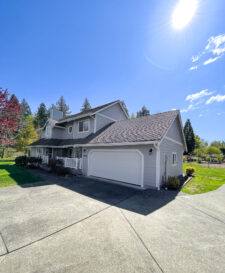
ColorPlus Technology: What's Actually Different About It
James Hardie's factory-applied finish, marketed as ColorPlus Technology, is baked onto the fiber cement in a controlled facility before the boards ever reach a job site. That's a fundamentally different process than field-painting siding after installation, and it's the reason we only install ColorPlus panels rather than primed boards that get painted on site.
How the Baked-On Finish Works
The panels go through multiple coats — a primer, color coats, and in most lines a clear topcoat — cured in an oven rather than air-dried. That curing process bonds the finish to the fiber cement substrate more evenly and more thoroughly than brush, roll, or even sprayed field paint can, because temperature and humidity are controlled instead of left to whatever the weather is doing that week. On a job site in Bellingham, where you can get sun, drizzle, and fog in the same afternoon, that consistency is not a minor advantage.
What This Means for Longevity
A factory finish resists fading, chipping, and cracking longer than field-applied paint on fiber cement, and James Hardie backs the ColorPlus finish with its own warranty coverage separate from the substrate warranty. In a climate that cycles between soaking rain and salt-tinged wind, finish failure — not board failure — is usually what sends a homeowner back into a repaint cycle. Starting with a factory-cured finish pushes that timeline out significantly.
Primed Hardie vs. ColorPlus — Why We Don't Install Primed and Paint It
James Hardie also sells a primed-only version of its siding, intended to be field-painted after installation. It's a legitimate product, and plenty of contractors install it that way. We don't, and it's worth explaining why rather than just saying "we use ColorPlus."
Primed boards give you unlimited paint color choice and can look identical to ColorPlus on install day. The trade-off shows up later. Field-applied paint on any substrate — fiber cement included — has a shorter service life than a factory-cured finish, and repainting siding on a two-story Bellingham home means scaffolding, weather delays, and a maintenance cycle the homeowner now owns indefinitely. ColorPlus shifts that cost and hassle back to the factory, where it's done once, correctly, before the siding ever gets nailed up. For a house that's going to sit through decades of Whatcom County winters, we think that's the better trade even though it narrows the color palette somewhat.
The ColorPlus Palette: What You're Actually Choosing From
James Hardie's ColorPlus lineup runs a few dozen shades across neutral, warm, and cool families — colors like Arctic White, Iron Gray, Cobble Stone, Aged Pewter, Woodland Cream, Boothbay Blue, Evening Blue, Mountain Sage, Navajo Beige, and Countrylane Red show up regularly in Pacific Northwest projects. The exact catalog shifts over time as collections are refreshed, so we always confirm current availability and order actual sample boards before a homeowner commits — a screen or a brochure never renders a color accurately.
Neutral and Gray Tones
Grays and warm neutrals are the most common choices we see in Bellingham, partly because they read well against the region's gray-sky months and partly because they pair easily with the stone, wood, and metal accents common in Pacific Northwest architecture. A muted gray or greige body color tends to age gracefully even as moss and mineral deposits from rain accumulate slightly on north-facing walls between cleanings.
Deeper and Saturated Colors
Darker blues, greens, and reds are available and can look excellent on the right house, but they absorb more heat and, on some substrates, show fading or chalking sooner than lighter tones. ColorPlus finishes are formulated to resist this better than field paint, but if you're drawn to a bold, saturated color, it's worth asking directly how that specific shade has performed over time before committing a whole elevation to it.
Climate-Zone Engineering: HZ10 and the Pacific Northwest
Color sits on top of a substrate that's also climate-engineered, which is easy to overlook. James Hardie makes different formulations for different climate zones — the HZ10 line is engineered for the wetter, milder regions that include Western Washington, with moisture management properties suited to sustained rain exposure rather than freeze-thaw cycling or extreme heat. Installing the correct climate-zone product matters as much as the color you put on it, because a board engineered for the wrong region can perform poorly regardless of how good the finish looks on day one. This is part of why we standardized on Hardie specifically — the manufacturer engineers for regional conditions instead of selling one formulation everywhere.
Choosing Colors for Bellingham's Light and Landscape
Working With Marine Light
Coastal light in Whatcom County tends to be softer and grayer than inland light, especially through the fall and winter. Colors that look crisp and bright under a showroom's fluorescent lighting can read flatter and cooler under Bellingham's typical overcast sky. Whenever possible, look at sample boards outdoors, on the actual house, at different times of day before finalizing a color.
Salt Air and Moss Season
Homes closer to the water deal with salt-laden air that can accelerate the appearance of grime and mineral buildup on siding, and the region's long damp season is friendly to moss and algae growth, particularly on shaded north and west elevations. Lighter, matte-leaning colors tend to show this buildup faster than mid-tone colors, though nothing is immune. Routine rinsing keeps any ColorPlus color looking right; it's a maintenance habit worth planning for regardless of shade.
Matching Neighborhood Character
Bellingham has a strong mix of craftsman, Pacific Northwest modern, and traditional home styles, often within the same block. Some neighborhoods and HOAs have informal or formal expectations about exterior palettes. It's worth checking any HOA guidelines before ordering material, since ColorPlus is a special-order factory finish and isn't something you touch up with a mismatched can of exterior paint later.
Trim, Accent, and Multi-Color Systems
Most Hardie projects use at least two colors — a body color and a contrasting trim color — and many add a third accent color on shutters, a front door surround, or a gable feature. James Hardie's trim boards and soffit panels come in a smaller but coordinated set of ColorPlus colors designed to pair with the main lap or panel siding colors, which takes the guesswork out of matching. A well-chosen trim contrast does more for curb appeal than most homeowners expect, and it costs relatively little extra since it's the same install labor either way.
Practical Color-Planning Checklist
- Request actual ColorPlus sample boards, not printed swatches — factory finish reads differently than ink on paper
- View samples outdoors against your home in both overcast and direct light, at different times of day
- Check any HOA or neighborhood covenant restrictions before ordering
- Plan trim and accent colors alongside the body color, not as an afterthought
- Ask which climate-zone product (such as HZ10) is being specified for your home
- Confirm current lead times — ColorPlus colors are factory runs and some shades take longer than others
- Ask how touch-up will be handled for any cut edges or minor field damage after installation
Maintenance and Touch-Up: Keeping a ColorPlus Finish Looking Right
A ColorPlus finish is low-maintenance, not no-maintenance. Field-cut edges need factory-matched touch-up product applied at installation to maintain the finish warranty, and it's worth confirming your installer is doing this correctly rather than skipping it. Beyond that, an annual rinse-down — garden hose pressure, not a pressure washer aimed point-blank at the siding — handles most of the salt film and organic buildup that accumulates in a marine, high-rainfall climate like Bellingham's. Avoid abrasive cleaners or high-pressure washing directly on the finish, since that can degrade the coating faster than normal weathering would.
Cost Factors to Understand Before You Order
Color itself doesn't usually change the base price much within the standard ColorPlus lineup, but a few related factors do affect the total project cost.
| Factor | How It Affects Cost |
|---|---|
| Standard vs. premium ColorPlus shade | A small number of colors carry a modest upcharge over the base palette |
| Primed vs. ColorPlus finish | Primed material costs less upfront but adds ongoing field-paint and labor costs over the life of the siding |
| Multi-color trim/accent system | Minor material cost increase; labor is similar since trim install happens regardless of color count |
| Lead time on special-order colors | Doesn't change price directly but can affect project scheduling around Bellingham's weather windows |
| Touch-up kit and field-cut coverage | Should be included in a proper installation quote — confirm it's not treated as an extra |
Getting the Color Decision Right the First Time
Because ColorPlus is a factory finish rather than field-applied paint, changing your mind after material is ordered is far more disruptive than it would be with a can of paint. That makes the sampling and planning stage worth slowing down for, especially on a home where salt air, driving rain, and moss season are all going to be testing that finish year after year. If you're weighing colors for a Bellingham or wider Whatcom County home, we're happy to walk the property, bring out real sample boards, and talk through what's held up well on similar homes in similar exposures. Reach out for a free, no-pressure estimate — there's no obligation, and it's the best way to see how a specific color actually looks on your house before committing to it.