 Bellingham Siding
 What Cordata Homes Are Up Against
Cordata sits in north Bellingham, close enough to the water and the marine weather patterns that move through Whatcom County to feel their effects on every exterior surface of a house. That means damp air for much of the year, long stretches of low-intensity rain punctuated by wind-driven storms, and a growing season generous enough that moss and algae find a foothold almost anywhere shade and moisture linger. None of that is unusual for this part of Washington. But it does mean the siding, roofing, windows, and decking on a Cordata home are doing more work, more of the year, than the same materials would in a drier climate.
Driving Rain and the Marine Air Effect
Bellingham's proximity to the Salish Sea means homes here deal with a version of "salt air" — moisture-laden marine air that keeps humidity elevated and slows drying time after every storm. Combine that with wind-driven rain that gets pushed sideways into wall assemblies, and you get siding systems that spend a lot of their life slightly damp rather than fully dry. Materials that swell, wick moisture, or trap water behind their surface age faster under those conditions than they would somewhere arid.
Moss, Shade, and Long Wet Winters
Whatcom County's tree cover and cloud-heavy winters create ideal conditions for moss and algae growth on north-facing walls, shaded siding, and anywhere airflow is limited. Left unaddressed, that growth holds moisture against the surface underneath it — which is exactly the kind of slow, hidden deterioration that shortens the life of siding, trim, and roofing long before it becomes visible from the street.
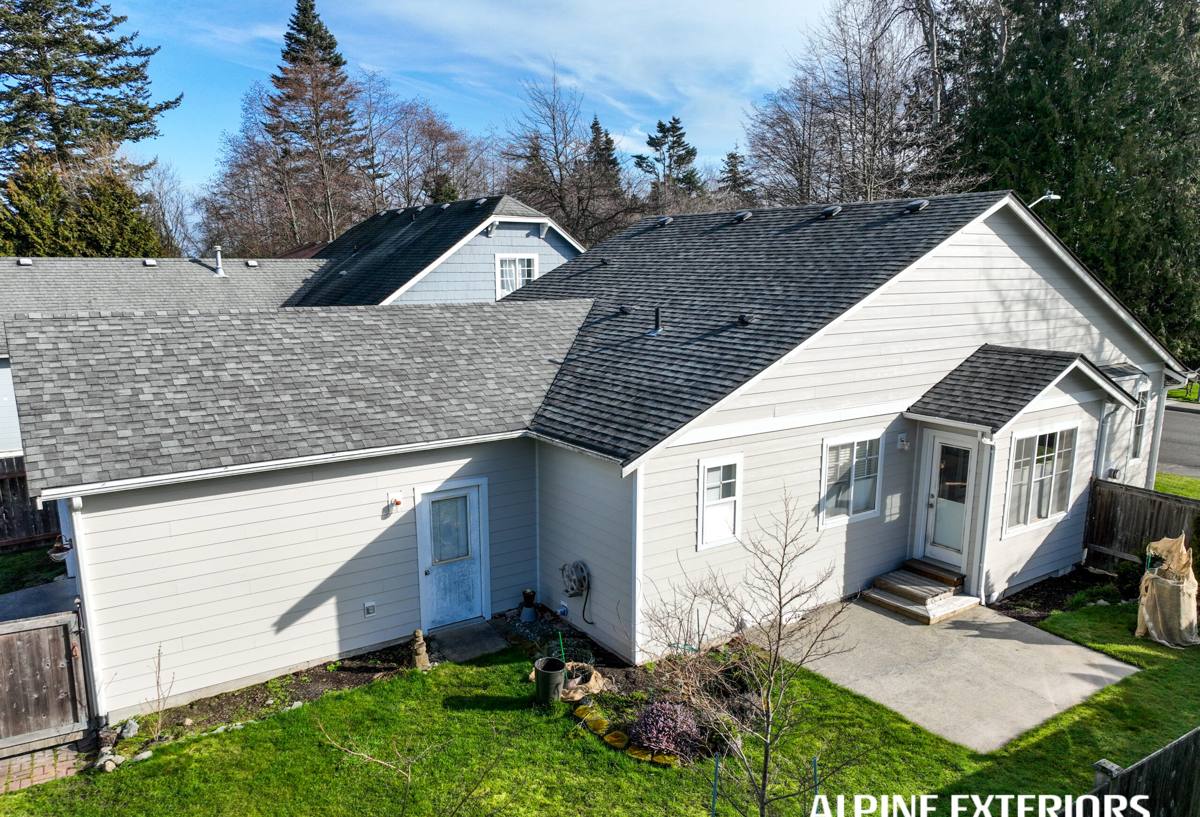
Why Siding Material Is the First Decision, Not an Afterthought
In a climate like this, the siding material itself matters more than the color or the crew's speed. Some products handle sustained moisture exposure well. Others depend on perfect caulking, paint maintenance, or a dry climate to perform the way they're marketed. We've built our business around installing one product — James Hardie fiber cement — because after years of exterior work in this exact climate, it's the one we trust to hold up without demanding constant homeowner intervention.
| Material | Moisture Behavior | Moss/Algae Resistance | Typical Maintenance |
|---|---|---|---|
| James Hardie fiber cement | Dimensionally stable; doesn't swell or rot when wet | Factory finish resists staining; cleans up well | Periodic rinse; repaint only if ever needed (ColorPlus rarely does) |
| Vinyl | Doesn't rot, but can warp, crack, or gap over time | Traps moisture behind panels; moss grows on surface grime | Regular washing; panels can fade and become brittle |
| Engineered wood (LP SmartSide) | Wood-based core is sensitive to sustained moisture at edges/seams | Can support growth if coating is compromised | Caulking and touch-up paint on a regular cycle |
| Cedar / primed spruce | Natural wood; absorbs and releases moisture continuously | Prone to moss and mildew without diligent upkeep | Frequent staining, sealing, or painting |
This isn't a knock on every product on that list — vinyl and engineered wood both have legitimate uses and reasonable track records in the right conditions. But in Whatcom County's specific combination of sustained moisture and shade, we've made a professional call to standardize on the one product we've seen hold up with the least homeowner intervention.
Why We Install Only James Hardie
James Hardie fiber cement is made from cement, sand, and cellulose fibers, which makes it dimensionally stable and non-combustible — it doesn't expand and contract with moisture the way wood-based products do, and it doesn't ignite. For a climate defined by sustained dampness rather than extreme dryness, that stability matters more than almost any other single factor.
HZ5 Products, Engineered for This Climate
Hardie's HZ5 product line is engineered specifically for regions with significant moisture exposure and freeze-thaw cycling, which fits western Washington's weather pattern well. It's built to resist moisture intrusion at the plank level, which reduces the risk of the slow, hidden water damage that shaded, moss-prone walls are prone to.
ColorPlus Factory Finish
Rather than relying on field-applied paint, Hardie's ColorPlus finish is baked on in a controlled factory environment, which gives a more consistent, UV- and moisture-resistant top coat than most site-applied paint jobs achieve — and it comes backed by its own finish warranty separate from the substrate warranty.
A Warranty Built to Transfer
Hardie backs its siding with a long-term, transferable limited warranty, which matters both for peace of mind while you own the home and for resale value when you don't. A warranty is only as good as the installation behind it, though, which is why correct installation practice matters as much as the product itself.
What a Siding Project Looks Like in Cordata
Every job starts with an honest look at what's underneath the existing siding, not just what it looks like from the driveway. In a climate this wet, we're specifically checking for moisture damage at seams, window and door flashing, and anywhere trim meets siding — the places water actually gets in.
- Inspect and document existing moisture damage before any material is ordered
- Confirm or install a proper drainage plane (weather-resistive barrier) behind the siding
- Detail flashing at windows, doors, and roof-wall intersections — the most common failure points in this climate
- Install Hardie planks or panels to manufacturer fastening and clearance specs, including ground and roofline clearances that keep moisture away from cut edges
- Seal and caulk per Hardie's specification, not generic practice
- Walk the finished job with the homeowner before calling it done
Fiber cement is less forgiving of sloppy installation than some materials — cut edges need to be sealed, clearances need to be respected, and fasteners need to be placed correctly. That sensitivity is part of why we treat installation training and crew consistency as seriously as the product choice itself.
Beyond Siding: The Rest of the Exterior Envelope
Siding doesn't work in isolation. Roofing, windows, and decks all interact with the same moisture and shade conditions, and a weak point in any one of them can undermine the others. We handle all four because a siding replacement is often the right moment to catch a roofline flashing issue, an aging window seal, or deck framing that's holding moisture it shouldn't be — before those problems find their way behind new siding.
Choosing a Contractor for a Cordata Home
Whatcom County has plenty of exterior contractors, and not all of them are set up the same way. A few things worth confirming before you sign anything:
- Are they licensed and insured in Washington, and will they show you proof without being asked twice?
- Do they install one product well, or a little of everything — and if the latter, do they have a real reason for recommending what they recommend for your house?
- Will they put moisture inspection and flashing detail in writing as part of the scope, not just "install siding"?
- Do they know the manufacturer's fastening and clearance specs well enough to explain them, not just recite the product name?
- Are they local enough to be around for a warranty claim or a follow-up question five years from now?
Living With Moss and Moisture: Ongoing Maintenance
Even the right siding benefits from basic upkeep in this climate. An occasional gentle rinse of shaded, moss-prone walls, keeping gutters clear so water isn't sheeting down the siding face, and trimming back vegetation that keeps walls in permanent shade all go a long way. Hardie's factory finish reduces how much maintenance is needed compared to painted wood products, but "reduces" isn't "eliminates" — a five-minute seasonal walk-around catches small issues before they become expensive ones.
What Affects Cost on a Cordata Siding Project
| Factor | Why It Matters Here |
|---|---|
| Extent of hidden moisture damage | Wet-climate homes more often have sheathing or framing repair needed once old siding comes off |
| Home size and wall complexity | More corners, gables, and trim detail means more labor and material cuts |
| Siding profile and trim package | Lap siding, panel systems, and trim boards vary in material and install cost |
| Access and site conditions | Mature landscaping, slopes, and tight lot lines common in established neighborhoods affect staging and labor time |
| Scope beyond siding | Bundling roofing, window, or deck work at the same time can reduce redundant setup costs |
We don't quote broad numbers without seeing the house — too many of these factors are specific to the property — but we're upfront about what's driving cost once we've actually looked at your walls.
If you're weighing a siding project for a Cordata home, or want a second opinion on what's really going on underneath your current siding, we're glad to take a look. A free, no-pressure estimate gets you a straight answer about condition, options, and cost — fill out the form below to get started.