 Bellingham Siding
 Siding in Barkley: A Neighborhood With Its Own Set of Problems
Barkley is one of Bellingham's newer, more actively developed neighborhoods, with a mix of townhomes, condos, and single-family homes built over the last two decades alongside older houses in the surrounding streets. That mix matters when it comes to exterior work. A ten-year-old townhome and a fifty-year-old house down the road are aging very differently, and the siding, trim, and roofing decisions that make sense for one don't always make sense for the other. What every home in Barkley shares, regardless of age, is exposure to the same Whatcom County weather: salt-laden air drifting in off Bellingham Bay, long stretches of driving rain, and a moss season that can run most of the year in shaded, damp spots.
We work Barkley regularly as part of our Bellingham service area, and we've seen firsthand how quickly the wrong exterior materials show wear here compared to drier parts of the state. This page walks through what local homes are up against, how our siding, roofing, window, and deck work fits the neighborhood, and why we've standardized on one siding product instead of offering the usual lineup.
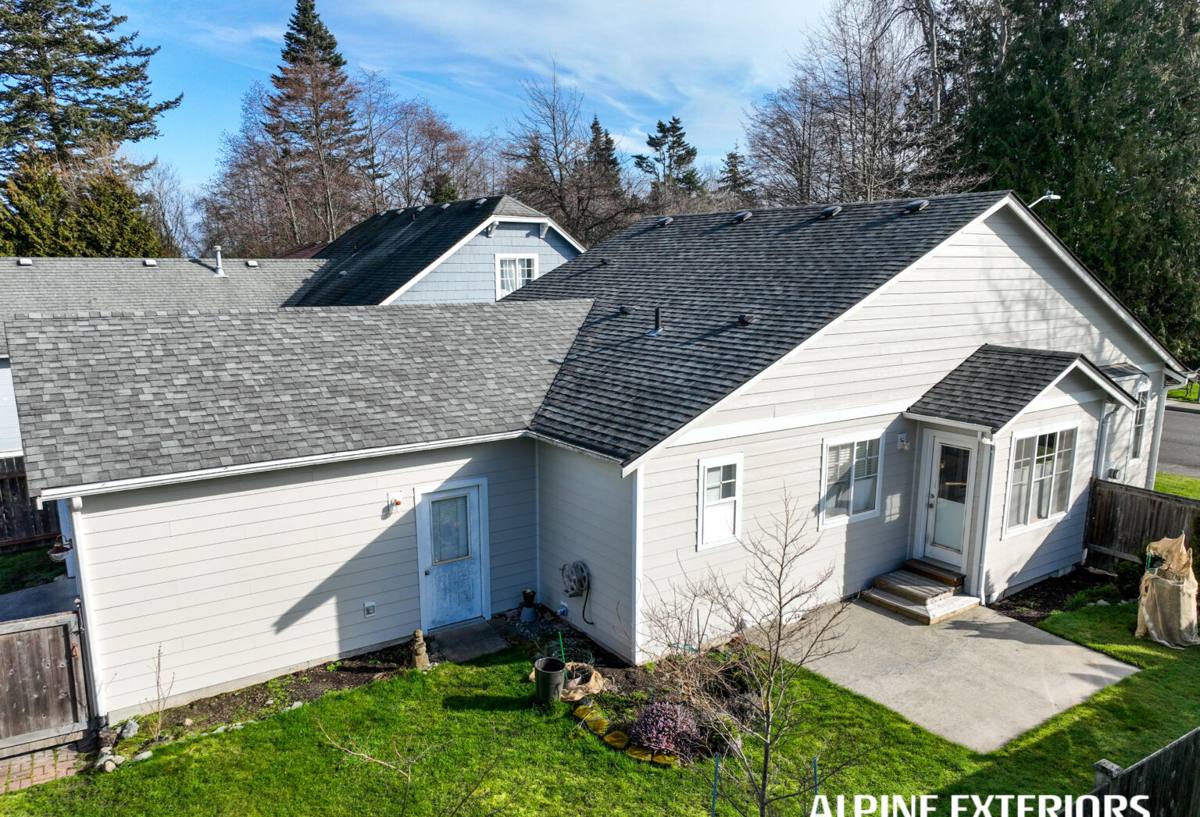
What Bellingham's Climate Actually Does to a House
Salt Air
Bellingham sits directly on the water, and prevailing weather pushes moist, mildly salt-laden air across the whole city, including inland neighborhoods like Barkley. Salt-bearing moisture accelerates corrosion on fasteners, flashing, and any metal trim that isn't properly rated, and it speeds up the breakdown of lower-grade paints and coatings on wood and composite siding.
Driving Rain
Whatcom County doesn't just get a lot of rain — it gets a lot of wind-driven rain, which behaves differently than a straight-down shower. Driving rain gets pushed sideways into seams, laps, and butt joints that would stay dry in calmer conditions. Siding systems that rely on caulk or paint film alone to keep water out tend to fail here faster than they would in a milder climate.
Moss and Sustained Moisture
Between tree cover, cloud cover, and long damp stretches from fall through spring, moss and algae growth is a fact of life on north-facing walls, shaded eaves, and roof surfaces throughout Bellingham. Moss holds moisture directly against a surface for extended periods, which is exactly the condition that rots wood trim, delaminates weaker composite products, and stains lighter-colored finishes.
None of this is unique to Barkley, but it's worth saying plainly: this is not a climate that rewards cutting corners on exterior materials or installation detail.
Why We Install Only James Hardie Fiber Cement
We used to install a broader range of siding products. We don't anymore, and it's not a marketing position — it's a standard we set after seeing which products actually held up in Whatcom County conditions over years, not just the first season.
James Hardie fiber cement is non-combustible, doesn't absorb water the way wood-based products do, and comes with a factory-applied ColorPlus finish baked on under controlled conditions rather than painted on-site or left to a homeowner to maintain. Hardie's HZ5 product line is specifically engineered for the kind of cold, wet, moisture-heavy climate Bellingham sits in. That's a meaningful distinction — not every fiber cement product on the market is formulated the same way for the same conditions.
We're not going to tell you every alternative is junk, because that's not honest and it's not our place. What we will say is why we stopped installing the common alternatives:
- Vinyl siding expands and contracts significantly with temperature swings, can warp or crack in impact, and its seams and J-channels give wind-driven rain more opportunities to work behind the surface over time.
- LP SmartSide is a wood-strand product with a factory treatment, but it's still an engineered wood product at its core — edge and cut-end sealing has to be perfect and stay perfect, which is a hard standard to guarantee over 20-plus years in a wet climate.
- Cemplank and Allura are also fiber cement, and they're reasonable products, but we've standardized on one system so our crews install it the same way, every time, with one warranty structure and one set of installation specs to master rather than splitting attention across several.
- Primed spruce or cedar look great initially but require an ongoing maintenance commitment — repainting, caulking, and monitoring for rot — that most homeowners underestimate until they're a few years in.
Our position is simple: in a climate that punishes maintenance gaps, we want to put a product on your house that performs even when a repaint gets pushed back a year, because it will.
How the Products Actually Compare
| Factor | James Hardie Fiber Cement | Vinyl | LP SmartSide | Cedar / Primed Wood |
|---|---|---|---|---|
| Moisture resistance | High — cement-based, doesn't rot | High for the panel, weak at seams | Moderate — depends on sealed edges | Low without diligent upkeep |
| Finish durability | Factory-baked ColorPlus, long fade resistance | Color molded in, can fade/chalk | Factory primer, needs field paint upkeep | Needs repainting every few years |
| Fire resistance | Non-combustible | Melts/deforms under heat | Combustible (wood-based) | Combustible |
| Typical lifespan (PNW) | 30+ years installed to spec | 15-25 years | 15-25 years with upkeep | 10-20 years with upkeep |
| Maintenance burden | Low — occasional wash | Low but seams degrade | Moderate — recaulk/repaint | High — regular repaint/reseal |
These are general ranges based on how these materials behave in the field, not manufacturer marketing numbers, and actual performance always depends heavily on installation quality — which is really the bigger variable in a climate like ours.
Installation Detail Matters More Than the Brand Name
Even the best-engineered siding fails early if it's hung wrong. In Bellingham's wind-driven rain, the details that separate a 10-year problem house from a 30-year problem-free house are things like:
- Correct rainscreen or drainage plane behind the siding so any moisture that gets past the surface can actually drain and dry out
- Proper flashing above windows, doors, and any horizontal trim, lapped correctly so water sheds outward instead of behind the wall
- Manufacturer-specified fastener patterns and clearances, especially at butt joints and corners
- Correctly sealed and painted cut ends on every board, not just the factory edges
- Adequate clearance between siding and grade, decks, and roof lines so moss and standing moisture don't sit directly against the material
This is the kind of work that's invisible once the job is done and the paint is on — which is exactly why it's worth asking a contractor to walk you through it before they start, not after.
Beyond Siding: The Rest of the Exterior in Barkley
Siding doesn't work in isolation. We also handle roofing, windows, and decks, because the same climate factors — moss, driving rain, and prolonged damp — hit those systems just as hard, and they all interact with each other. A roof that sheds water improperly onto a wall, or a deck ledger board that traps moisture against siding, undercuts even a well-installed siding job. When we look at a Barkley home, we're looking at how the whole exterior envelope works together, not just at the wall cladding in isolation.
Roofing
Moss growth on roofs is one of the more visible symptoms of this climate, and a roof that's holding moisture against the decking is often the first place a moisture problem starts before it ever reaches the walls.
Windows
Window flashing and integration with the siding plane is one of the most common failure points we find on older homes in this region — it's a detail that's easy to get wrong and expensive to fix after the fact.
Decks
Decks attached to the house create a direct path for water and debris to collect against siding and framing if the ledger and flashing details aren't handled correctly.
Why a Local Crew Matters in a Neighborhood Like Barkley
Barkley's mix of newer construction and older surrounding homes means a crew working here needs to recognize both what a modern building code expects and how older homes in this specific area were originally built and where they tend to develop problems. A contractor based outside Whatcom County, or one that treats Bellingham like any other Western Washington job site, is more likely to miss the climate-specific details — rainscreen gaps, flashing laps, fastener corrosion resistance — that matter more here than in drier inland regions. Being local also means we're back quickly if something needs a look after the job is done, and we're not guessing at how Bellingham's weather patterns behave over a full year — we're dealing with it ourselves.
What to Look For When Hiring for Exterior Work in This Area
- Manufacturer training or certification on the specific siding product being installed, not just general carpentry experience
- A written scope that specifies flashing, drainage plane, and fastener details — not just "install siding"
- Local references or job history in Whatcom County, not just the broader Puget Sound region
- A clear explanation of warranty coverage — both the manufacturer's product warranty and the contractor's labor warranty
- Willingness to explain why they use the materials they use, including honest trade-offs
Maintenance Expectations Once the Work Is Done
Even low-maintenance fiber cement siding benefits from periodic attention in a climate like this. A yearly rinse to knock off moss spores and grime, a visual check of caulking at trim and penetrations, and prompt attention to any impact damage will keep a properly installed Hardie system performing for decades. That's a much shorter maintenance list than what wood or wood-composite siding requires, and it's part of why we made the switch to a single product line we can stand behind fully.
If you're weighing a siding, roofing, window, or deck project on a home in Barkley, we're happy to take a look and give you a straightforward, no-pressure estimate — including an honest read on what your specific home actually needs versus what can wait.