 Bellingham Siding
 Why South Hill Roofs Wear Differently Than You'd Expect
South Hill sits up above much of central Bellingham, which means more direct exposure to weather moving in off Bellingham Bay and the Strait of Georgia. That elevation and exposure is a mixed bag for roofs. On one hand, better airflow across the roof deck can help shingles dry out faster after a storm. On the other hand, homes on South Hill's western and southern-facing slopes catch more wind-driven rain, and the tree cover on many older lots keeps other sections of the same roof shaded and damp for days at a time. We see roofs on this hill fail unevenly — one slope worn out and mossy, the other still holding up fine — more often than in flatter parts of Bellingham.
None of this is unique to any one street or subdivision. It's just how this part of Whatcom County behaves: salt-laden air off the water, long stretches of driving rain in fall and winter, and a moss season that can run eight months or more if a roof doesn't get sun or airflow. A new roof installed for South Hill needs to be built with that pattern in mind, not just installed to a generic spec sheet.
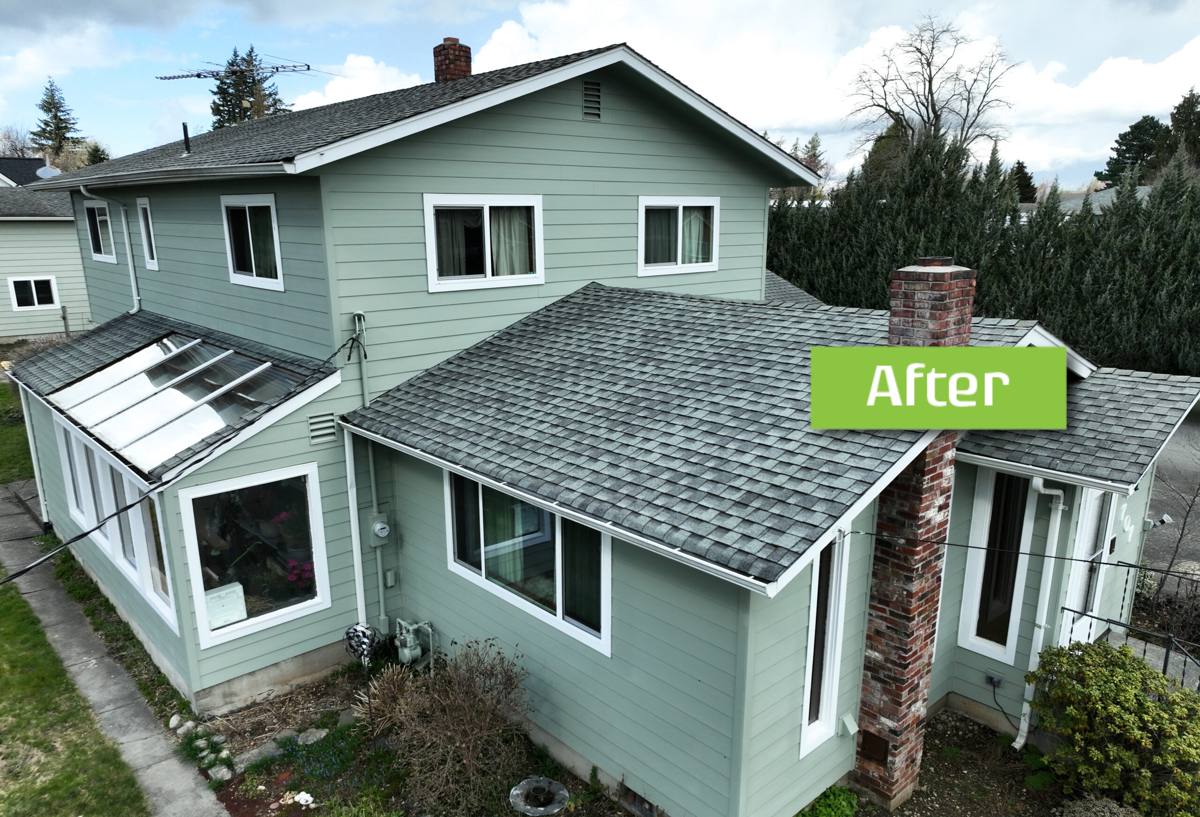
What "Correct" Looks Like for a Bellingham Roof
A new roof installation is more than laying shingles over the old deck. On a South Hill home, the details that actually determine how the roof performs over the next 20-30 years are mostly things you won't see once the job is done.
The Deck Underneath
Before anything new goes down, the existing roof deck needs to come off and get inspected — not just the visible layer, but the plywood or board sheathing underneath. Years of moss and trapped moisture can soften sheathing without any obvious sign from the attic side. Soft or delaminated sections get replaced before a single course of underlayment goes on. Skipping this step is the single most common shortcut that leads to early roof failure in this climate.
Underlayment and Ice/Water Protection
Synthetic underlayment across the full roof is standard now, but the areas that matter most in Whatcom County are the eaves, valleys, and any low-slope transitions — these get a self-adhering ice-and-water membrane, not just felt or synthetic underlayment alone. Wind-driven rain off the Strait doesn't fall straight down; it pushes sideways and up under shingle edges, so eave and valley protection is doing real work here, not just satisfying a code minimum.
Ventilation
A roof that can't breathe traps moisture underneath it, and trapped moisture is what accelerates moss growth, rot, and premature shingle failure from below. Balanced intake (soffit vents) and exhaust (ridge vent) matter as much as the shingle brand on top. On older South Hill homes that were re-roofed decades ago without updating ventilation, this is often the missing piece that explains why the last roof didn't make it to its rated lifespan.
Flashing
Chimneys, skylights, dormers, and wall-to-roof transitions fail at the flashing long before the field of the roof does. New flashing, properly stepped and counter-flashed rather than just caulked over old metal, is part of a correct installation — not an upsell.
Material Options for This Climate
Most South Hill homes are well served by a quality architectural asphalt shingle, but the right choice depends on the home's exposure, roof pitch, and how much moss and shade the property deals with.
| Material | Moss/Moisture Resistance | Typical Lifespan | Best Fit |
|---|---|---|---|
| Architectural asphalt shingle | Good, with proper ventilation and algae-resistant granules | 25-30 years | Most South Hill homes; best value |
| Synthetic/composite shingle | Very good; less porous surface | 30-40 years | Shaded or moss-prone lots, higher upfront cost |
| Standing seam metal | Excellent; sheds moisture and moss has little to grip | 40-50+ years | Steeper roofs, homeowners planning to stay long-term |
| Cedar shake | Requires regular maintenance in wet climates | 20-25 years with upkeep | Homes prioritizing traditional look, willing to maintain it |
We'll walk through algae-resistant shingle options specifically, since standard shingles without copper or zinc granules tend to develop dark streaking faster under Bellingham's damp, shaded conditions. It's a small spec difference that makes a visible difference in how the roof looks five years in.
How We Approach a South Hill Roof Replacement
1. On-Site Assessment
We look at the whole system, not just shingle condition — attic ventilation, signs of past moisture intrusion, valley and flashing condition, and how much shade and moss exposure the specific slopes of your roof deal with. Two roofs on the same block can need different answers.
2. Straightforward Written Estimate
You get a clear scope: tear-off, deck repair allowance if needed, underlayment and ice/water membrane plan, ventilation approach, flashing work, and material choice. No vague "we'll figure it out once we're up there" pricing on the core scope.
3. Tear-Off and Deck Inspection
Full tear-off to the deck, with any soft or damaged sheathing identified and replaced before we move forward. We won't cover over a compromised deck to save time.
4. Underlayment, Flashing, and Ventilation Installed First
The system that protects the home gets built before the shingles ever go down — ice-and-water membrane at eaves and valleys, synthetic underlayment across the field, new flashing at every penetration, and intake/exhaust ventilation balanced for the roof's size.
5. Shingle or Material Installation
Installed to manufacturer spec for nail pattern, exposure, and fastening — details that directly affect wind resistance, which matters on an exposed hill like this.
6. Final Walkthrough and Cleanup
Magnetic sweep for stray fasteners, full site cleanup, and a walkthrough so you understand what was done and why.
Signs a South Hill Roof Needs Replacing, Not Patching
- Granule loss heavy enough that you're finding grit in gutters every time it rains
- Moss established at the shingle edges or in valleys, not just surface staining
- Soft spots or noticeable give when walked on, especially near valleys or chimneys
- Daylight visible through the roof deck from inside the attic
- Shingles cupping, curling, or cracking across multiple slopes rather than one isolated area
- Repeated leaks in the same spot despite prior patch repairs
- Roof is 20+ years old and has never had ventilation upgraded
If a roof only shows one or two of these and is otherwise sound, a repair may genuinely be the right call — we'll tell you that rather than pushing a full replacement that isn't needed yet.
What Drives Cost on a Job Like This
Every roof is different, but a few factors consistently move the price on South Hill homes specifically:
- Deck condition — moisture-damaged sheathing found during tear-off adds material and labor to replace
- Roof pitch and access — steeper slopes and homes with limited driveway or yard access take longer and require more safety setup
- Number of penetrations — chimneys, skylights, and multiple roof planes each add flashing work
- Ventilation upgrades — adding soffit or ridge venting where none existed is worth the cost but adds to the scope
- Material choice — architectural asphalt, synthetic, and metal carry different material and labor costs
We'd rather walk your specific roof and give you real numbers than quote a broad range that doesn't mean much for your house.
Timing a Roof Replacement Around Whatcom County Weather
Late spring through early fall is the ideal window for roofing in this area — drier stretches make tear-off and installation faster and reduce the risk of exposed decking taking on moisture mid-project. That said, roofs don't always wait for good weather to fail, and roofing work can be done responsibly outside that window with proper weather protection and sequencing. If your roof is showing failure signs now, it's worth getting assessed regardless of season rather than waiting and risking interior damage.
Why Local Experience on This Specific Hill Matters
South Hill's mix of elevation, tree cover, and exposure to weather off the bay means the right roofing approach here isn't identical to a job in a flatter, more sheltered part of Bellingham. A crew that already works this neighborhood knows which slopes tend to hold moss, which older homes are likely to have outdated or missing ventilation, and how wind-driven rain off the Strait actually behaves against a roof edge — not from a manual, but from having been up on these roofs before. That local pattern recognition shows up in fewer surprises during tear-off and a roof that's built for how this specific hill actually gets weathered.
If your roof is due for replacement or you're not sure whether it needs a repair or a full install, we're happy to take a look and walk you through what we find. Reach out for a free, no-pressure estimate using the form below.