 Bellingham Siding
 Siding in Birchwood: What Bellingham's Weather Does to a House
Birchwood is a settled, tree-shaded residential neighborhood in Bellingham, and that shade is both its charm and its problem. Mature conifers and deciduous trees keep yards cool in summer, but they also keep siding wet longer than homes out in the open. Add Whatcom County's marine climate — salt-tinged air drifting in off Bellingham Bay, long stretches of driving rain from October through May, and a moss season that can run most of the year on north-facing walls — and you have a recipe that punishes the wrong exterior material. We've worked on homes throughout Bellingham long enough to know which products hold up here and which ones quietly fail behind a coat of paint.
None of this means Birchwood is a bad place to own a home. It means the exterior envelope has to be chosen and installed with this specific climate in mind, not a generic national spec sheet. That's the whole reason we standardized on one siding product instead of offering a menu of options.
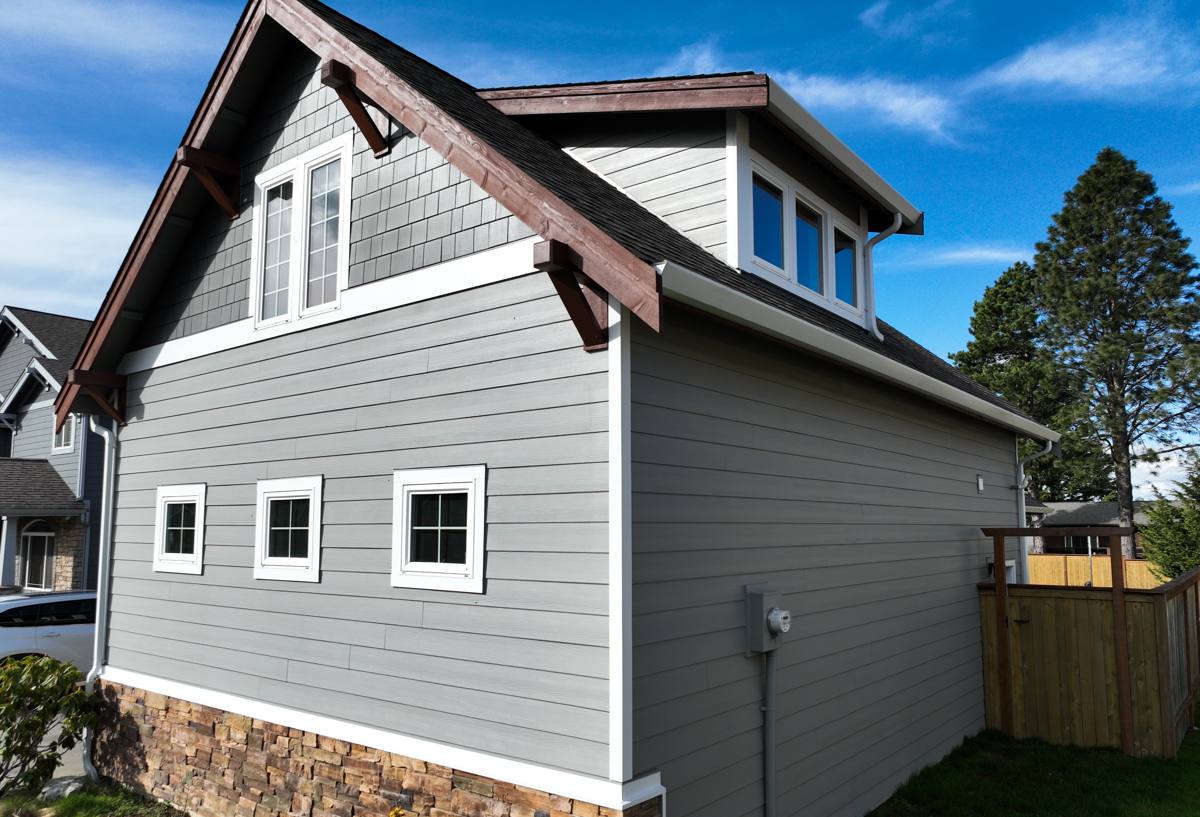
Why Shade and Moisture Matter More Than Most Homeowners Realize
A wall that dries out fast after a storm is a wall that lasts. A wall that stays damp for days — because it's tucked under tree cover, faces north, or sits close to a fence line — is a wall where moisture has time to do damage, whether that's paint failure, substrate swelling, or moss and algae taking hold. Birchwood's tree canopy is lovely, but it means many homes here have at least one elevation that rarely sees direct sun. That's the wall to watch.
What This Looks Like on a Real House
- Persistent green or black streaking on north- and west-facing siding, especially near roof lines and downspouts
- Paint that fails years earlier on the shaded side of the house than on the sunny side
- Soft or swollen spots near the bottom courses of siding, where splash-back from landscaping keeps material wet
- Caulk joints that crack and open up faster than expected, letting water behind the cladding
Any of these are worth a look before they turn into a bigger repair. They're also exactly the failure modes we design around when we plan a siding install.
Why We Install Only James Hardie Fiber Cement
We get asked why we don't offer vinyl, LP SmartSide, or other fiber cement brands like Cemplank or Allura. The honest answer is that after years of exterior work in this climate, we decided to standardize on one product we trust completely rather than sell whatever a homeowner asks for.
The Case Against the Alternatives, Fairly Stated
Vinyl siding is inexpensive and easy to install, and for a lot of the country it's a reasonable choice. In a wet, shaded, moss-prone climate like Whatcom County's, though, vinyl's weaknesses show up faster: it can warp or buckle with temperature swings, its seams and panels give moisture places to collect, and it doesn't hold paint if a homeowner ever wants to change the color. It's also thin enough that impact damage is common.
LP SmartSide is engineered wood — strand board treated and coated to resist moisture. It performs well when installed and maintained exactly to spec, but it's still wood at its core, and wood-based siding is unforgiving of caulking gaps, unpainted cut edges, or the kind of prolonged dampness Birchwood's shaded lots deliver. We've seen too many of these installs age poorly in this specific climate to put our name behind them.
Other fiber cement brands, like Cemplank or Allura, are chemically similar to James Hardie. Where they tend to fall short is factory finish quality and the depth of the warranty behind them. That difference matters most exactly where we're working — in a climate that stresses the finish year-round.
What James Hardie Gets Right
James Hardie fiber cement is non-combustible, dimensionally stable, and manufactured with regional climate in mind — their HZ5 product line is engineered specifically for wet, freeze-prone Pacific Northwest conditions. The ColorPlus factory finish is baked on under controlled conditions, which holds color and resists fading, chipping, and cracking far better than field-applied paint. It carries a strong transferable warranty when installed by a certified crew, which matters if you ever sell the house. None of this makes it magic — it still has to be installed correctly, with the right flashing, gapping, and fastening — but it gives us a product we can stand behind on every home we touch in Bellingham.
How the Siding Process Works for a Birchwood Home
- On-site assessment. We walk the property, check for moisture damage, rot, or ventilation issues behind the existing siding, and note which elevations get the least sun.
- Tear-off and inspection. Once old siding is off, we inspect the sheathing and house wrap. Any soft or damaged wood gets addressed before new siding goes up — covering a problem is not an option.
- Weather barrier and flashing. Correct house wrap, window and door flashing, and rainscreen detailing where appropriate are what actually keep water out — the siding itself is the last line of defense, not the first.
- Hardie installation to manufacturer spec. Proper fastener spacing, gapping at joints, and caulking at penetrations. This is where a lot of installation problems on other jobs originate, and it's where we spend the most care.
- Final walk-through. We go over the finished work with the homeowner and answer questions about care and warranty registration.
Siding, Roofing, Windows, and Decks — Why One Crew Matters
A house is one system, not four separate products. Siding that's installed without regard for roof flashing, or windows that aren't properly integrated with the water barrier, create the exact gaps that let moisture in behind the wall. Because we handle siding, roofing, windows, and decks, we can look at a Birchwood home as a whole envelope and catch conflicts — a roof-to-wall transition that needs re-flashing, a window that should be replaced rather than resided around, a deck ledger board that's driving water into the wall behind it — instead of quoting siding in isolation and hoping someone else catches the rest.
Comparing Your Options
| Material | Moisture Resistance in Wet, Shaded Climates | Finish Longevity | Maintenance |
|---|---|---|---|
| Vinyl | Fair — seams and panel gaps can trap moisture | Color fades over time; not paintable without special primer | Low, but prone to warping and cracking |
| LP SmartSide (engineered wood) | Good if maintained perfectly; vulnerable at cut edges and gaps | Depends on paint/coating upkeep | Moderate to high — needs monitoring for moisture intrusion |
| Other fiber cement (Cemplank, Allura) | Good — similar base material to Hardie | Factory finish quality and warranty terms vary by brand | Low |
| James Hardie fiber cement | Excellent — engineered for PNW conditions (HZ5 line) | ColorPlus factory finish holds up for years with minimal fading | Low — occasional wash-down |
Living With Fiber Cement Siding in Whatcom County
Once James Hardie siding is installed correctly, upkeep in Birchwood is straightforward. An annual rinse-down — especially on shaded, moss-prone elevations — keeps the ColorPlus finish looking new and prevents organic growth from getting a foothold. It's worth walking the exterior once a year to check caulk joints at trim and window edges, since caulk is a maintenance item regardless of what siding sits behind it. Beyond that, this is a low-maintenance product by design, which matters in a climate that doesn't give a house much of a break between rainy seasons.
A Simple Seasonal Checklist
- Rinse siding annually, paying extra attention to shaded and north-facing walls
- Trim back vegetation and tree limbs that keep siding damp or block airflow
- Check and refresh caulking at trim, window, and door edges every year or two
- Keep gutters and downspouts clear so water isn't running down the wall face
- Look for any soft spots, staining, or lifted caulk after major storms
Why a Local Crew Makes a Real Difference
A contractor based in and around Bellingham deals with these exact conditions on every job — the same rain patterns, the same shaded lots, the same moss pressure that Birchwood homes face. That's different from a crew that installs siding the same way regardless of region. Knowing which Whatcom County neighborhoods have more shade cover, which elevations tend to hold moisture, and how James Hardie's HZ5 product performs locally isn't something you get from a spec sheet — it comes from doing the work here, repeatedly, and paying attention to how houses actually age.
If your Birchwood home's siding is showing its age — moss buildup, paint failure, soft spots, or just a color you're tired of — we're happy to take a look and give you a straightforward, no-pressure estimate for James Hardie siding, along with an honest read on your roof, windows, and any deck areas that could use attention while we're there.