 Bellingham Siding
 Puget's Exterior Challenge: Water, Salt, and Shade
Homes in and around the Puget area of Bellingham sit close enough to the Puget Sound and Bellingham Bay to catch the salt-tinged air that rolls in off the water, and far enough into the Pacific Northwest weather pattern to get months of steady, driving rain every year. Add in the mature tree canopy that shades so many Whatcom County properties, and you've got a recipe for exterior siding that never fully dries out between storms. That combination — moisture, salt, and shade — is exactly what wears out the wrong siding material fastest, and it's exactly why we only install one type of siding on homes in this area.
None of this is exotic weather. It's just persistent. Bellingham doesn't get the extreme freeze-thaw cycles of the Midwest or the wildfire-driven heat of eastern Washington, but it makes up for it with sheer duration — rain that sets in for days, humidity that doesn't fully lift, and a growing season for moss and algae that's longer than almost anywhere else in the state. Siding here isn't tested by one bad storm. It's tested by thousands of hours of dampness, year after year.
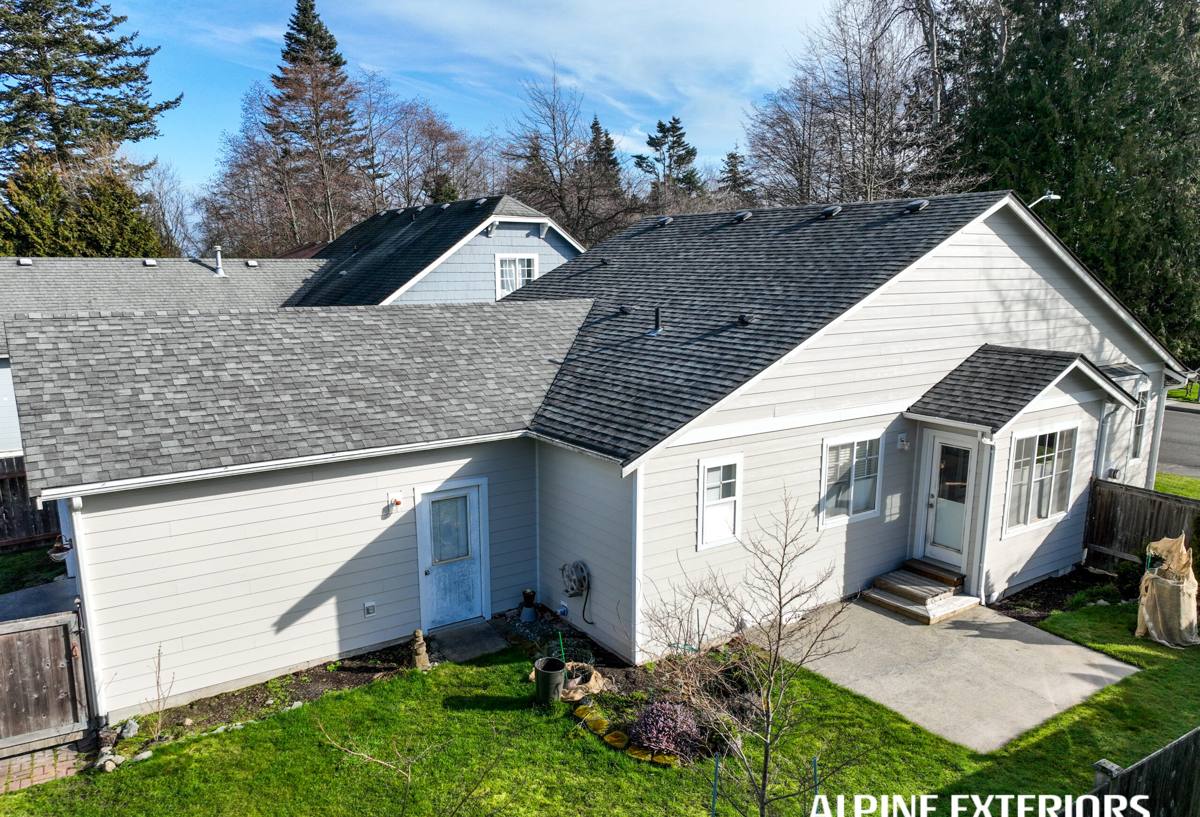
What Puget Homes Actually Face
Salt Air and Coastal Moisture
Properties closer to the water pick up airborne salt that settles on exterior surfaces. Over time, that salt film holds moisture against the siding longer than plain rain would on its own, accelerating whatever breakdown process a material is already prone to. It's a slow, cumulative effect — not something you notice in year one, but something that shows up clearly by year ten or fifteen on a material that wasn't built to handle it.
Driving Rain and Wind-Driven Moisture
Whatcom County storms frequently come with enough wind to push rain sideways into wall assemblies, not just straight down onto rooflines. That means siding seams, butt joints, and any exposed edges take on water that a purely vertical rain would never reach. Products that rely on a tight factory seal or a paint film to keep water out are more exposed here than they'd be in a drier climate.
Moss, Algae, and Shade
Wherever tree cover keeps a wall shaded for most of the day, moss and algae get a head start. They hold moisture directly against the siding surface and, on organic materials, that trapped moisture eventually invites rot. On painted surfaces, moss and mildew growth also degrades the finish faster than direct sun exposure would.
Why We Only Install James Hardie Fiber Cement
We get asked fairly often why we don't offer vinyl, LP SmartSide, or a lower-cost fiber cement alternative alongside Hardie. The honest answer is that we tried, for years, to be a "we install whatever you want" siding company, and we kept ending up back at the same houses a decade later dealing with the same set of problems: swollen edges, failed caulk joints, moss-driven rot, and paint that couldn't hold up to this climate. So we made a call — we stopped installing anything but James Hardie fiber cement, and we tell every homeowner exactly why.
What Hardie Gets Right for This Climate
- Non-combustible core. Fiber cement doesn't feed a fire the way wood-based products can, which matters for insurance conversations as much as safety.
- Engineered for moisture, not just painted against it. Hardie's HZ5 product line is formulated specifically for the wetter, harsher climate zones on the West Coast, including western Washington.
- Factory-applied ColorPlus finish. The color and protective coating are baked on at the factory under controlled conditions, not brushed on a jobsite where weather and technique both vary.
- Dimensionally stable. Fiber cement doesn't swell and shrink with moisture the way engineered wood products can, which keeps seams and paint lines tighter for longer.
- Backed by a strong transferable warranty that reflects the manufacturer's confidence in the product's real-world performance, not just its lab performance.
None of this means other products are junk. Vinyl siding is inexpensive and low-maintenance in the right setting. Engineered wood siding can look great and install quickly. But in a climate that stays wet for months at a stretch, with salt air in the mix and moss pressure from tree cover, we've found the trade-offs on those products stack up against the homeowner over time — and we'd rather not put something on your house that we already know we'll be asked to explain problems with in ten years.
How Our Siding Process Works
Assessment and Inspection
We start by walking the exterior with you, looking at exposure direction, tree cover, existing moisture damage, and the condition of the water-resistive barrier underneath the current siding if it's being replaced. On homes near Puget, we pay particular attention to north- and west-facing walls, which tend to hold the most moisture and see the most moss growth.
Prep and Moisture Barrier
Correct installation starts before a single piece of siding goes up. That means confirming flashing at windows, doors, and any wall penetrations, and making sure the water-resistive barrier is continuous and properly lapped. Fiber cement siding installed over a compromised moisture barrier will still eventually cause problems — the material is only as good as what's behind it.
Installation to Manufacturer Spec
James Hardie publishes specific installation requirements — fastener spacing, clearances from grade and roofing, gaps at butt joints, caulking practices — and performance issues with fiber cement siding usually trace back to a shortcut somewhere in that list, not a flaw in the product itself. We install to spec, every time, because that's what makes the warranty mean something and what actually keeps water out.
Final Walkthrough
Once installation is complete, we walk the exterior with you again to review the work, confirm caulking and trim details, and answer any questions about care going forward.
Comparing Siding Options for This Climate
| Material | Moisture Behavior in Wet Climates | Maintenance | Typical Lifespan Here |
|---|---|---|---|
| James Hardie Fiber Cement | Engineered for wet coastal climates; dimensionally stable | Occasional wash; repaint on the homeowner's schedule, not out of necessity | Multiple decades with correct install |
| Vinyl Siding | Doesn't rot, but can warp under heat and gap at seams over time | Low; limited repair options if damaged | Variable; UV and impact-sensitive |
| Engineered Wood (LP SmartSide) | Vulnerable at cut edges and seams if moisture gets in | Requires diligent caulk and paint upkeep | Shorter if moisture management lapses |
| Cedar / Primed Spruce | Organic material; moss and rot risk in shaded, damp areas | High; regular refinishing needed | Shortest without consistent upkeep |
Beyond Siding: The Full Exterior Picture
Siding doesn't work in isolation. A roof that's shedding water improperly, gutters that overflow onto wall sections, or windows with failed flashing will undermine even correctly installed fiber cement siding. Because we handle roofing, windows, decks, and siding, we look at the exterior as one connected system rather than treating each trade as its own silo. If we're on-site for a siding estimate and notice a roofing or flashing issue that's going to compromise the new siding, we'll tell you before we start, not after.
Deck Considerations in a Wet Climate
Decks in this part of Whatcom County face many of the same pressures as siding — sustained moisture, shade-driven algae growth, and the freeze-thaw cycles that do happen here even if they're mild. Proper spacing, drainage, and material choice matter as much on a deck as they do on a wall.
What to Ask Before Hiring an Exterior Contractor
Puget is a smaller community within a competitive regional market, and homeowners here are often choosing between a mix of local crews and larger companies that cover a wider swath of Whatcom County. A few questions tend to separate a contractor who'll do the job right from one who'll cut corners you won't see for years.
- Are they installing to the manufacturer's published spec, or just "however it's always been done"?
- Do they carry proper licensing and insurance for work in Washington State?
- Will they show you the moisture barrier and flashing details before siding goes up, or is it a black box?
- Do they stand behind the installation with their own workmanship warranty, separate from the manufacturer's material warranty?
- Can they explain why they use the materials they use, in plain language, without dodging the question?
Planning a Siding Project in Puget
Timing matters less than people think for fiber cement siding — it can be installed across most of the year in western Washington — but scheduling around the heaviest rain stretches makes for a smoother, cleaner job site. We'll work with you to find a window that fits your timeline and the weather.
If you're weighing a full re-side, a repair after storm damage, or just want an honest read on how your current siding is holding up against the moisture and moss pressure that's typical for this area, we're happy to take a look. Reach out for a free, no-pressure estimate — we'll walk the exterior with you and tell you straight what we see.