 Bellingham Siding
 Roof Replacement Built for Lynden's Weather
Lynden sits inland from Bellingham Bay, but that doesn't mean the roof over your head gets an easier ride than homes closer to the water. Whatcom County's weather systems move in off the Pacific and Georgia Strait carrying moisture-heavy air, and by the time they reach Lynden they're still dropping driving rain sideways against roof planes, valleys, and flashing details for months at a time. Add a long, wet moss season that runs from fall through spring, and you've got a roof that's under near-constant low-grade attack even when nothing dramatic is happening.
A roof replacement done right in this area isn't just about swapping old shingles for new ones. It's about building a roof system that sheds water fast, resists moss colonization, and holds up to repeated wet-dry cycling without the small failures — a lifted shingle tab, a gap in flashing, an under-ventilated attic — that turn into big problems two or three winters down the road.
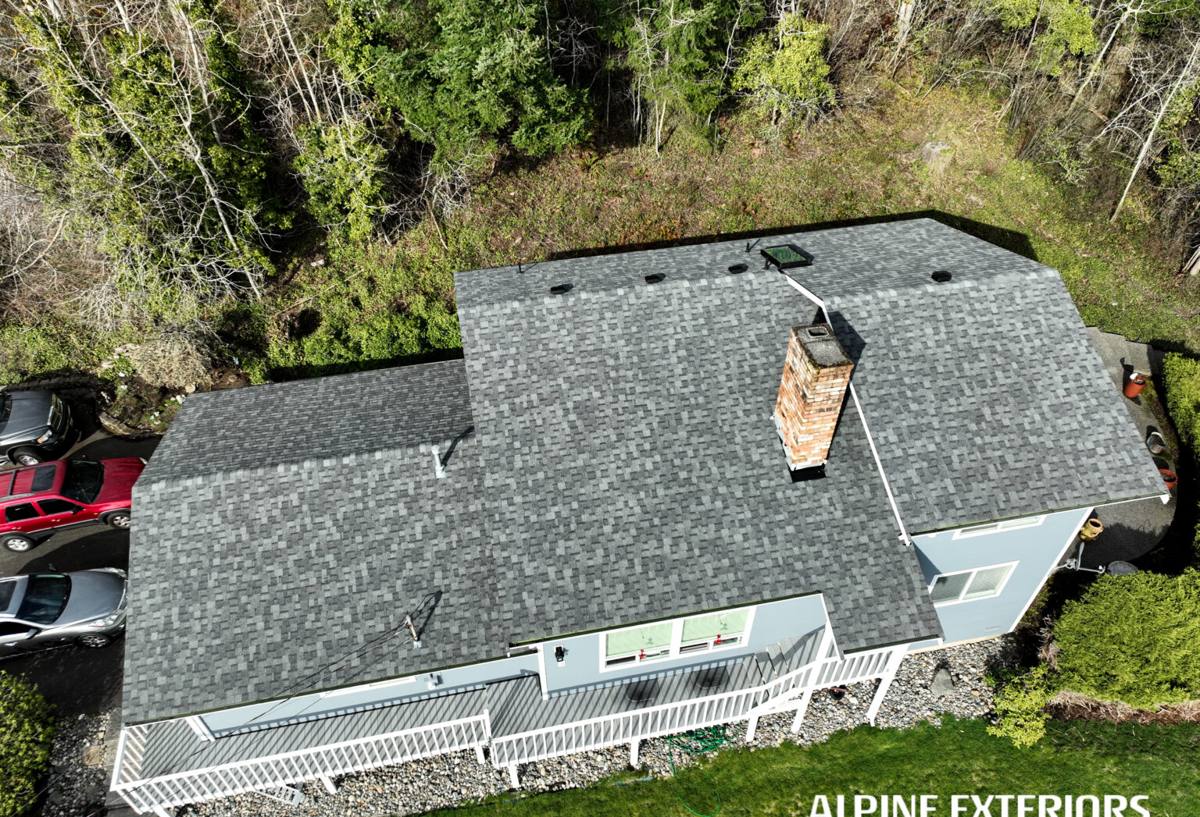
Signs Your Lynden Roof Needs Replacing, Not Just Repairing
Not every roof problem calls for full replacement, and we'll tell you honestly when a repair is the smarter move. But there's a point where patching stops making sense — where the labor and material cost of chasing individual leaks exceeds what a new roof system would run, or where the underlying issues are spread across the whole roof rather than isolated to one spot.
- Shingles that are cupping, curling, or losing granules across large sections rather than one localized area
- Moss or algae growth that keeps returning within a season or two of cleaning, especially on north-facing slopes
- Daylight visible through the roof deck from inside the attic, or soft spots when walked
- Repeated leaks in different locations rather than one recurring spot
- A roof approaching or past the manufacturer's rated lifespan, especially if the original installation quality is unknown
- Visible sagging along the ridge or roof plane, which can point to deck or structural issues
If you're only seeing one or two of these and the roof is otherwise sound, a targeted repair may buy you several more years. We'll say so. If several of these are showing up together, that's usually the roof telling you it's done fighting the weather on its own.
Why This Matters More in a Wet, Mossy Climate
A minor deficiency that might sit quietly for a decade in a dry climate doesn't get that grace period here. A small gap in flashing or a slightly under-lapped shingle course becomes an entry point for the kind of driving rain Whatcom County sees regularly, and moss doesn't need much of a foothold — a little organic debris in a valley or behind a chimney is enough to start a colony that lifts shingles as it grows.
What a Correct Roof Replacement Involves
A roof replacement is only as good as what happens underneath the shingles. The visible layer gets the attention, but the components most homeowners never see are what actually determine whether the roof performs through twenty-plus wet seasons.
Tear-Off and Deck Inspection
We remove the existing roofing down to the deck rather than layering over it. That's the only way to actually see what's underneath — soft or rotted decking, prior water damage, or signs of past leaks that were never properly addressed. Any compromised decking gets replaced before anything new goes down. Roofing over a bad deck just hides the problem under a new layer of shingles.
Underlayment and Water Protection
Underlayment is the roof's backup line of defense, and in a climate with this much sustained rain, it's not a place to cut corners. Ice and water shield membrane at eaves, valleys, and around penetrations gives an extra layer of protection where water is most likely to back up or pool, on top of a full synthetic underlayment across the rest of the deck.
Ventilation
Attic ventilation gets overlooked constantly, but it directly affects how long a roof lasts. Poor airflow traps moisture in the attic, which accelerates deck rot from the inside and contributes to ice damming in cold snaps. A correct replacement includes checking that intake (soffit) and exhaust (ridge or roof vents) are balanced, not just present.
Flashing and Roof Details
Chimneys, skylights, vent pipes, and roof-to-wall transitions are where the large majority of roof leaks actually start — not the open field of shingles. New flashing, properly stepped and integrated with the underlayment (not just caulked over old metal), is standard on every replacement we do.
Material Installation
Shingles or panels get installed to manufacturer spec — correct nailing pattern, exposure, and starter course — because that's what keeps a warranty valid and what actually holds up to wind-driven rain instead of just looking finished from the ground.
Material Options for Whatcom County Homes
There's no single "best" roofing material — the right choice depends on your budget, roof pitch, how long you plan to stay in the home, and how much long-term maintenance you're willing to do. Here's how the common options stack up for this climate specifically.
| Material | Moss/Moisture Resistance | Typical Lifespan | Maintenance Needs |
|---|---|---|---|
| Architectural asphalt shingle | Good, especially with algae-resistant granules | 25–30 years | Periodic moss removal, gutter clearing |
| Standing seam metal | Excellent — sheds moss and moisture fastest | 40–50+ years | Low; occasional fastener/sealant checks |
| Cedar shake | Poor without diligent upkeep | 20–25 years with maintenance | High — regular treatment and moss control required |
| Synthetic/composite shingle | Good to very good | 30–50 years | Low to moderate |
For most Lynden homeowners, the choice comes down to architectural asphalt versus metal. Asphalt remains the most cost-effective option with solid performance when installed correctly with algae-resistant shingles. Metal costs more upfront but sheds moss and water more aggressively and needs less attention over its lifespan — worth considering if you're planning to stay in the home long-term. We're happy to walk through the honest trade-offs for your specific roof rather than push one product across the board.
Our Process, Start to Finish
- On-site inspection — we walk the roof (weather permitting) and check the attic, not just look from the ground, to give you an accurate assessment rather than a guess.
- Written estimate — clear scope, materials, and pricing before any work begins, no surprise add-ons.
- Scheduling around weather — tear-off and dry-in work is scheduled with an eye on the forecast so your home isn't exposed longer than necessary.
- Tear-off, deck repair, and dry-in — old roofing removed, deck issues addressed, underlayment installed the same day where possible.
- Installation — shingles or panels installed to manufacturer spec, with flashing and ventilation handled as part of the job, not an afterthought.
- Final walkthrough and cleanup — magnetic sweep for debris, gutters checked, and a walk-through with you before we consider the job done.
Living With a New Roof: Moss and Maintenance
A new roof reduces moss risk significantly, but it doesn't eliminate the conditions that cause moss in the first place — shade, moisture, and organic debris. A little routine attention keeps the new investment performing the way it should for its full rated lifespan.
- Clear leaves and needles from valleys and behind chimneys before fall rains set in
- Keep gutters clean so water isn't backing up under the eaves
- Trim overhanging branches to cut down on shade and debris buildup on north-facing slopes
- Have moss growth removed promptly rather than letting it establish — early growth is far easier to deal with than an established colony
- Schedule a roof check every couple of years, especially after major storms
What Affects the Cost
Every roof is different, and we won't quote a number without seeing yours, but these are the main variables that move the price up or down.
| Factor | Why It Matters |
|---|---|
| Roof size and complexity | More valleys, dormers, and penetrations mean more labor and flashing detail |
| Pitch and access | Steep or hard-to-access roofs require more safety setup and time |
| Deck condition | Rotted or damaged decking found during tear-off adds material and labor |
| Material choice | Asphalt, metal, and composite options carry different material and install costs |
| Layers to remove | Multiple existing layers add disposal and tear-off time |
We'll break all of this down in plain terms during your estimate so you know exactly what you're paying for and why.
Why Hire a Crew That Already Works Lynden
Whatcom County's weather isn't theoretical to us — it's what we plan every roof around. A crew that only occasionally works this far north can underestimate how much attention flashing, ventilation, and moss-resistant materials need in a climate with this much sustained wet weather. We work in Lynden and the surrounding Bellingham area regularly enough to know what actually holds up here versus what looks fine on paper in a drier region's spec sheet.
That local familiarity also means straight answers: when a repair will genuinely hold, we'll say so instead of pushing a full replacement. When a full replacement is the honest recommendation, we'll explain exactly why in terms you can verify for yourself.
If your roof is showing wear, or you just want an honest read on where it stands, we're glad to come take a look. The estimate is free, there's no pressure attached to it, and you'll walk away with a clear, written picture of your options either way.