 Bellingham Siding
 Deck Replacement in Barkley: Built for How Bellingham Weather Actually Behaves
Barkley homeowners tend to reach out about deck replacement for one of two reasons: the deck has started to feel soft or spongy underfoot, or a routine look underneath revealed rot, rust, or a ledger board that's pulling away from the house. Either way, by the time a deck is visibly failing, the damage usually started years earlier — hidden under the decking, behind flashing that was never installed correctly, or inside a post base that's been sitting in standing water since the day it was built. In Bellingham and the rest of Whatcom County, that slow failure timeline is shorter than in drier climates, because the deck almost never gets a real chance to dry out between rain events.
This page covers what deck replacement actually involves for a Barkley property, what "correct" looks like structurally and materially, and how our process works from first look to final walkthrough.
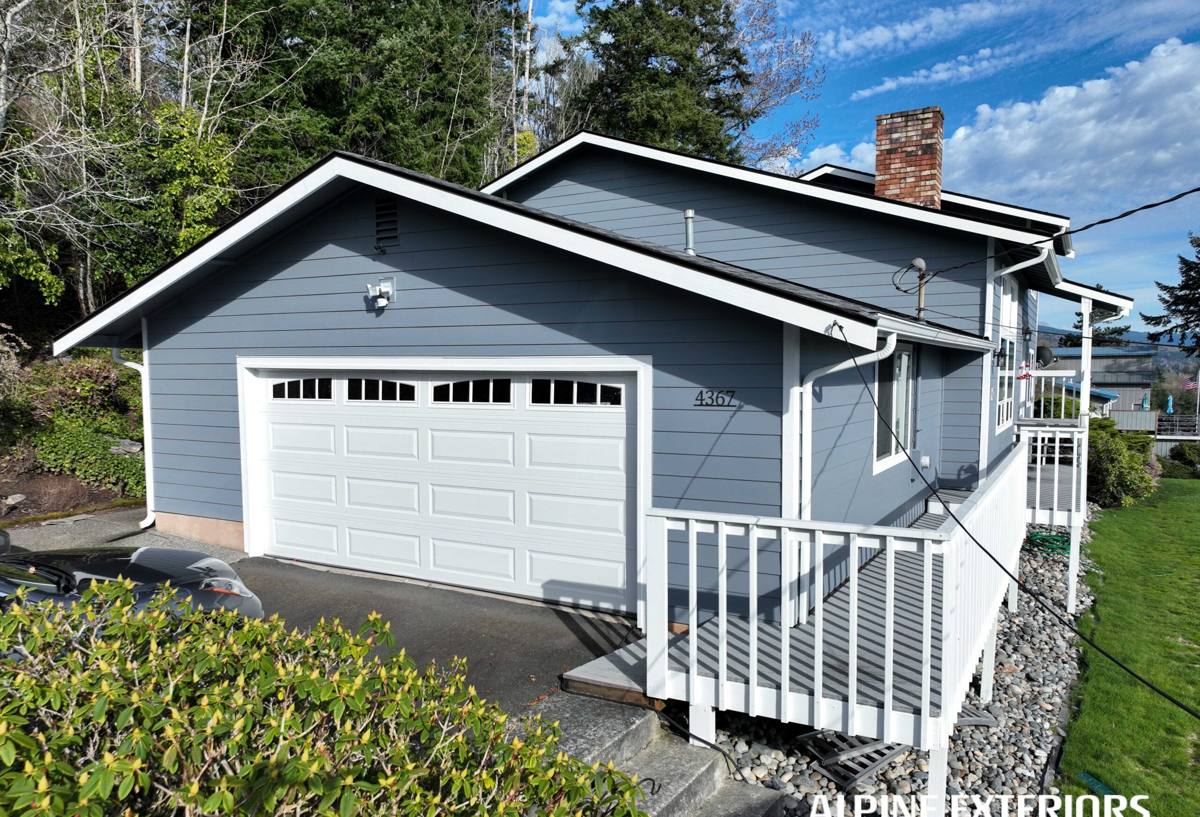
Why Barkley Decks Fail Faster Than the Warranty Card Suggests
Every deck material sold today comes with a warranty that assumes reasonably normal exposure. Bellingham's climate isn't reasonably normal exposure — it's one of the more demanding environments a deck will see in the continental US, for a few specific reasons:
- Long moss season: Shaded and north-facing decks in Barkley can stay damp for months at a stretch, and moss holds moisture directly against wood and fastener heads far longer than open rain exposure alone.
- Driving rain: Wind-driven rain doesn't just fall on a deck surface — it gets pushed sideways into ledger connections, stair stringers, and any gap where flashing was skipped or installed backwards.
- Salt-influenced air: Proximity to Bellingham Bay means fasteners, brackets, and any exposed metal hardware corrode faster than they would inland, especially if the original build used standard (non-coated) hardware instead of hardware rated for treated lumber and coastal exposure.
- Freeze-thaw cycling: Whatcom County gets enough cold snaps each winter that water trapped in wood grain or concrete footings expands and contracts repeatedly, which accelerates cracking and splitting that started as a small, ignorable issue.
None of this means decks can't last in Barkley — it means they need to be built with this climate in mind from the framing up, not just finished with a nice-looking surface board.
What "Correct" Actually Means Underneath the Deck
Ledger Attachment and Flashing
The ledger board — where the deck attaches to the house — is the single most common source of hidden rot on decks in this region. If the original builder didn't install proper flashing (or used caulk as a substitute for flashing), water has been getting behind the ledger and into the house's rim joist for years, often without any visible sign from the deck surface. A correct replacement always includes new code-compliant flashing at this connection, not a reuse of whatever was there before.
Footings and Post Bases
Wood posts that sit directly on concrete or in soil hold moisture and rot from the bottom up. Post bases that hold the post above the concrete surface, combined with footings set below frost depth per Whatcom County code, keep water moving away from the wood instead of pooling against it.
Joist Framing and Hardware
Joist hangers, structural screws, and any exposed metal should be rated for both treated lumber (which is corrosive to untreated steel) and coastal humidity. Mixing in cheap, uncoated hardware to save a few dollars is one of the more common shortcuts we see on decks that are failing well before their expected lifespan.
Drainage Beneath the Deck
On low decks or decks with usable space underneath, water needs somewhere to go. Proper grading, gravel, or a drainage system underneath prevents the kind of standing moisture that turns a crawlspace-height deck into a permanent damp zone — which is exactly the environment moss and rot need to take hold.
Decking Material Comparison for Barkley Conditions
Material choice matters, but it matters less than correct framing underneath it. Still, homeowners consistently ask what holds up best in this specific climate, so here's an honest comparison:
| Material | Moisture Behavior in Bellingham Climate | Maintenance | Typical Lifespan Here |
|---|---|---|---|
| Pressure-treated wood | Absorbs and releases moisture readily; prone to cupping and splitting if not sealed regularly | Annual cleaning and re-sealing recommended | 10-15 years with upkeep |
| Cedar | Naturally rot-resistant but still needs sealing in a wet climate; shows weathering faster in shaded, mossy areas | Regular cleaning, periodic staining/sealing | 15-20 years with upkeep |
| Composite decking | Doesn't absorb water the way wood does, but still needs airflow underneath to prevent moss and mildew on the surface | Periodic washing to prevent surface growth; no sealing/staining needed | 25-30+ years |
| PVC decking | Fully moisture-resistant surface material; least susceptible to moss staining of the common options | Occasional washing | 25-30+ years |
We'll walk through these trade-offs honestly during your estimate — composite and PVC cost more upfront but remove most of the maintenance burden that wood decking carries in a climate this wet. There's no wrong answer, just a budget and maintenance-tolerance conversation.
Signs a Barkley Deck Needs Replacement, Not Repair
Not every deck problem means a full rebuild. But certain findings mean repair is a temporary patch on a structural problem that will resurface:
- Soft or spongy decking in multiple areas, not just one board
- Rot or discoloration at the ledger board where it meets the house
- Posts that have visible rot or crumbling at the base
- Rust streaking from joist hangers or fasteners
- Railings that flex or feel loose when pushed
- A deck that was never permitted or doesn't meet current guardrail/stair code
If the issue is isolated — one cracked board, one loose railing post — repair is often the right call, and we'll tell you that directly rather than pushing a full replacement you don't need.
Our Deck Replacement Process
1. On-Site Assessment
We look underneath the deck, not just at the surface — checking the ledger connection, post bases, joist condition, and any signs of moisture intrusion into the house itself. This is where most of the real information is.
2. Scope and Plan
We put together a clear scope covering demolition, framing, flashing, material selection, and any permit requirements. Whatcom County and City of Bellingham both have permitting requirements for deck work above certain heights or attached to the structure, and we handle that process rather than leaving it to you.
3. Demolition and Structural Inspection
Once the old decking and framing are removed, we get a full look at the rim joist and house connection — this is often when hidden damage from years of moisture intrusion becomes visible, and we'll flag anything that needs to be addressed before rebuilding.
4. Framing, Flashing, and Footings
New framing goes in to current code, with proper flashing at the ledger, corrosion-resistant hardware throughout, and footings set to handle Whatcom County's frost depth and drainage conditions.
5. Decking, Railing, and Finish
Surface material goes down per your material choice, with railings and stairs built to current code guardrail and baluster spacing requirements — not just matched to whatever the old deck had.
6. Final Walkthrough and Inspection
We walk the finished deck with you, and where permitting applies, we coordinate final inspection so you have a deck that's not just built well but documented as compliant.
Why a Crew That Already Works Barkley Matters
Deck problems in this neighborhood tend to rhyme — similar framing shortcuts from the same building era, similar moss patterns on similarly shaded lots, similar drainage challenges depending on where a property sits relative to slope and tree cover. A crew that's already worked on decks in Barkley isn't guessing at how Bellingham's rain and moss season will treat a given design; they've seen it play out on homes nearby. That translates into fewer surprises during demolition and a build that accounts for this specific climate from the start, instead of a generic deck design that happens to be sitting in the Pacific Northwest.
Local also means accountability. If a flashing detail needs a callback adjustment after the first real rain of the season, you're not waiting on a crew that has to drive in from out of the area.
What to Ask Before Hiring Anyone for Deck Replacement
- Will you pull the required permit, and is that included in the quote?
- What hardware and flashing will you use at the ledger board specifically?
- Will footings be set below frost depth per current code?
- What's the plan for drainage if the deck sits low to the ground?
- Do you carry liability insurance and can you provide proof?
- What does the warranty cover — labor, materials, or both — and for how long?
Any contractor who hesitates on these questions, especially the permit and ledger flashing ones, is worth a second look before you sign anything.
Cost Factors Worth Understanding Upfront
Every deck replacement quote is different, but the same variables drive most of the cost difference between projects:
| Factor | Why It Moves the Price |
|---|---|
| Deck size and height | More square footage and taller structures mean more material and more complex railing/stair requirements |
| Decking material choice | Composite and PVC cost more upfront than wood but reduce long-term maintenance spend |
| Structural condition found during demo | Rim joist rot or foundation issues discovered mid-project can add scope beyond the original estimate |
| Permit and code requirements | Guardrail height, baluster spacing, and footing depth requirements affect labor and materials |
| Access to the site | Decks with tight or sloped access take more time and labor to build safely |
We'll give you a written scope before work starts so there's no ambiguity about what's included, and we'll flag anything unexpected we find during demolition before proceeding, not after.
Get a Free, No-Pressure Estimate
If your Barkley deck is showing soft spots, visible rot, or you're just not sure whether it needs repair or full replacement, we're happy to take a look and give you an honest read on what you're working with. Use the form below to request a free estimate — no pressure, no obligation, just a clear picture of your options.