 Bellingham Siding
 Sehome's Roofing Challenge: Salt Air, Driving Rain, and a Long Moss Season
Sehome sits close enough to Bellingham Bay that salt-laden marine air is a daily fact of life for anything on a roof — fasteners, flashing, vents, and metal trim all corrode faster here than they would twenty miles inland. Add the wooded, hillside character of much of the neighborhood, with mature tree canopy shading large sections of roof for much of the day, and you get a second problem: those shaded, north-facing slopes rarely dry out fully between rain events. From October through April, that combination keeps roof surfaces damp for days or weeks at a stretch, which is exactly the environment moss and algae need to take hold.
None of this means Sehome homes need exotic roofing. It means the installation has to account for moisture that lingers longer than a manufacturer's spec sheet, written for a generic climate zone, ever anticipates. A roof that's correctly installed for Whatcom County conditions handles wind-driven rain off the Strait, sheds moss instead of holding it, and keeps salt air away from the fasteners and metal components that fail first.
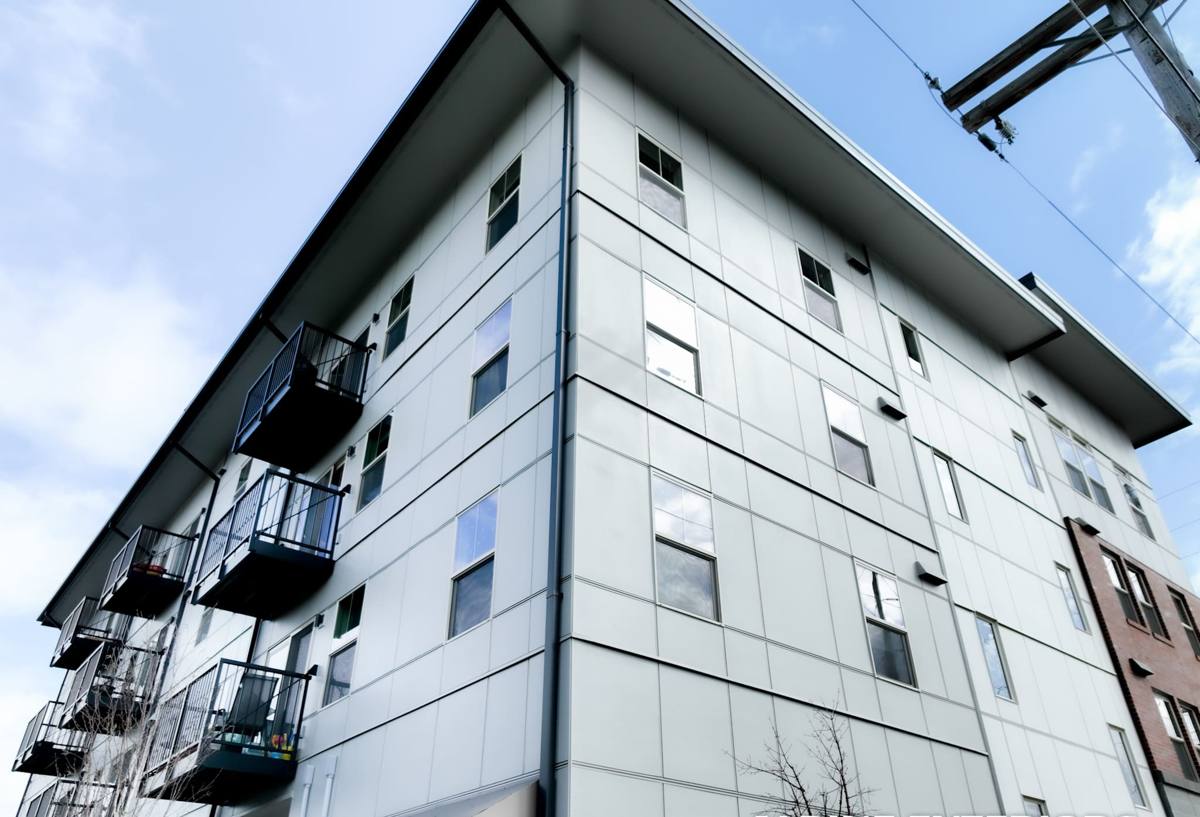
What a Correct New Roof Installation Actually Involves
A new roof is more than laying down shingles. Done right, it's a system, and every layer of that system matters more in a wet marine climate than in a dry one.
Tear-Off and Deck Inspection
We remove the old roofing down to the sheathing rather than layering over it. That's the only way to actually see the deck — soft spots, delaminated plywood, or rot around old penetrations don't show up until the old material is off, and covering them up just buries a problem under a new roof.
Underlayment and Ice-and-Water Shield
Synthetic underlayment goes down across the full deck, with self-adhering ice-and-water shield reinforcing the eaves, valleys, and any low-slope transitions where wind-driven rain is most likely to work its way backward under the shingles. In a climate that gets sustained rain rather than just showers, this layer is what keeps a small wind event from becoming a leak.
Flashing at Every Penetration
Chimneys, vent pipes, skylights, and any wall-to-roof intersection get new flashing, not a bead of caulk over the old flashing. Caulk is a maintenance item; correctly formed and layered flashing is a permanent detail.
Ventilation
Balanced intake and exhaust ventilation keeps the attic close to outdoor temperature and humidity, which reduces condensation on the underside of the deck and helps the roof surface dry out faster after rain — a real factor in how much moss gets a foothold.
Choosing the Right Roofing Material for Whatcom County Conditions
There isn't one "correct" material for every Sehome roof — pitch, tree cover, budget, and the look of the house all factor in. What matters is understanding the honest trade-offs of each option in a wet, shaded, salt-air climate.
| Material | Moss/Algae Resistance | Maintenance | Notes |
|---|---|---|---|
| Algae-resistant asphalt composition shingle | Good, with copper- or zinc-infused granules | Low | Most common choice; wide color range, straightforward warranty |
| Synthetic/composite shake or slate | Good | Low | Mimics traditional shake or slate look without the wood moisture issues |
| Standing seam metal | Very good — sheds moss and debris efficiently | Low to moderate | Higher upfront cost, long service life, performs well under tree cover |
| Cedar shake | Poor without diligent upkeep | High | Traditional appearance, but holds moisture and needs regular treatment in shaded, damp settings |
We'll walk through the honest trade-offs for your specific roof — pitch, sun exposure, and how much of the year it stays shaded — rather than pushing one product across every job.
The Roof-Wall Connection: Why It Matters That We Also Do Siding
Some of the worst hidden water damage on Pacific Northwest homes doesn't happen on the open roof field — it happens where a roof meets a wall. Dormers, additions, chimneys, and porch roofs all create a roof-to-wall transition, and if the kickout flashing and step flashing at that joint aren't built correctly, water gets diverted behind the siding instead of down and off the roof. It can travel unnoticed for years, rotting sheathing and framing before it ever shows up as a stain inside.
Because we install both roofing and siding, we treat that transition as one continuous drainage plane rather than two separate trades handing off a joint neither one fully owns. The flashing, the siding's water-resistive barrier, and the roof underlayment all need to overlap correctly, and understanding both sides of that connection is exactly the kind of detail that gets missed when a roofing-only crew ties into existing siding, or vice versa.
Building Moss and Algae Resistance Into the Install
You can't roof-proof a house against a Whatcom County winter, but you can install in a way that gives moss and algae far less to work with.
- Algae-resistant shingles with copper or zinc granules, where the material choice allows it
- Balanced attic ventilation to reduce underside moisture and speed surface drying
- Clean, correctly pitched valleys and properly sized gutters so water and debris don't sit
- Full tear-off rather than a recover, so trapped moisture under old layers isn't sealed in
- Attention to how nearby tree cover shades each roof plane, factored into material recommendation
We won't promise a roof that never grows a trace of moss under a shaded Sehome tree canopy — nobody honestly can. What we can build is a roof that sheds it faster and doesn't trap moisture underneath where it can't be seen.
Our New Roof Installation Process
- Inspection and assessment — we look at the deck, ventilation, flashing points, and any wall-to-roof transitions, not just the shingle surface
- Written estimate — scope, material options, and pricing laid out plainly before any work starts
- Material selection — honest comparison of options for your roof's pitch, exposure, and budget
- Permitting — we handle the paperwork required for the job
- Tear-off and deck repair — old roofing removed, sheathing inspected and replaced where needed
- Underlayment, ice-and-water shield, and flashing — installed to current best practice, not the minimum code allows
- Roofing installation — correct nailing pattern, exposure, and fastener spacing for the material and local wind exposure
- Ventilation and ridge detail — intake and exhaust balanced, ridge components sealed and finished
- Cleanup and walkthrough — site cleared, magnetic sweep for stray fasteners, and a walkthrough of what was done and what to expect from the warranty
Signs a Sehome Home Needs a New Roof, Not Another Patch
Repairs make sense when a roof is otherwise sound and the problem is isolated. A full replacement makes sense when the underlying material is past the point where patching solves anything for long. Watch for:
- Granule loss heavy enough that shingles look patchy or bare in spots
- Shingles curling, cupping, or cracking across multiple areas, not just one spot
- Daylight visible through the roof deck from inside the attic
- Moss or algae mats thick enough to hold water against the shingle surface
- Soft or spongy spots underfoot on the roof deck
- Staining on interior ceilings or walls that tracks back to a roof source
- A roof at or past 20–25 years old, especially one that's had repeated repairs
What Affects the Cost of a New Roof in Sehome
Every roof is priced on its own specifics rather than a flat per-square rate, but the same handful of factors drive most of the difference between jobs.
| Factor | Why It Matters |
|---|---|
| Roof size and pitch | More surface area and steeper pitches mean more material and labor time |
| Material choice | Standard asphalt, synthetic composite, and metal carry different material and installation costs |
| Number of existing layers | Tearing off multiple old layers adds disposal and labor time |
| Deck condition | Rotted or delaminated sheathing found during tear-off needs replacement before roofing goes on |
| Access and tree cover | Tight access or heavy overhead branches can slow staging and material handling |
| Ventilation and flashing upgrades | Bringing older ventilation or flashing up to current practice adds scope but reduces future risk |
Rather than quote a number without seeing the roof, we'll walk it, note what's driving the cost on your specific home, and put it all in writing so there's nothing to guess at later.
Why Hiring a Crew That Already Works in Sehome Matters
A roofing crew that's worked other homes in Sehome already knows the terrain — the hillside grades, the tree cover, the mix of older and newer construction, and how Bellingham Bay's marine air treats fasteners and flashing over time. That familiarity shows up in small ways: knowing which roof planes on a shaded lot need extra attention to moss, recognizing older sheathing patterns common to the neighborhood's housing stock, and understanding how local permitting works without adding delay to your project. It also means we're not a storm-chasing crew passing through — we're accountable locally, and we'll be here if a warranty question comes up years down the road.
If your Sehome roof is showing its age, or you just want an honest read on where it stands, we're glad to take a look. Fill out the form below for a free, no-pressure estimate — we'll walk the roof, tell you what we actually see, and lay out your options in plain terms.