 Bellingham Siding
 Why Barkley Roofs Wear Differently Than Roofs Inland
Barkley sits close enough to Bellingham Bay and Puget Sound that roofs here deal with a specific combination most inland Whatcom County homes don't: salt-laden air, wind-driven rain that gets pushed sideways under shingle edges and flashing, and long stretches of shade and dampness that turn into moss season almost every year. None of that means a roof is doomed — it just means a repair has to account for how those conditions actually damage a roof, not just patch what's visible on the surface.
A roof that looks fine from the ground can still have soft decking under a moss mat, a flashing seam that's been wicking water into the sheathing for two winters, or granule loss on the south and west slopes from repeated wet-dry cycling. Roof repair in this climate is as much about finding where water is actually getting in as it is about the shingle or seam that shows the damage.
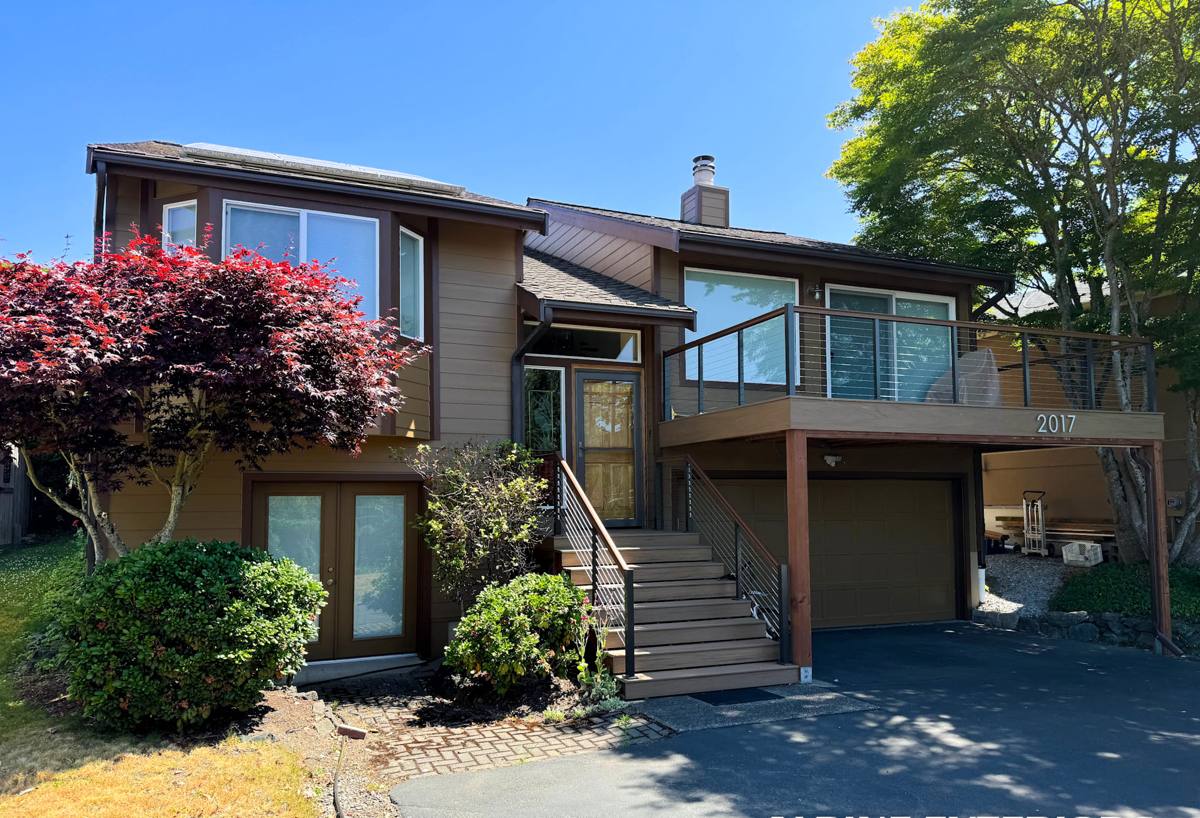
The Repair Issues We See Most Often in This Area
Moss and Organic Growth
Bellingham's long wet season and shaded lots give moss a real head start, especially on north-facing slopes and anywhere tree cover keeps a roof from drying out between rains. Moss doesn't just sit on top of shingles — it lifts the shingle tabs as it grows, holds water against the roofing material, and breaks down the mat underneath. Left alone through a few wet seasons, what starts as a cosmetic issue becomes a repair issue.
Flashing and Valley Failures
Flashing around chimneys, skylights, dormers, and roof-to-wall transitions is where most leaks actually start, not out in the open field of the roof. Driving rain off the water finds any gap in step flashing, counter-flashing, or valley metal and pushes water uphill under the shingles. This is the single most common repair call we get in this area, and it's usually fixable without a full roof replacement if it's caught before the sheathing underneath has rotted.
Gutter and Edge Damage
Clogged gutters back water up under the starter course and fascia, which is a slow, quiet way to rot the roof edge and the trim behind it. In a climate that gets steady rain for months at a stretch, a gutter problem doesn't stay a gutter problem for long.
Wind-Lifted or Cracked Shingles
Whatcom County doesn't see the hail or hurricane-force wind that drives repair work in other parts of the country, but steady coastal wind combined with age-brittled shingles will lift tabs and crack seals over time, especially on exposed roof planes.
What a Correct Roof Repair Actually Involves
A repair that holds up here isn't just swapping out the shingles that look bad. It means:
- Getting up on the roof to trace the leak or damage back to its actual source, not just the spot where water is showing up inside
- Checking the decking underneath damaged areas for soft spots or rot before covering anything back up
- Matching flashing details to how water actually moves on that section of roof, not just re-caulking a seam
- Using materials and fasteners rated for coastal exposure, not whatever is cheapest at the supply house
- Tying the repair into the surrounding roofing so it sheds water the same way the rest of the roof does, instead of creating a new weak point at the edge of the patch
Caulk and sealant have a place in roofing, but they're not a substitute for correct flashing and shingle work. A repair that relies mainly on sealant to keep water out is a repair that will need to be redone.
Our Roof Repair Process
1. Inspection and Diagnosis
We start on the roof, not from a photo or a guess based on the ceiling stain. We're looking at flashing, valleys, moss coverage, shingle condition, and — where accessible — the decking and ventilation, since attic moisture and roof damage are often connected.
2. A Straight Answer, in Writing
You get a clear explanation of what's actually wrong, what it will take to fix it, and a written estimate before any work starts. If the roof is closer to end-of-life than repair, we'll say so plainly instead of patching something that needs a bigger conversation.
3. The Repair Itself
We use materials matched to the existing roof where possible, and coastal-appropriate fasteners and underlayment where it matters. Work areas are protected and cleaned up — nails and debris don't get left in gutters or landscaping.
4. Follow-Through
We stand behind the workmanship on every repair. If something we fixed isn't performing the way it should, that's on us to make right.
Repair or Replace? How We Help You Decide
Not every roof problem calls for a full replacement, and not every roof is worth repairing indefinitely. The honest answer usually comes down to a few factors:
| Factor | Leans Toward Repair | Leans Toward Replacement |
|---|---|---|
| Age of roof | Under 15–20 years, depending on material | At or past manufacturer's expected service life |
| Extent of damage | Isolated to one section, flashing, or valley | Widespread granule loss, multiple failing areas |
| Decking condition | Solid, no soft spots found | Rot or soft decking found under damage |
| Moss/organic growth | Surface growth, no shingle degradation yet | Long-term growth has broken down the mat |
| Number of past repairs | First or second repair on this roof | Repeated patches in the same areas |
We'll walk you through where your roof falls on this before recommending either path — our goal is the option that makes sense for your roof and your budget, not the bigger invoice.
Materials That Hold Up in Bellingham's Climate
Material choice matters more here than in drier climates, because everything on the roof is dealing with sustained moisture exposure for a good part of the year.
- Shingles: we match existing composition shingles where possible for color and profile, and use algae-resistant shingles for replacement sections when the manufacturer offers them, given how quickly this area grows moss and moss-adjacent algae
- Flashing: we favor corrosion-resistant metal appropriate for coastal air over painted or lower-grade flashing that can fail faster this close to the Sound
- Underlayment: in vulnerable areas — eaves, valleys, around penetrations — we use self-adhering waterproof underlayment as a second line of defense, not just standard felt
- Fasteners: corrosion-resistant nails and screws, since standard fasteners can weaken faster in salt-influenced air
We don't push premium materials as an upsell on every job — plenty of straightforward repairs just need correct workmanship with standard materials. Where we do recommend an upgrade, it's because that specific spot on your roof is fighting more moisture or salt exposure than the rest of the house.
Preventive Maintenance Between Repairs
A repair holds up longer, and the next one costs less, when a roof gets basic upkeep between visits. In Whatcom County's climate, that mostly means staying ahead of moisture and organic growth:
- Clear gutters and downspouts at least twice a year, more often under conifers
- Remove moss buildup before it lifts shingle tabs, using methods that don't strip granules or damage the roofing surface
- Trim back branches that keep sections of the roof shaded and slow to dry
- Check attic ventilation — poor airflow traps moisture that shortens roof life from underneath
- Have flashing and valleys checked after any major windstorm, since that's where wind-driven rain finds its way in first
- Address small leaks early — a stain the size of a dinner plate is a much smaller repair than a rotted section of decking
Why a Crew That Already Works This Neighborhood Matters
Roofing crews that work Barkley and the rest of Bellingham regularly know how the local mix of roof ages, tree cover, and coastal exposure tends to fail — and just as importantly, they know how to schedule around this area's weather instead of getting caught mid-repair by a system rolling in off the water. That local familiarity also means faster, more accurate diagnosis: less time spent figuring out whether a leak is coming from flashing, moss, or a ventilation problem, and more time actually fixing it.
It also means accountability. A crew that plans to keep working in this community has every reason to do the repair right the first time and stand behind it, rather than treat the job as a one-off.
Get a Free, No-Pressure Estimate
If you're dealing with a leak, moss buildup, damaged flashing, or just want an honest read on your roof's condition before it becomes a bigger problem, we're glad to take a look. Use the form below to request a free estimate — no pressure, no obligation, just a straight assessment of what your roof actually needs.