 Bellingham Siding
 Bellingham's Climate Is Hard on Asphalt Shingles — Especially in Columbia
Columbia sits close enough to Bellingham Bay to catch salt-laden air off the water, and like most of Whatcom County it goes months at a stretch under low cloud, drizzle, and driving rain. Add the tree cover that gives many Columbia streets their shade, and you get roofs that stay damp longer than roofs in drier, sunnier climates. That combination — salt exposure, near-constant moisture, and shade — is exactly what shortens the life of an asphalt shingle roof when it isn't installed and maintained with that climate in mind.
None of this means asphalt shingles are the wrong choice for a Columbia home. They're still the most practical, cost-effective roofing material for most houses in this neighborhood. It means the installation details — underlayment, ventilation, flashing, and shingle selection — matter more here than they would in a mild, dry climate, because there's less margin for error before moisture finds a way in.
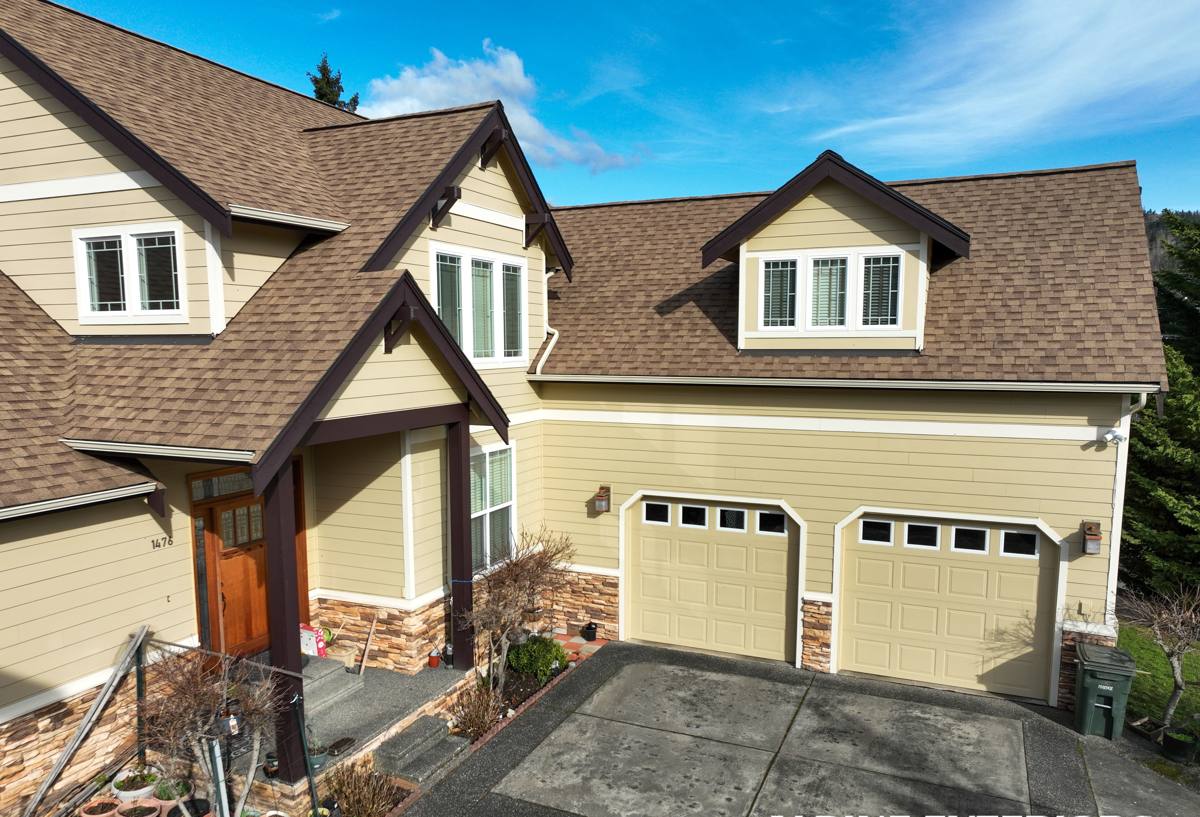
What a Correctly Installed Shingle Roof Includes
A shingle roof is only as good as the layers underneath it. Anyone can nail shingles to a deck; doing it in a way that holds up through a Whatcom County winter takes attention to a handful of details that don't show up in a driveway estimate.
Deck Inspection and Tear-Off
We remove the old roofing down to the deck rather than layering over it. That lets us check the sheathing for soft spots, delamination, or rot — common on older homes where a slow leak has been going unnoticed under the shingles for years. Any bad decking gets replaced before anything new goes down; skipping this step is the single most common cause of a roof failing early.
Underlayment and Ice-and-Water Barrier
A synthetic underlayment goes down across the full deck as the roof's backup waterproofing layer. At eaves, valleys, and around penetrations — the spots where wind-driven rain is most likely to work its way under the shingles — we add a self-adhering ice-and-water membrane. In a climate that sees sustained horizontal rain more than it sees snow, this membrane is doing more work protecting against wind-driven wet weather than against ice.
Ventilation
Balanced intake and exhaust ventilation keeps the attic close to outdoor temperature and lets moisture escape instead of condensing on the underside of the deck. Under-ventilated attics are a quiet, common problem on older Columbia homes that have been re-roofed once or twice without anyone revisiting the original venting — and poor ventilation will shorten the life of even a well-installed shingle, and can void the manufacturer's warranty outright.
Flashing
Step flashing at walls, counter-flashing at chimneys, and proper valley metal or woven valleys are where the majority of roof leaks actually originate — not through the shingle field itself. Flashing gets replaced, not reused, on every re-roof we do, because rust and old sealant are exactly what fail first in a wet, salt-air environment.
Fastening and Shingle Selection
Shingles are nailed according to the manufacturer's pattern and exposure spec, not just "close enough." In a coastal, wind-exposed area, under-nailing or high-nailing is a common shortcut that shows up later as lifted or blown-off shingles during the first real windstorm.
Moss and Algae: Managing Bellingham's Long Wet Season
Moss is the most visible sign of the climate doing its work on a roof. In shaded, north-facing sections — common throughout Columbia's tree-lined streets — moss and algae can take hold within a couple of seasons on standard shingles. Left alone, moss holds moisture directly against the shingle surface, lifts tabs at the edges, and accelerates granule loss, which is what actually determines a shingle's remaining lifespan.
Algae-resistant shingles, which use copper-containing granules to slow algae growth, are worth the modest upcharge on most Columbia re-roofs, especially on shaded slopes. They don't eliminate moss entirely, but they meaningfully slow it down. Beyond material choice, keeping gutters and valleys clear and trimming back overhanging branches where practical does more for a roof's long-term health in this climate than any single product upgrade.
Salt Air Off Bellingham Bay: What It Does to a Roof
Homes closer to the water deal with a slow, steady exposure to salt-carrying air that accelerates corrosion on any exposed metal — flashing, roof vents, nail heads, and gutter hardware. Standard galvanized fasteners and thin flashing can start showing rust streaks well before the shingles themselves are due for replacement. We spec corrosion-resistant fasteners and heavier-gauge flashing on roofs in this exposure zone, which costs a little more up front and saves a service call five or six years down the line.
Choosing the Right Asphalt Shingle for a Columbia Home
Most homeowners are choosing between a handful of shingle tiers. The right one depends on the roof's exposure, the home's age and style, and how long the current owner plans to stay.
| Shingle Type | Typical Lifespan | Best Suited For | Trade-Offs |
|---|---|---|---|
| 3-Tab | 15–20 years | Budget re-roofs, rental properties | Lower wind rating, flatter profile, shorter warranty |
| Architectural (Laminate) | 25–30 years | Most Columbia homes | Higher upfront cost than 3-tab, but far better wind and impact performance |
| Algae-Resistant Architectural | 25–30 years | Shaded lots, north-facing slopes | Small cost premium; slows but doesn't prevent moss/algae growth |
| Premium/Designer | 30+ years | Homes prioritizing appearance and longest warranty | Highest material cost; benefits are mostly cosmetic and warranty length |
For most homes in this neighborhood, a mid-to-upper-tier architectural shingle with algae-resistant granules is the practical middle ground — it costs more than 3-tab but holds up noticeably better against the moss, wind, and moisture this area sees year-round.
What Drives the Cost of a Columbia Re-Roof
Every roof is different, so we don't quote sight-unseen — but these are the factors that move the price up or down on most jobs in this area:
| Factor | Why It Matters |
|---|---|
| Roof pitch and access | Steeper roofs and limited access (tight lots, tall trees) mean more labor and safety equipment |
| Number of existing layers | Tear-off of two layers takes longer and costs more in disposal than one |
| Deck condition | Rotted or soft sheathing found during tear-off is repaired or replaced, which adds material and labor |
| Ventilation upgrades | Adding or correcting intake/exhaust venting on an older home is a worthwhile add, not just a cosmetic one |
| Shingle tier chosen | Material cost scales with the tier — 3-tab through premium designer lines |
| Flashing and valley work | Full flashing replacement at chimneys, walls, and valleys adds cost but is not optional on our jobs |
Our Process, Start to Finish
- On-site inspection: We walk the roof and attic, check the deck where visible, and note existing ventilation, flashing condition, and any moss or drainage issues.
- Written estimate: A clear scope and price — what's being torn off, what underlayment and shingle are specced, and what happens if we find deck damage.
- Tear-off and deck check: Full removal down to the sheathing, with any soft or damaged decking replaced before moving forward.
- Underlayment, ice-and-water membrane, and flashing: Installed at eaves, valleys, and all penetrations before a single shingle goes down.
- Shingle installation: Fastened to manufacturer spec for exposure and wind rating, with attention to proper nailing pattern.
- Ventilation check: Intake and exhaust venting confirmed or corrected as part of the job, not treated as an afterthought.
- Cleanup and magnetic sweep: Job site, gutters, and yard cleared of debris and stray fasteners.
- Final walkthrough: We go over the finished roof and warranty paperwork with the homeowner before calling the job done.
Why Hire a Crew That Already Works in Columbia
A roofing crew that regularly works this neighborhood already knows what to expect from its housing stock — the mix of older homes with original, sometimes undersized ventilation, the shaded lots that hold moisture longer, and the exposure that comes with being close to the water. That familiarity shows up in fewer surprises mid-job, more accurate estimates, and faster response when a windstorm off the bay causes damage that needs attention before the next round of rain moves in.
It also matters for permitting and code compliance — Bellingham and Whatcom County have their own permitting requirements for roofing work, and a local crew that pulls permits here regularly isn't learning the process on your project.
Maintenance Checklist for Homeowners
Between roof replacements, a few habits go a long way in this climate:
- Clear gutters and valleys of debris at least twice a year — more often under heavy tree cover
- Have moss physically removed rather than just treated, since dead moss still holds moisture against the shingle
- Trim back branches that shade the roof or drop debris directly onto it
- Check attic ventilation isn't blocked by insulation or storage
- Look for granule buildup in gutters, a sign shingles are wearing down
- Have flashing around chimneys, vents, and walls inspected after major windstorms
- Address small leaks immediately — a slow leak in this climate can go undetected in a deck for a long time
Ready for a Straight Answer on Your Roof?
If you're not sure whether your Columbia roof needs a repair, a partial fix, or a full replacement, we're happy to take a look and give you a clear, no-pressure assessment. Use the form below to request a free estimate.