 Bellingham Siding
 Roofing in Sehome: A Different Set of Problems Than Inland Homes
Sehome sits close enough to Bellingham Bay that homes here deal with a combination most inland Whatcom County neighborhoods don't: salt-tinged marine air, wind-driven rain off the water, and the shade from mature trees that keeps roofs damp long after a storm passes. Add in Bellingham's long, gray moss season — roughly October through May most years — and you've got a roofing environment that's harder on materials than the national average product warranty ever accounts for.
We've replaced roofs on a lot of homes in this part of Bellingham, from older bungalows near the hill to newer builds on the flatter lots closer to downtown. The houses vary, but the failure patterns don't: moss lifting shingle edges, valleys that hold water too long, and flashing that was never sealed for this climate in the first place. A roof replacement done right here isn't just "put new shingles on" — it's solving those specific problems so they don't come back in five years.
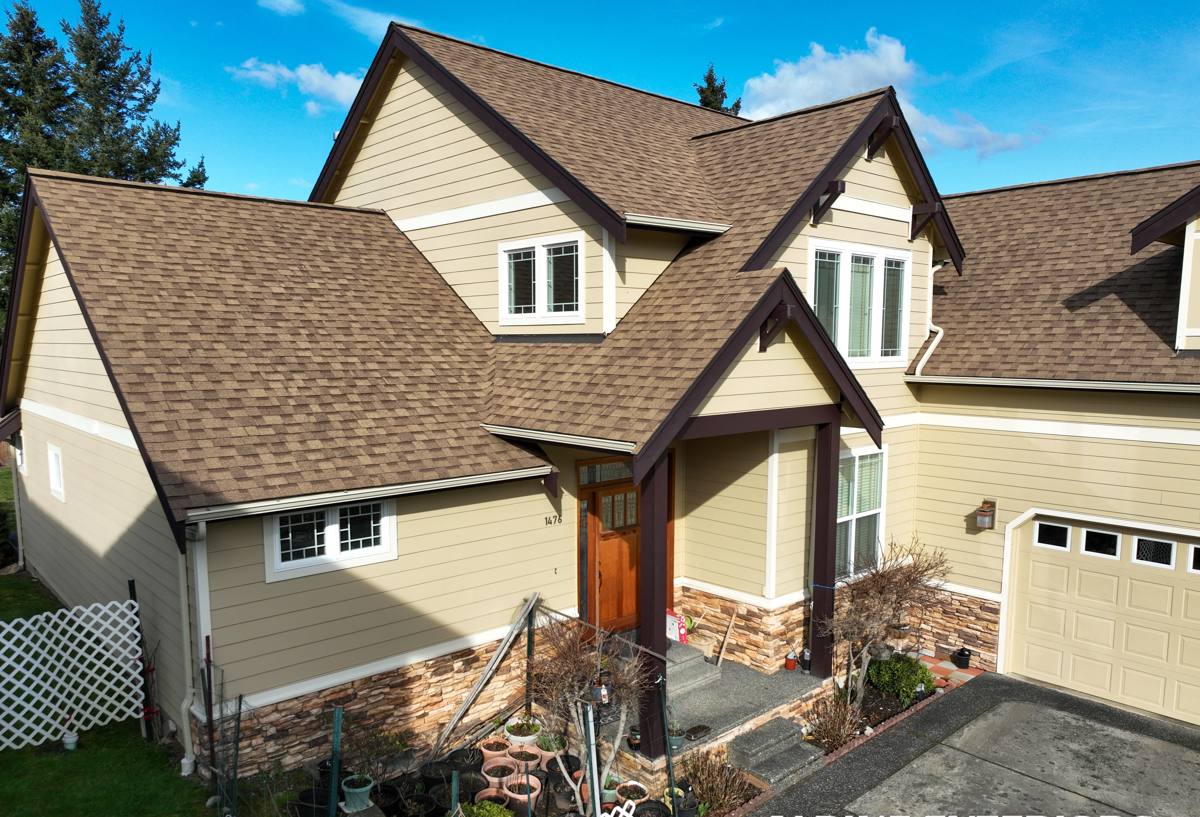
What Sehome's Climate Actually Does to a Roof
Salt Air and Metal Fatigue
Proximity to the bay means airborne salt settles on every exterior surface, including your roof. Over years, that accelerates corrosion on unprotected fasteners, cheap flashing, and lower-grade metal roof edges. It doesn't ruin a roof overnight, but it shortens the life of anything not rated for coastal-adjacent exposure — which is why we spec corrosion-resistant fasteners and flashing on every replacement here, not just the ones closest to the water.
Driving Rain and Wind-Driven Water Intrusion
Bellingham doesn't get the heaviest rainfall totals in Western Washington, but storms off the Sound often come with wind — and wind-driven rain finds gaps that vertical rain never would. Underlayment quality and how it's installed at valleys, eaves, and penetrations matters more here than in drier, calmer climates. A roof that's "fine" in a light rain can still leak during a windy November storm if the underlayment and flashing details weren't done for driving rain specifically.
Moss: The Slow, Quiet Roof Killer
Shade, moisture, and mild temperatures are a perfect moss recipe, and Sehome's tree cover gives moss plenty of places to take hold — especially on north-facing slopes and anywhere debris collects. Moss doesn't just look bad. It holds moisture against the roofing material, lifts shingle tabs as it grows, and can work its way under flashing over time. By the time moss is visibly thick, it's usually already done some damage underneath.
Signs a Sehome Roof Needs Replacing, Not Patching
- Granule loss heavy enough that you're finding grit in gutters and downspouts every season
- Moss or algae staining across large sections, not just isolated shaded patches
- Curling, cupping, or cracked shingles, especially on south and west-facing slopes
- Soft spots in the decking when walked (a sign moisture has already gotten past the surface)
- Flashing around chimneys, vents, or skylights that's rusted, lifted, or was never properly sealed
- Daylight visible through the attic roof boards, or damp insulation below the roof deck
- A roof at or past the manufacturer's expected lifespan for our climate, even if it "looks okay" from the ground
One or two of these might mean a repair is enough. Several at once, especially combined with age, usually means patching is just delaying a full replacement — and spending money that won't count toward the new roof.
What a Correct Roof Replacement Involves Here
A roof replacement built for this climate is more than swapping old shingles for new ones. The parts that actually determine how long the roof lasts are mostly things you won't see once it's finished:
Tear-Off and Deck Inspection
We remove the old roofing down to the deck rather than layering over it. This is the only way to actually see the plywood or sheathing underneath — soft, water-stained, or rotted decking has to be replaced before anything new goes down, and you can't know it's there until the old material is off.
Underlayment Suited to Wet, Windy Conditions
We use synthetic or high-quality underlayment rated for the moisture exposure Bellingham roofs deal with, with extra attention — and often ice-and-water shield style membrane — at valleys, eaves, and any low-slope transitions where water lingers longest.
Flashing Done for the Long Haul
Flashing failure is one of the most common causes of roof leaks that get blamed on "the shingles." We install and seal flashing at every penetration, valley, and wall intersection using materials that hold up to salt air exposure, not the minimum the building code allows.
Ventilation That Matches the Climate
Proper intake and exhaust ventilation keeps moisture from building up in the attic, which matters even more in a damp climate like ours. Poor ventilation shortens shingle life from underneath, which is a failure homeowners rarely connect back to the actual cause.
Material Options: What We Recommend for Sehome Homes
There's no single "best" roofing material for every house — it depends on your roof's slope, your home's style, and your budget. Here's how the common options stack up for this specific climate:
| Material | How It Handles Our Climate | Maintenance Considerations |
|---|---|---|
| Architectural Asphalt Shingle | Good performance when installed with proper underlayment and ventilation; widely used and proven locally | Needs periodic moss treatment and gutter/valley debris clearing |
| Standing Seam Metal | Sheds moss and moisture well due to smooth surface; strong wind and rain resistance | Higher upfront cost; fastener and coating quality matters near the bay |
| Synthetic/Composite Shingle | Resists moisture absorption better than older wood-look products | Product-specific installation sensitivity; not all installers are equally experienced with it |
| Cedar Shake | Traditional look, but higher moisture retention risk in a shaded, damp climate | Requires more diligent maintenance and moss management than other options here |
We're upfront when a material isn't a good fit for a specific roof — for example, a heavily shaded, low-slope section is a tougher environment for any wood-based product, regardless of brand, simply because of how long moisture sits on the surface. That's a maintenance and moisture-behavior conversation, not a knock on any manufacturer.
Our Process for a Sehome Roof Replacement
- On-site inspection. We walk the roof and attic, not just look from the ground, to assess decking, ventilation, flashing, and moss/moisture damage.
- Honest scope and written estimate. You get a clear breakdown of what needs replacing, what materials we recommend and why, and a straightforward price — no vague allowances.
- Tear-off and deck repair. Old roofing comes off completely; any compromised decking is replaced before new material goes down.
- Underlayment, flashing, and ventilation installed to spec. This is where most of the roof's actual lifespan is determined.
- New roofing installed per manufacturer specifications. Proper nailing patterns, exposure, and sealing — the details that keep warranties valid and roofs watertight.
- Final walkthrough and cleanup. We check the work with you, clear debris and nails from the property, and answer any questions before we call it done.
Why a Crew That Already Works Sehome Matters
Roofing crews unfamiliar with Bellingham sometimes spec materials and details built for drier, calmer climates — because that's what they're used to installing elsewhere. That mismatch shows up years later as premature moss growth, flashing leaks, or shingles that degrade faster than they should. A crew that already works Whatcom County knows which slopes in this kind of neighborhood hold moisture longest, which flashing details actually hold up to driving rain off the bay, and which shortcuts show up as callbacks in year three instead of year fifteen.
There's also a practical side: local crews know the permitting process with the City of Bellingham, understand typical roof pitches and styles common in older Sehome homes versus newer construction, and can respond quickly if something needs attention after a storm — no waiting on a company based hours away.
What to Ask Before Hiring Anyone for This Job
- Will you do a full tear-off, or is a layover being proposed to save money? (Layovers hide deck problems and shorten roof life.)
- What underlayment and flashing materials are included, specifically — not just the shingle brand?
- Is the estimate itemized, or is it one lump number with no breakdown?
- What's the plan for ventilation, and will it be adjusted if the current setup is inadequate?
- Is the crew licensed and insured in Washington, and can they provide proof without hesitation?
- What's covered under workmanship warranty versus manufacturer material warranty, and for how long?
Any contractor who gets vague or defensive about these questions is worth reconsidering, regardless of price.
Cost Factors for Sehome Roof Replacement
Every roof is different, and giving a number without seeing your roof wouldn't be honest. But the main factors that move the price are consistent:
| Factor | Why It Matters |
|---|---|
| Roof size and number of slopes/valleys | More complexity means more material, labor, and flashing detail work |
| Current deck condition | Rotted or soft decking found during tear-off adds material and labor cost |
| Material choice | Asphalt shingle, metal, and composite options carry different material and installation costs |
| Access and pitch | Steep or hard-to-access roofs require more safety equipment and labor time |
| Ventilation upgrades | Adding or correcting intake/exhaust ventilation is a smart long-term investment but adds to project scope |
If your Sehome home's roof is showing its age, dealing with moss, or you just want an honest opinion on what shape it's really in, we're glad to take a look. We offer free, no-pressure estimates — use the form below and we'll get you scheduled.