 Bellingham Siding
 Storm Damage Roof Repair for Ferndale Homes
Ferndale sits close enough to the water that its roofs take a different kind of beating than homes further inland. Wind off the Strait of Georgia and Bellingham Bay drives rain sideways into roof edges, flashing, and vent boots. Salt-laden air speeds up corrosion on metal fasteners and flashing. And Whatcom County's long, wet moss season keeps organic growth working at shingles and shakes for most of the year. None of that shows up as a single dramatic event most of the time — it shows up as small failures that add up until a storm finds the weak point.
When a storm does hit — a windstorm that lifts shingles, a heavy rain event that finds a gap in flashing, or a falling branch that punctures the roof deck — the damage needs to be assessed and repaired correctly the first time. A rushed patch job on a Ferndale roof, done without accounting for the moisture load this area sees, tends to fail again within a season or two.
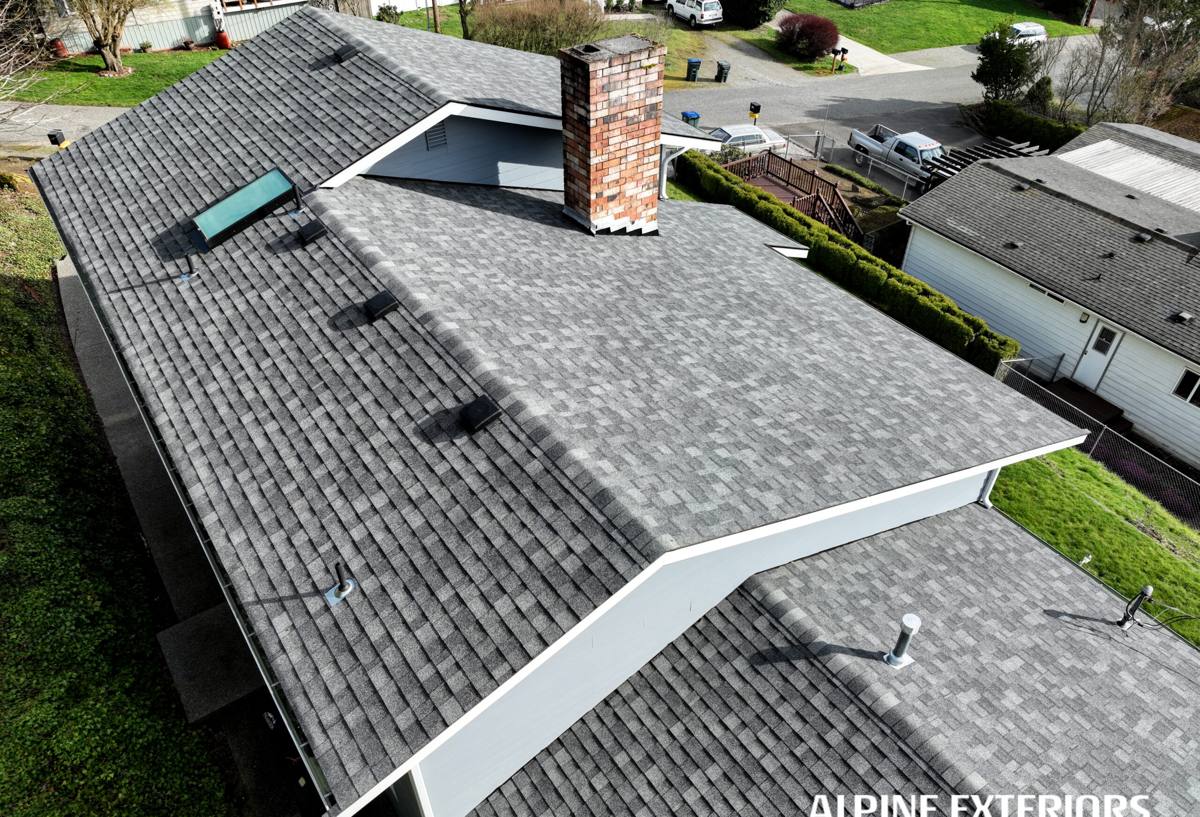
What Storm Damage Actually Looks Like Here
Not every storm-related roof problem is obvious from the ground. Some of it is, and some of it takes an inspection to catch.
Wind Damage
Sustained wind and gusts can lift shingle tabs, break the seal strip that holds shingles flat, or tear shingles off outright. Once the seal is broken, a shingle can keep lifting in every wind event afterward even if it looks intact — this is one of the most common reasons a roof that "made it through the storm fine" starts leaking weeks later.
Wind-Driven Rain
Rain that comes in at an angle finds paths that vertical rain never would: under ridge caps, around chimney and vent flashing, along step flashing where a roof meets a wall. In Ferndale, this is often the actual source of a leak that gets blamed on "the storm" when the storm just exposed a flashing detail that was already marginal.
Impact Damage
Falling branches and wind-blown debris can crack shingles, dent metal roofing, or in worse cases puncture the deck. Impact damage is usually the easiest type to spot but the most important to get fully inspected, since deck damage that isn't caught leads to rot underneath the new roofing.
Moss and Moisture Damage Made Worse by Storms
A roof that already has moss buildup holds water longer after a storm, which adds weight, keeps shingles wet longer than they're designed for, and accelerates granule loss. Storm damage repair on a Ferndale roof almost always has to deal with existing moss and moisture conditions, not just the fresh damage.
Why Fast, Correct Repair Matters
A damaged roof doesn't wait for a convenient time to leak. Once water gets past the roofing layer, it moves — into insulation, framing, drywall, and sometimes electrical. The cost of repairing that secondary damage is usually far higher than the cost of the original roof repair would have been.
There's also a practical insurance reason to move quickly: many policies have documentation and filing windows, and damage that sits exposed to more weather is harder to attribute cleanly to a single storm event. Getting a professional assessment soon after a storm, with photos and a written scope, protects you either way — whether you file a claim or just want an honest record of what needs fixing.
What a Correct Storm Damage Repair Involves
A proper repair isn't just replacing what's visibly torn or missing. It means:
- Inspecting the full roof plane, not just the area where damage was reported, since wind damage often extends beyond the obvious spot
- Checking the roof deck underneath removed shingles for soft spots, staining, or rot before any new material goes down
- Replacing damaged underlayment, not just shingles, since underlayment is the actual water barrier
- Re-securing or replacing flashing at valleys, chimneys, vents, and wall intersections — the most common leak points after a storm
- Matching shingle type, color, and exposure to the existing roof as closely as possible on partial repairs
- Clearing moss and debris from the repair area and surrounding roof so trapped moisture doesn't undermine the new work
- Confirming ventilation isn't blocked, since poor attic ventilation compounds moisture problems in this climate
Skipping any of these steps is how a "repaired" roof ends up leaking again the next time it rains hard.
Our Process for Storm Damage Repairs in Ferndale
1. Inspection and Documentation
We walk the roof (or use a safe vantage point when conditions don't allow it) and document damage with photos, noting both the storm damage and any pre-existing wear that's relevant, like moss buildup or aging flashing. This documentation is useful whether or not you're filing an insurance claim.
2. Temporary Protection
If there's active exposure — a hole, missing shingles, torn underlayment — we get it tarped or otherwise protected first so the interior of your home isn't taking on water while repair plans get finalized.
3. Written Scope and Estimate
You get a clear, itemized description of what needs to be repaired and why, in plain language, before any work starts. No pressure to upsell into a full replacement if a targeted repair is the honest answer.
4. The Repair
We remove and replace damaged materials down to sound decking, address flashing and moisture issues in the repair area, and match materials to your existing roof as closely as possible.
5. Cleanup and Final Check
Debris and old materials are hauled off, and we do a final walk-through so you know exactly what was done.
Repair vs. Replacement: How We Help You Decide
Not every storm-damaged roof needs to be replaced, and not every roof is a good candidate for another round of patching. The right call depends on the roof's age, how much of it is affected, and what condition the rest of the roof is in.
| Factor | Leans Toward Repair | Leans Toward Replacement |
|---|---|---|
| Roof age | Under 10-15 years, in otherwise good shape | Near or past typical lifespan for the material |
| Extent of damage | Localized to one area or plane | Scattered across multiple areas of the roof |
| Underlying deck condition | Sound, no rot found during inspection | Soft spots or rot found in multiple areas |
| Moss/moisture history | Manageable with cleaning and minor treatment | Chronic moss damage affecting granule loss broadly |
| Material match availability | Existing shingle/shake still available or close match exists | Discontinued material, patch would be visibly mismatched |
We'll tell you honestly which category your roof falls into rather than defaulting to the more expensive option.
Insurance Claims: What We Can and Can't Do
We're not insurance adjusters, and we won't promise a claim outcome. What we can do is give you an honest, well-documented assessment of what's storm damage versus what's ordinary wear, since insurers distinguish between the two. A written scope with photos, prepared close to the time of the storm, is the most useful thing you can bring to an adjuster meeting. If you're unsure whether damage is claim-worthy, an inspection is a good first step before you call your insurer.
Dealing with Ferndale's Moss and Salt Air Over the Long Term
A single storm repair fixes the immediate problem, but Whatcom County's climate keeps working on a roof year-round. Moss regrowth is close to constant in shaded, north-facing, or heavily treed areas, and salt-influenced air near the water accelerates corrosion on exposed fasteners and metal flashing faster than it would inland. Part of doing storm repair right is flagging these ongoing conditions so you know what to watch for and what routine maintenance — periodic moss removal, gutter clearing, flashing checks — will actually extend the life of the repair instead of letting the same damage recur in a year or two.
Why Hiring a Crew That Already Works Ferndale Matters
A roofing crew that regularly works in Ferndale and the rest of Whatcom County knows what this area's storms actually do to roofs, rather than applying a generic repair approach built for a drier climate. That means recognizing wind-driven rain patterns specific to homes near the water, knowing which flashing details fail first in this climate, and understanding how moss and moisture interact with storm damage rather than treating them as separate issues. It also means faster response after a storm, since we're not driving in from out of the area, and familiarity with local permitting requirements when a repair crosses into replacement territory.
Signs You May Have Storm Damage Worth Inspecting
- Shingles that look lifted, curled, or out of alignment after a windstorm
- Granules collecting in gutters or at downspout outlets
- Water stains on ceilings or upper walls following heavy rain
- Visible gaps or bent flashing around chimneys, vents, or roof valleys
- Daylight visible through the attic roof deck
- Heavy moss growth combined with any of the above
- Debris impact marks, dents, or cracked shingles after a storm
If you're seeing any of these after a storm, it's worth having a professional look before the next round of weather makes the problem worse. We offer free, no-pressure estimates for Ferndale homeowners — an inspection costs you nothing, and you'll get a straight answer about what actually needs to be done, whether that's a targeted repair or something more.