 Bellingham Siding
 Board & Batten Siding in Sehome: What the Style Actually Requires
Board and batten is one of the most requested siding looks in Sehome right now. The vertical lines suit the mix of older bungalows and updated homes near Western Washington University, and it reads as clean and modern without looking out of place next to a craftsman porch. But board and batten is also one of the least forgiving siding styles to get wrong. The wide boards and narrow battens create dozens of extra seams compared to standard lap siding, and every one of those seams is a potential path for water. In a neighborhood that sits close to the water and catches its share of wind-driven rain off Bellingham Bay, that detail matters more than the look does.
This page covers what a correctly built board and batten installation involves in Sehome specifically, why the material underneath the battens matters as much as the pattern itself, and how our crew approaches these jobs.
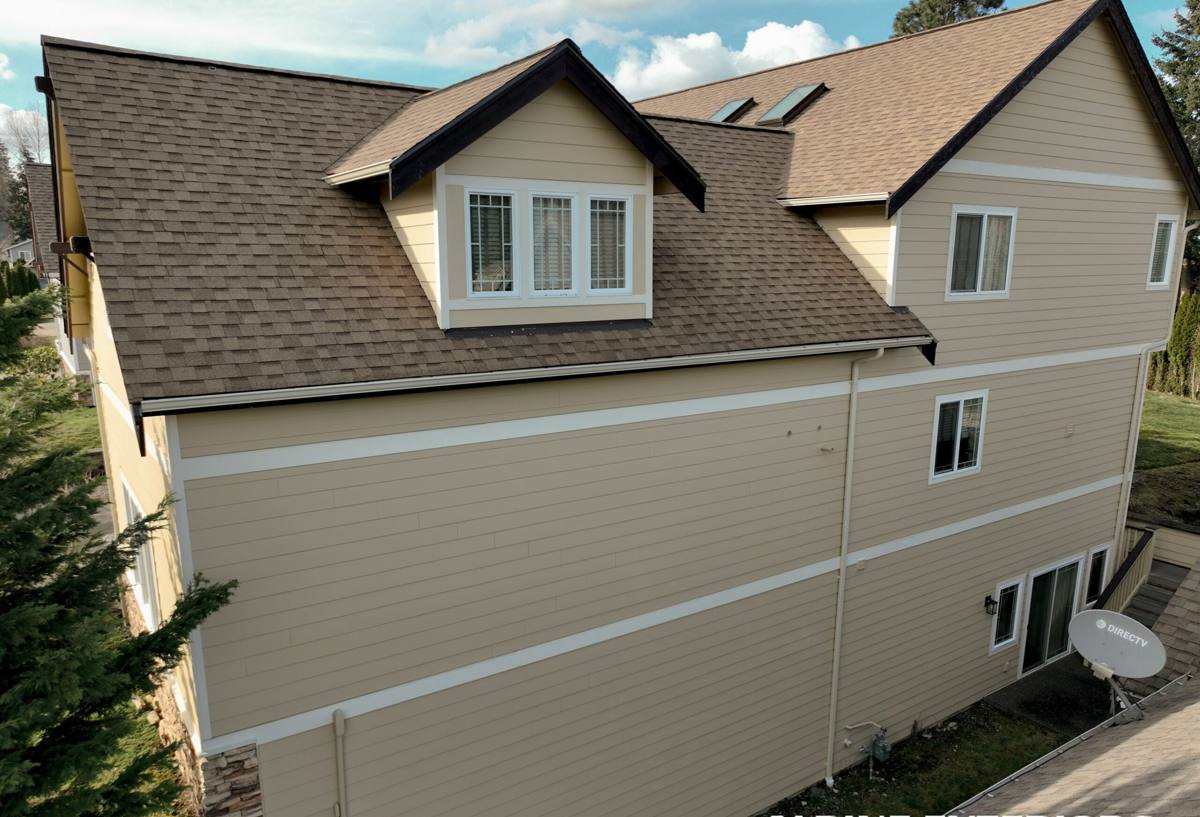
Why Sehome's Climate Is Hard on Vertical Siding
Salt Air and Metal Fasteners
Sehome's proximity to the bay means homes here deal with a low but steady load of salt in the air. Over years, that salt accelerates corrosion on any exposed or poorly coated fastener, staple, or trim flashing. Board and batten has more fastener penetrations per square foot than lap siding because both the base boards and the battens need to be nailed, so fastener quality and placement carry more weight on this style than on almost any other.
Driving Rain
Whatcom County storms often come in sideways, not straight down. Vertical siding channels water downward along its seams faster than horizontal lap siding does, which is good when the seams are sealed and flashed correctly — and bad when they aren't. A batten that's just caulked over a butt joint, rather than backed by proper flashing and drainage, will eventually let water track behind the board.
Moss Season
Bellingham's long wet season, roughly October through May, keeps north- and shade-facing walls damp for extended stretches. Moss and algae take hold on any siding material that stays wet and doesn't dry out between rain events. Vertical battens create narrow shaded channels that hold moisture longer than a flat wall does, so the material and finish on a board and batten job need to actually resist that, not just look good on install day.
Why We Install James Hardie Fiber Cement — Not Wood, Vinyl, or LP
We only install James Hardie fiber cement siding. For board and batten specifically, that decision is even more deliberate than it is for lap siding, because the alternatives struggle in exactly the ways this style is already vulnerable to.
- Primed spruce or cedar board and batten looks great for the first several years, but real wood battens absorb moisture at every cut end and seam. In a wet climate like Sehome's, that means recurring paint failure, cupping, and rot at the exact joints where water collects. Maintenance becomes a recurring cost, not a one-time job.
- Vinyl board and batten is dimensionally unstable — it expands and contracts with temperature swings and can bow or pull away from fasteners over time, which opens gaps at the battens rather than closing them. It's also thin enough that it dents and doesn't hold paint if you ever want to change the color.
- LP SmartSide is an engineered wood product with a resin-treated core, which helps against some moisture, but it's still wood-based. Cut edges and fastener penetrations need diligent field sealing, and if that sealing gets missed or degrades, the strand-based substrate is vulnerable to swelling.
James Hardie fiber cement is cement, sand, and cellulose fiber — it doesn't rot, it isn't a food source for moss the way raw wood is, and it holds its shape in wet-dry cycles far better than vinyl or wood-based products. It's also non-combustible, which matters given Washington's increasing wildfire smoke and ember seasons even on the wet side of the state. For a style with this many seams, starting with a material that doesn't degrade at the seam is the whole game.
The Two Ways to Build Board and Batten With Hardie
| Method | How it works | Best for |
|---|---|---|
| Hardie panel + batten | Large HardiePanel sheets installed first, vertical battens fastened over the seams and field | Cleaner modern look, fewer horizontal joints, faster install |
| Board-on-board | Individual HardieTrim or HardiePlank boards installed with a gap, narrower boards fastened over each gap as the "batten" | Traditional farmhouse look, deeper shadow lines |
Both methods work in Sehome's climate when detailed correctly, and the choice usually comes down to look rather than performance — panel-and-batten tends to be more budget-friendly and has fewer total seams, while board-on-board gives a deeper, more traditional shadow line. We'll walk through both options during the estimate and show you how each performs against the specific exposure on your walls.
What a Correct Installation Actually Involves
Weather-Resistive Barrier and Drainage Plane
Every board and batten job we do starts with a continuous weather-resistive barrier and a drainage gap behind the siding, not just behind the panel. That gap lets any moisture that does get past a seam drain and evaporate instead of sitting against the sheathing.
Flashing at Every Horizontal Break
Anywhere a panel run stops — window heads, belly bands, roof lines — needs proper Z-flashing, not caulk alone. Caulk is a first line of defense, not a substitute for flashing, and it's the single most common shortcut we see skipped on lower-bid board and batten jobs.
Fastener Placement and Batten Spacing
Battens need to land on framing or blocking, spaced and fastened to Hardie's engineering specs — not just eyeballed for even reveals. Incorrect fastener spacing is one of the leading causes of premature siding failure industrywide, and it's harder to catch after the fact on vertical siding than on lap siding.
Factory Finish, Field-Sealed Cuts
We install Hardie's ColorPlus factory-finished boards wherever possible, which keeps the finish consistent and warrantied. Every field cut gets sealed per Hardie's installation instructions before the board goes up — an easy step to skip and a costly one to skip on.
Our Process for a Sehome Board and Batten Project
- Walk and assessment: we look at your home's specific exposure — which walls take the most driving rain, which stay shaded and damp longest, where the current siding is already showing moss or paint failure.
- Method and product selection: panel-and-batten vs. board-on-board, HardieTrim profile widths, reveal spacing, and color, matched to your home's style and budget.
- Tear-off and sheathing check: we don't cover up rot or compromised sheathing — if we find it, we show you before closing anything in.
- Barrier, flashing, and drainage installation: the unglamorous part that determines whether the job lasts fifteen years or fifty.
- Siding and batten install to Hardie spec: correct fastener type, spacing, and sealed field cuts throughout.
- Final walk-through: we go over the finished job with you and explain the warranty coverage in writing.
What to Check Before You Hire Anyone for This
- Do they install board and batten regularly, or is it a rare request they're learning on your house?
- Will they specify how they're handling flashing at window heads and horizontal breaks, or just say "we'll caulk it"?
- Are they using factory-finished boards, or field-painting after install (which shifts warranty coverage)?
- Can they explain the difference between panel-and-batten and board-on-board and recommend one for your specific walls?
- Do they carry manufacturer certification for the product they're installing?
- Will the estimate be written, itemized, and specific to your home — not a flat per-square-foot guess?
Why Local Experience in Sehome Matters
Sehome's housing stock is varied — older homes with settled framing, mid-century houses, and newer builds all sit within a few blocks of each other. A crew that already works this part of Bellingham knows what to expect when they open up a wall here: what the sheathing condition tends to look like, how much moss buildup is normal versus a sign of a bigger drainage problem, and which walls in this neighborhood take the worst of the weather off the bay. That's not something you get from a crew driving in from outside the county for a one-off job. It shows up in fewer surprises mid-project and a longer-lasting result.
Get a Straightforward Estimate
If you're considering board and batten siding for a home in Sehome, we're happy to walk the property, talk through panel-and-batten versus board-on-board for your specific walls, and give you a clear, no-pressure estimate using James Hardie fiber cement — the only siding system we install. Reach out using the form below to get started.