 Bellingham Siding
 What Barkley's Climate Does to Exterior Siding
Barkley sits inside Whatcom County's marine climate, which means the siding on a Barkley home isn't dealing with one seasonal stress — it's dealing with three that overlap almost year-round. Salt-laden air drifts in off the Puget Sound region and settles on painted and coated surfaces. Driving rain, pushed sideways by wind off the water, finds every gap in flashing and trim that a calmer climate would never test. And a long, damp shoulder season — often stretching from October well into April — keeps north- and shade-facing wall sections wet long enough for moss and algae to take hold and stay there.
None of this is exotic. It's just relentless. A siding product or an installation detail that would be fine in a drier inland town can fail here in a handful of years, not because the material is defective, but because it was never engineered for this combination of moisture, salt exposure, and low sun angle. That's the lens we use on every Barkley project: not "will this look good on install day" but "will this still be doing its job in fifteen years of Whatcom County weather."
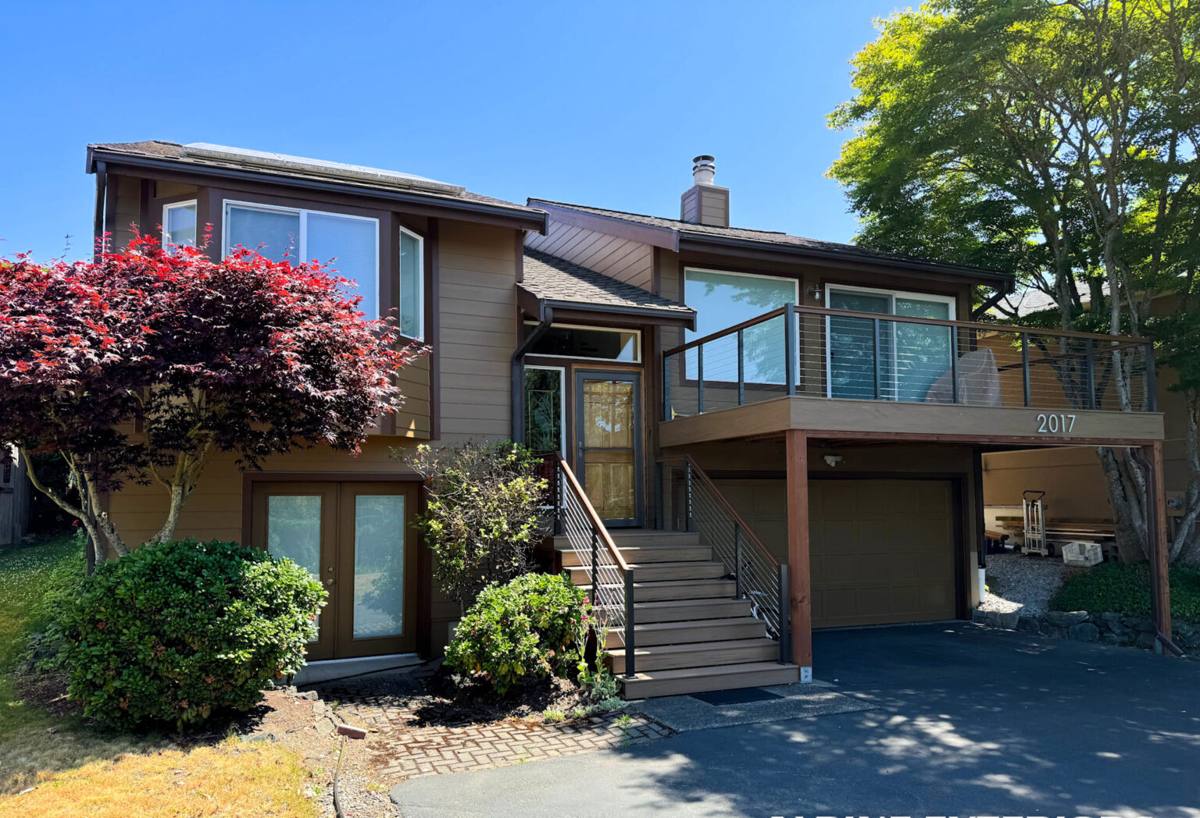
Why James Hardie Fits This Neighborhood
It Doesn't Feed on Moisture
James Hardie siding is fiber cement — sand, cement, and cellulose fiber — not wood and not a wood-based composite. It doesn't swell, delaminate, or rot when it stays damp, which matters directly in Barkley because damp is the default condition for a big chunk of the year. Wood-based sidings can hold up fine when they're kept dry and well-ventilated; the problem is that keeping anything perfectly dry in this climate for a full decade is unrealistic.
A Factory Finish Built for UV and Salt
Hardie's ColorPlus finish is baked on at the factory under controlled conditions, not brushed or sprayed on site. That gives it more consistent coverage and better adhesion than field-applied paint, and it holds color and resists fading under the UV and salt exposure that a coastal-influenced climate delivers. Field-painted siding needs repainting on a cycle; ColorPlus is engineered to go far longer between touch-ups, which is a real difference in a region where painting season is short and wet weather can delay it further.
Non-Combustible Material
Fiber cement doesn't support combustion the way wood-based sidings can. That's less about wildfire exposure in Barkley specifically and more about the fact that it's simply a more stable, predictable material against heat and flame — one less variable to worry about over the life of the house.
What a Correct Installation Actually Involves
The material is only half the equation. Fiber cement siding installed without attention to the details below will still let water in, and once water gets behind cladding in a climate this wet, it doesn't dry out quickly. A correct James Hardie job in Barkley includes:
A Real Drainage Plane
A weather-resistive barrier and a drainage gap behind the siding — whether furring strips or a purpose-built rainscreen product — give any water that gets past the cladding somewhere to go besides the sheathing. In a climate with this much driving rain, skipping this step is the single most common shortcut that causes long-term problems.
Flashing at Every Penetration
Windows, doors, hose bibs, light fixtures, and deck ledgers all need proper flashing integrated with the water-resistive barrier — not caulk used as a substitute for flashing. Caulk fails; flashing sheds water by design and keeps working after the caulk has already cracked.
Correct Fastening and Clearances
James Hardie publishes fastening schedules and minimum clearances (from grade, roof lines, and horizontal surfaces) that vary by product line and by the HZ climate zone the home falls in. Whatcom County's exposure calls for following those specs exactly — not the minimum that happens to be convenient on a given day.
Field-Cut Edges Sealed
Every cut edge of a fiber cement board should be back-primed or sealed before it goes up. Raw, unsealed cut edges are the most common point of moisture entry into fiber cement siding, and it's a five-minute step that's easy to skip if a crew is moving fast.
| Detail | Shortcut version | Correct version |
|---|---|---|
| Behind the siding | Housewrap only, no gap | Housewrap plus a drainage gap or rainscreen |
| Window and door edges | Caulk bridging the gap | Integrated flashing, caulk as backup only |
| Cut ends | Left raw | Sealed or factory-primed before installation |
| Fastener spacing | Generic or "close enough" | Matched to Hardie's published schedule for the product and zone |
| Clearance from grade/roof | Whatever fits the layout | Manufacturer minimums held on every elevation |
Choosing the Right Hardie Product Line for a Barkley Home
James Hardie makes several product lines, and the right one depends on the home's style and exposure, not just personal preference.
| Product | Look | Best fit |
|---|---|---|
| HardiePlank lap siding | Traditional horizontal lap | Most Barkley home styles; the most common choice |
| HardieShingle | Staggered or straight-edge shingle profile | Craftsman and cottage-style homes wanting texture |
| HardiePanel | Vertical panel, often with battens | Accent walls, gables, and modern-leaning designs |
| HardieTrim | Fiber cement trim boards | Corners, fascia, and window/door surrounds to match the field siding's durability |
Many Barkley projects mix a primary lap siding with a panel or shingle accent on gables or entry features. That's a design choice, but it also matters for weather performance — accent details with more seams and transitions need extra care with flashing, which is exactly the kind of detail an experienced crew won't rush.
Moss, Algae, and Long-Term Upkeep
Whatcom County's long wet season means moss and algae growth on siding is a matter of when, not if, especially on shaded north walls and under overhangs that stay damp. Hardie's factory finish resists staining better than bare wood or field-applied paint, but no exterior surface is immune to organic growth in this climate. A yearly soft rinse and a check of gutters, downspouts, and any spots where sprinklers hit the wall will keep moss from getting a foothold and extend the life of the finish. What you want to avoid is pressure-washing at close range, which can force water behind laps and joints rather than just cleaning the surface.
Our Process for a Barkley Siding Project
- On-site inspection of the existing siding, sheathing, and any signs of past water intrusion
- Written scope covering product line, color, trim details, and drainage plane approach
- Removal of old siding with sheathing checked and repaired before anything new goes on
- Installation of the water-resistive barrier and drainage gap
- Flashing at every window, door, and penetration before siding installation begins
- James Hardie installation to manufacturer fastening schedules and clearance specs
- Final walkthrough covering finish, caulking, and basic care going forward
Every step above exists because skipping it is exactly how a siding job looks fine for the first year or two and then starts failing in year five. We'd rather take the extra time up front than have a homeowner dealing with hidden rot a few winters later.
Why It Matters That a Crew Already Works This Neighborhood
A crew that's worked Barkley and the surrounding parts of Bellingham has already seen how this specific climate treats a house — which elevations take the worst of the driving rain, where moss shows up first, how a given roofline sheds water onto the wall below it. That's not something you get from a spec sheet; it's pattern recognition from doing the work here repeatedly. It also means a straightforward logistics advantage: local material staging, familiarity with permitting through the City of Bellingham, and a crew that isn't learning the neighborhood's quirks on your home for the first time.
What Affects the Cost
Every home is different, but the factors that move a Barkley siding estimate up or down are consistent:
| Factor | Why it matters |
|---|---|
| Home size and number of stories | More surface area and more staging/access work |
| Current siding condition | Rotted sheathing found underneath adds repair scope |
| Product line and profile mix | Plank, shingle, and panel combinations price differently |
| Trim and detail complexity | Gables, dormers, and multiple accent materials add labor |
| Site access | Tight lots, slopes, and landscaping affect staging and speed |
We don't quote a price without seeing the house — anyone who does is guessing, and on an older Barkley home, what's under the existing siding often changes the scope more than anything else on this list.
If you're weighing a siding replacement or repair in Barkley, we're happy to take a look and give you a straightforward, no-pressure estimate — no guesswork, and no push toward a product we wouldn't put on our own homes.