 Bellingham Siding
 Why Sehome Homes Need Siding Built for This Climate
Sehome sits close enough to Bellingham Bay that homes here take on a version of Whatcom County weather that's a step harder on exterior materials than what you'd deal with further inland. Salt-tinged air off the bay, long stretches of driving rain that comes in sideways during fall and winter storms, and a moss season that can run most of the year on shaded north- and west-facing walls all work on siding at the same time, not one at a time. That combination is exactly why we don't treat every siding job the same way, and why James Hardie fiber cement is the only product we put on Sehome homes.
Older homes in this neighborhood — plenty of craftsman-era and mid-century houses mixed in with newer construction — often still carry original wood siding or a vinyl retrofit from decades back. Both show their age here faster than in drier climates. If you've noticed soft trim, peeling paint that won't hold, or dark streaking that comes back within a season of cleaning, that's the local climate doing what it does to the wrong material.
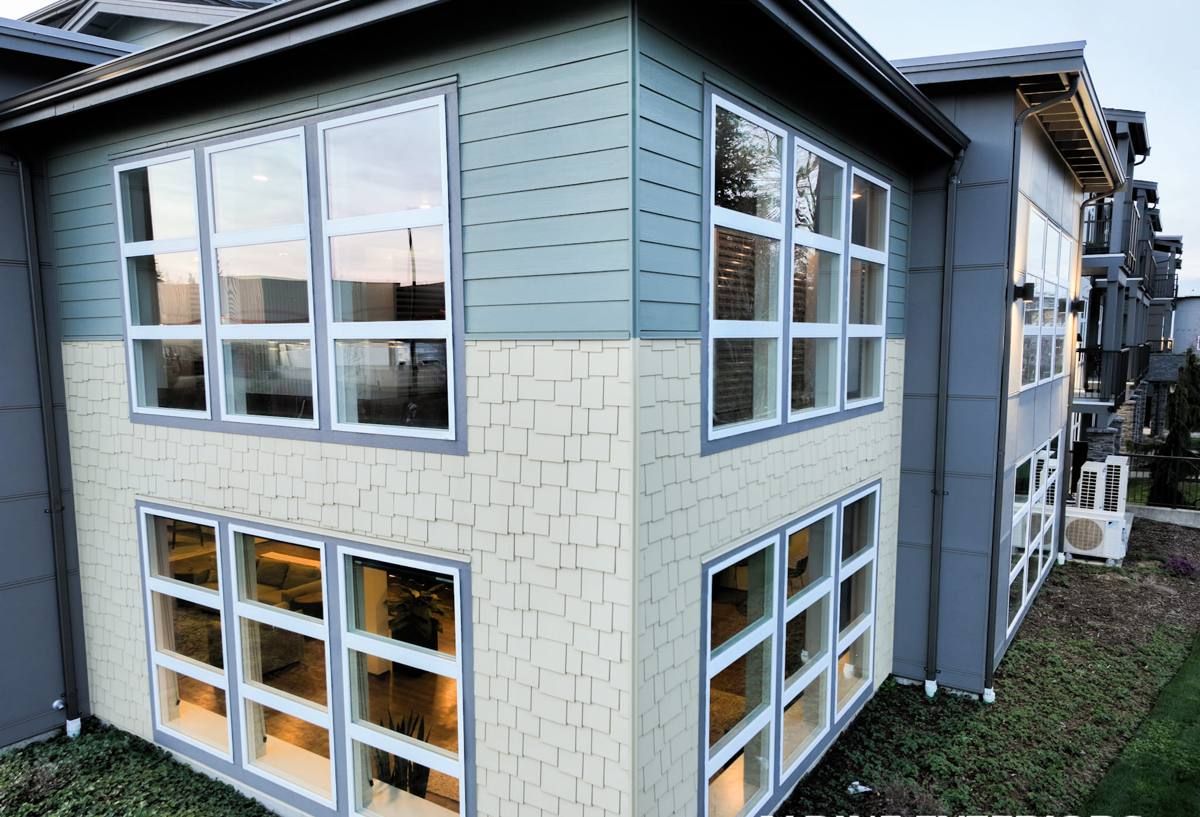
What Bellingham's Weather Actually Does to Siding
It helps to understand the specific mechanisms at work, because they point directly to what a correct siding job needs to solve for.
Moisture Load, Not Just Rain Totals
Bellingham doesn't get the heaviest rainfall in the state, but it gets a lot of days where a wall stays damp — low clouds, drizzle, and marine humidity that never fully dries out between storms. Siding materials that swell, wick, or trap moisture behind them pay for that over years, not weeks. Fiber cement doesn't swell or rot the way wood does, and it doesn't trap moisture behind a non-breathable skin the way some vinyl installations can.
Salt Air and Coastal Exposure
Proximity to the bay means a low but steady dose of salt-laden air, which accelerates corrosion on fasteners and metal trim and degrades weaker paint films faster than inland exposure would. This is a big part of why factory-applied finish quality matters more here than in a dry inland town — field-applied paint on wood or cheaper composite siding just doesn't hold up as long against it.
Moss, Algae, and Shade
Sehome's mature tree canopy is part of what makes the neighborhood attractive, but it also means a lot of walls stay shaded and damp for long stretches. Moss and algae take hold on porous or textured surfaces that stay wet, and once established they hold moisture against the siding underneath, which compounds the rot risk on wood-based products.
Why We Install Only James Hardie in Sehome (and Whatcom County)
We get asked why we don't offer vinyl, LP SmartSide, cedar, or primed wood alternatives. The honest answer is that we've made a standard for ourselves based on what actually holds up under conditions like Sehome's, and fiber cement wins that comparison decisively.
- Non-combustible material — fiber cement doesn't burn, which matters as wildfire smoke seasons have become a more regular part of the Pacific Northwest summer.
- Won't rot or swell with moisture — unlike wood or wood-based composite siding, it doesn't feed the freeze-thaw and moisture cycles our winters put it through.
- Factory-cured ColorPlus finish — baked on under controlled conditions, so it resists fading and holds its bond far better than field-applied paint, especially against salt air.
- Engineered for this climate specifically — Hardie's HZ5 product line is formulated for regions like ours with freeze-thaw cycles and sustained moisture exposure.
- Long, transferable warranty backed by a large manufacturer — not a guarantee against every problem, but a real backstop if the product itself underperforms.
Vinyl is cheap and low-maintenance in a mild climate, but it can become brittle in cold snaps and doesn't stand up structurally the way fiber cement does. Cedar and primed spruce look great on day one but need ongoing paint maintenance that most homeowners underestimate, especially with Sehome's shade and moisture load. LP SmartSide and other wood-strand composites are engineered to resist moisture better than raw wood, but they're still wood-based at the core, and edge sealing becomes a permanent maintenance responsibility. We'd rather install one product correctly than offer five and hope the homeowner picked right.
The Right Hardie Product Line for a Sehome Home
James Hardie makes several siding profiles, and the right pick depends on the home's architecture as much as the climate. For this area we typically work with:
| Product | Best Fit | Why It Works in Sehome |
|---|---|---|
| HardiePlank lap siding | Craftsman, traditional, and most standard homes | Classic look, widest color range, proven track record in wet coastal climates |
| HardiePanel vertical siding | Modern builds, accent walls, gable ends | Clean lines, pairs well with trim details common in newer Sehome construction |
| HardieShingle | Craftsman and cottage-style homes | Matches the textured look of older neighborhood housing stock without the maintenance of cedar shingle |
| HardieTrim boards | All installs | Fiber cement trim resists the same rot and moss issues as wood trim, finished to match |
All of these are available in HZ5 formulation, which is the version engineered for our climate zone, and all come with the factory ColorPlus finish option so you're not relying on field-applied paint to survive the coastal exposure.
What a Correct Installation Involves
James Hardie siding is only as good as the installation behind it. A rushed or corner-cut job undermines everything the material is engineered to do. On every Sehome project we install to Hardie's published specifications, which includes:
- Proper water-resistive barrier and flashing at every window, door, and penetration — this is where most moisture failures actually start, not in the siding itself
- Correct fastener type and placement (Hardie is specific about nail gauge, spacing, and blind- vs. face-nailing by product)
- Minimum clearance from grade, decks, and roof lines so the bottom edge of the siding isn't sitting in standing moisture
- Proper gapping and caulking at butt joints, corners, and trim intersections — sized for our seasonal expansion and contraction
- Field-cut edges sealed per manufacturer spec, since raw cut edges are the one place fiber cement can take on water if left untreated
- Ventilation behind the siding assembly where the wall design calls for it, to keep moisture from getting trapped against the sheathing
Skipping any one of these doesn't usually show up as a problem in year one. It shows up in year five or eight, as staining, trim rot, or a warranty claim that gets denied because the installation didn't match spec. That's the gap between "siding installed" and "siding installed correctly."
Our Process for a Sehome Siding Project
1. On-Site Assessment
We walk the home, check the current siding and sheathing condition, look at drainage and grading around the foundation, and note any tree cover or shade patterns that affect moisture and moss exposure on specific walls.
2. Product and Color Selection
We help you choose the right profile and ColorPlus color for the home's style and the neighborhood's character, without pushing you toward whatever happens to be in stock.
3. Sheathing and Moisture Barrier Check
Before any new siding goes up, we confirm what's underneath is sound. If there's existing rot or a compromised barrier, that gets addressed first — new siding over a bad substrate just hides the problem.
4. Installation to Spec
Flashing, fastening, gapping, and sealing all done per James Hardie's installation guidelines, not shortcuts that happen to look fine from the curb.
5. Final Walkthrough
We go over the finished work with you directly, including basic care guidance for the specific product and color you chose.
Why a Crew That Already Works Sehome Matters
Siding installation isn't one-size-fits-all across a city, let alone a region. A crew that regularly works Sehome and the surrounding Bellingham neighborhoods already knows which walls tend to hold moss, how local permitting and inspection typically go, and what the housing stock in this specific part of town tends to need — whether that's matching an existing craftsman profile or planning around mature trees that shade half the exterior. That local pattern recognition is worth more than a general contractor's best guess, and it's part of why proper flashing and moisture detailing get done right the first time instead of being discovered as a callback.
Maintenance: What Ownership Actually Looks Like After Install
One of the real advantages of James Hardie in a climate like this is how little ongoing maintenance it demands compared to wood or repainted composite siding. That said, "low-maintenance" isn't "no-maintenance":
- Rinse siding periodically to keep pollen, salt residue, and organic buildup from accumulating, especially on shaded walls
- Keep gutters clear so overflow doesn't run down the siding face repeatedly in one spot
- Trim back vegetation and tree limbs that keep a wall section shaded and damp longer than the rest of the house
- Inspect caulking at trim joints every couple of years and have any cracked sealant redone before it lets water behind the siding
- Address any impact damage promptly — fiber cement is tough, but a cracked panel left unsealed is a moisture entry point
None of that compares to the repainting cycle wood or primed composite siding demands in a marine climate, which is a big part of the long-term value case for Hardie in Sehome specifically.
If your Sehome home's siding is showing its age, or you're planning ahead of a repaint you'd rather not repeat in five years, we're happy to walk the property with you and give a straightforward, no-pressure estimate on what correct James Hardie installation would look like for your home. Use the form below to get started.