 Bellingham Siding
 Composite Decking Built for Sehome's Weather, Not Just Its Looks
Sehome sits close enough to Bellingham Bay that salt-laden air, wind-driven rain, and a long stretch of gray, damp months are just part of owning a home here. A deck in this neighborhood isn't judged by how it looks on a dry August afternoon — it's judged by how it holds up in February, when moss is creeping across every north-facing surface and the wood underneath hasn't had a real chance to dry out since October. Composite decking, installed correctly, is one of the few deck systems that actually stands up to that cycle year after year without the sanding, staining, and moss-scraping routine that wood demands.
This page is specifically about composite decking for homes in and around Sehome — what the climate here does to a deck, what a correct installation actually involves, and why the details matter more in this neighborhood than they would somewhere drier.
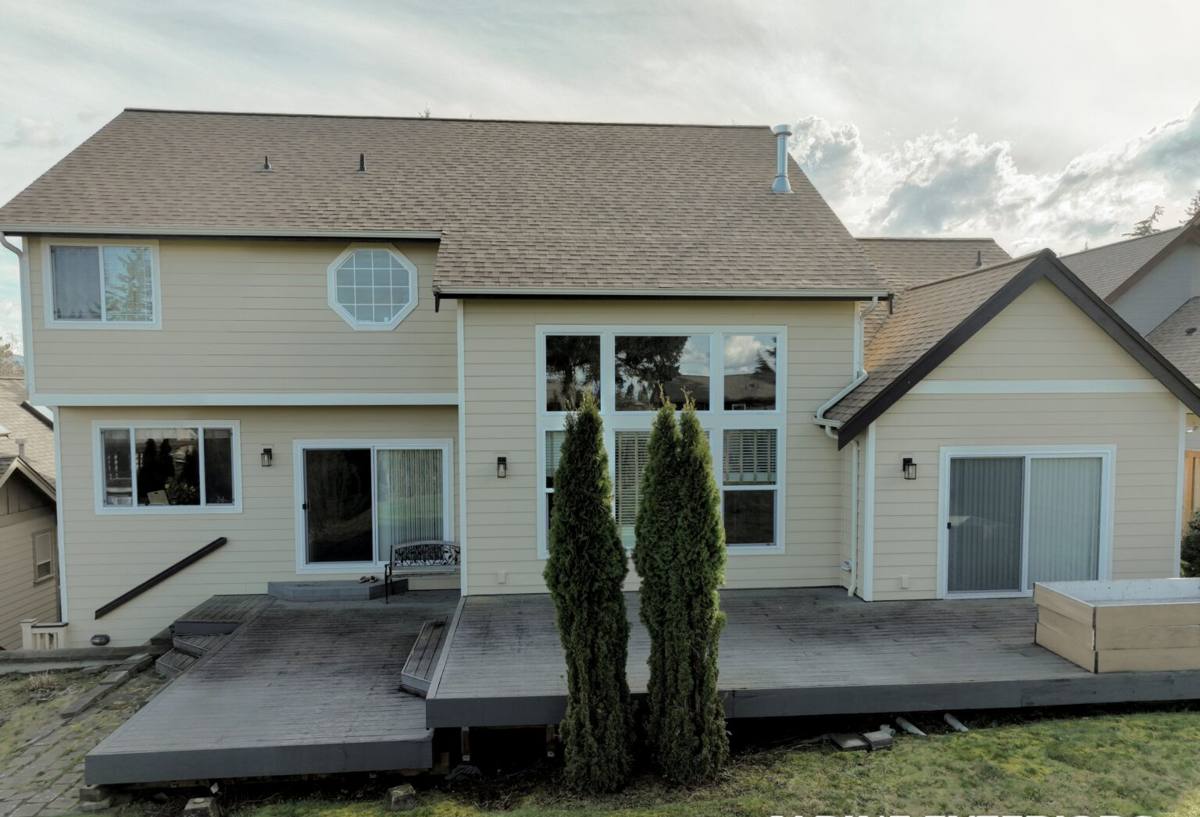
What Whatcom County's Climate Does to a Deck
Bellingham's marine climate is mild, which is part of why people love living here — but mild and dry are not the same thing. A few realities shape how we build and spec decks in Sehome:
- Salt air corrosion: Proximity to the bay accelerates corrosion on fasteners, flashing, and hardware. Cheap or mismatched metal fails faster here than it would inland.
- Driving rain: Wind off the water pushes rain sideways at times, meaning water hits ledger boards, rim joists, and vertical surfaces that a calm-weather deck design might not account for.
- Extended moss season: Shaded, north- or east-facing decks in Sehome's tree-lined lots can stay damp for months at a stretch, which is exactly the environment moss and algae need to take hold.
- Freeze-thaw swings: Not extreme here, but real — a handful of freezes each winter is enough to widen any crack or gap that wasn't sealed properly the first time.
None of this is a reason to avoid decking altogether. It's a reason to be deliberate about material choice, structural detailing, and drainage — which is where composite decking earns its keep.
Why Composite Decking Fits Sehome Specifically
It Doesn't Feed Moss and Mildew the Way Wood Does
Wood decking is organic material — moss, algae, and mildew can root into its grain, especially in shaded, damp spots that don't get much direct sun through Bellingham's overcast months. Composite boards have a cap layer that doesn't offer the same foothold. Surface growth can still form on any decking material exposed to constant moisture and shade, but on composite it sits on top of the board rather than embedding into it, so a routine cleaning actually removes it instead of just knocking back the visible layer.
It Doesn't Swell, Cup, or Split from Repeated Wetting
The freeze-thaw and wet-dry cycling that's normal for a Whatcom County winter is hard on solid wood. Boards absorb water, swell, dry unevenly, and eventually cup, crack, or throw splinters. Quality composite decking is engineered to resist that kind of moisture cycling, which matters more here than in a drier climate where a deck gets a real chance to fully dry out between rains.
It Skips the Annual Maintenance Wood Demands
A wood deck in this climate typically needs yearly attention — cleaning, brightening, and re-staining or sealing — just to keep water from getting into the grain. Composite decking doesn't need that cycle. It still needs periodic cleaning to keep moss and organic debris from building up, but it doesn't need refinishing to stay protected.
What a Correct Composite Deck Installation Involves
The decking boards themselves get most of the attention, but in a climate like this, the parts you don't see are what determine whether the deck lasts. Our process for a Sehome composite deck includes:
1. Structural Assessment and Substructure
We start below the boards. Ledger board attachment, joist spacing, and footing condition all get evaluated — composite decking is heavier than wood in some product lines, and manufacturers spec tighter joist spacing for composite than for standard lumber. Undersized framing is one of the most common corners cut on decks we're asked to fix or replace.
2. Flashing and Water Management
Given how much sideways rain this area gets, ledger flashing where the deck meets the house is not optional. We flash it properly so wind-driven rain can't work its way behind the board and into the rim joist or wall assembly — a slow leak here is one of the more expensive mistakes a deck can hide.
3. Fastener and Hardware Selection
Salt air corrodes cheap or mismatched fasteners faster than most homeowners expect. We use fastener and hardware systems rated for coastal/marine exposure and matched to the decking manufacturer's specifications — mixing metals or using undersized fasteners is a common source of premature hardware failure near the water.
4. Ventilation and Drainage Beneath the Deck
Composite decking still needs airflow underneath it. A deck built low to the ground or over poorly graded soil traps moisture, which shows up as odor, mold, or accelerated wear on the substructure even if the composite boards themselves look fine on top. We grade and ventilate the space underneath as part of the build, not as an afterthought.
5. Board Layout and Expansion Gaps
Composite boards expand and contract with temperature more than people assume. Gaps at butt joints, picture-frame borders, and against the house are set to manufacturer spec so the deck doesn't buckle or gap unevenly as seasons change.
Composite vs. Wood vs. PVC: An Honest Comparison for This Climate
| Factor | Wood | Composite | PVC/Vinyl |
|---|---|---|---|
| Moisture resistance in wet climates | Poor without annual sealing | Strong, engineered for moisture cycling | Very strong, fully synthetic |
| Moss/algae resistance | Low — grows into grain | Good — sits on cap surface, cleans off | Good — nonporous surface |
| Annual maintenance | Cleaning + staining/sealing | Periodic washing only | Periodic washing only |
| Upfront cost | Lowest | Mid-range | Highest |
| Look/feel | Natural wood grain | Wood-look, warmer feel underfoot | More uniform, plastic feel |
| Fastener/hardware sensitivity | Moderate | Higher — needs matched hardware | Moderate |
Wood costs less up front but carries the highest ongoing maintenance burden in a climate like Sehome's. PVC is the most moisture-proof option but comes at a premium and reads as less natural underfoot. For most Sehome homeowners, composite lands in the sweet spot — real durability against local weather without wood's upkeep or PVC's price tag.
What to Check Before You Sign a Composite Deck Contract
- Does the bid specify joist spacing appropriate for composite decking, not just standard lumber spacing?
- Is ledger flashing explicitly included, or is it assumed/skipped?
- Are fasteners and hardware rated for coastal/marine exposure?
- Does the quote name the specific composite product and board profile, not just "composite decking"?
- Is under-deck ventilation and drainage addressed, especially for low-clearance decks?
- Does the contractor carry Washington L&I coverage and offer a written warranty on labor, separate from the manufacturer's material warranty?
A low bid that skips flashing, uses standard-spacing framing, or leaves hardware unspecified isn't actually cheaper — it's a deck that needs rework in a few years, in a climate that won't forgive the shortcut.
Why a Crew That Already Works Sehome Matters
Sehome's mix of established, tree-shaded lots and its closeness to the bay means decks here deal with more shade-driven moisture and more salt exposure than decks in drier, more open parts of Whatcom County. A crew that regularly works this specific neighborhood already knows which sides of a lot tend to hold moisture longest, how local soil drains, and which fastener and flashing details actually hold up here versus what a generic install guide assumes. That local pattern recognition is the difference between a deck that's built to a spec sheet and one that's built for the way Sehome actually weathers.
We also know the practical side of working in this neighborhood — permitting through the City of Bellingham, typical lot access and staging constraints on established residential streets, and scheduling around the wetter stretches of the year so the substructure isn't rushed while it's soaked.
Maintenance: What Composite Still Needs From You
Composite decking is low-maintenance, not no-maintenance. In this climate, a simple seasonal routine keeps it performing the way it's supposed to:
- Sweep off leaves and debris regularly, especially in fall — trapped organic matter under leaves is what feeds moss and mildew.
- Wash the deck surface a couple of times a year with a soft-bristle brush and a cleaner rated for composite — pressure washers on the wrong setting can damage the cap layer.
- Check and clear gaps between boards so water and debris don't build up and hold moisture against the substructure.
- Inspect railings, stairs, and ledger flashing annually for loose fasteners or early corrosion, particularly if the deck faces the bay.
Get an Honest Estimate for Your Sehome Deck
Every lot in Sehome handles shade, drainage, and wind a little differently, and the right composite deck build accounts for those specifics rather than treating every property the same. If you're planning a new deck or replacing one that's showing its age, we're happy to take a look and give you a straightforward, no-pressure estimate — what it needs, what it'll cost, and why. Reach out using the form below to get started.