 Bellingham Siding
 Building a Deck That Actually Holds Up in Sehome
Sehome sits close enough to Bellingham Bay that salt-laden air is part of daily life, and like the rest of Whatcom County, it gets a long stretch of the year where rain falls steadily and surfaces rarely get a full chance to dry out. A deck built with generic, one-size-fits-all methods might look fine the first summer. By year three or four, homeowners in this part of Bellingham start noticing soft spots near ledger boards, green film on the boards by October, and fasteners that have started to weep rust stains into the wood. None of that is inevitable. It's the result of decks designed for a drier climate getting installed here anyway.
Our approach to deck building in Sehome starts from the assumption that the structure has to shed water fast, resist corrosion from salt-tinged air, and stay clean enough underfoot that moss doesn't get a foothold. That changes material choices, fastener selection, framing details, and even how we schedule the work. Below is a straightforward look at what goes into a deck that's actually built for this neighborhood, not just built here.
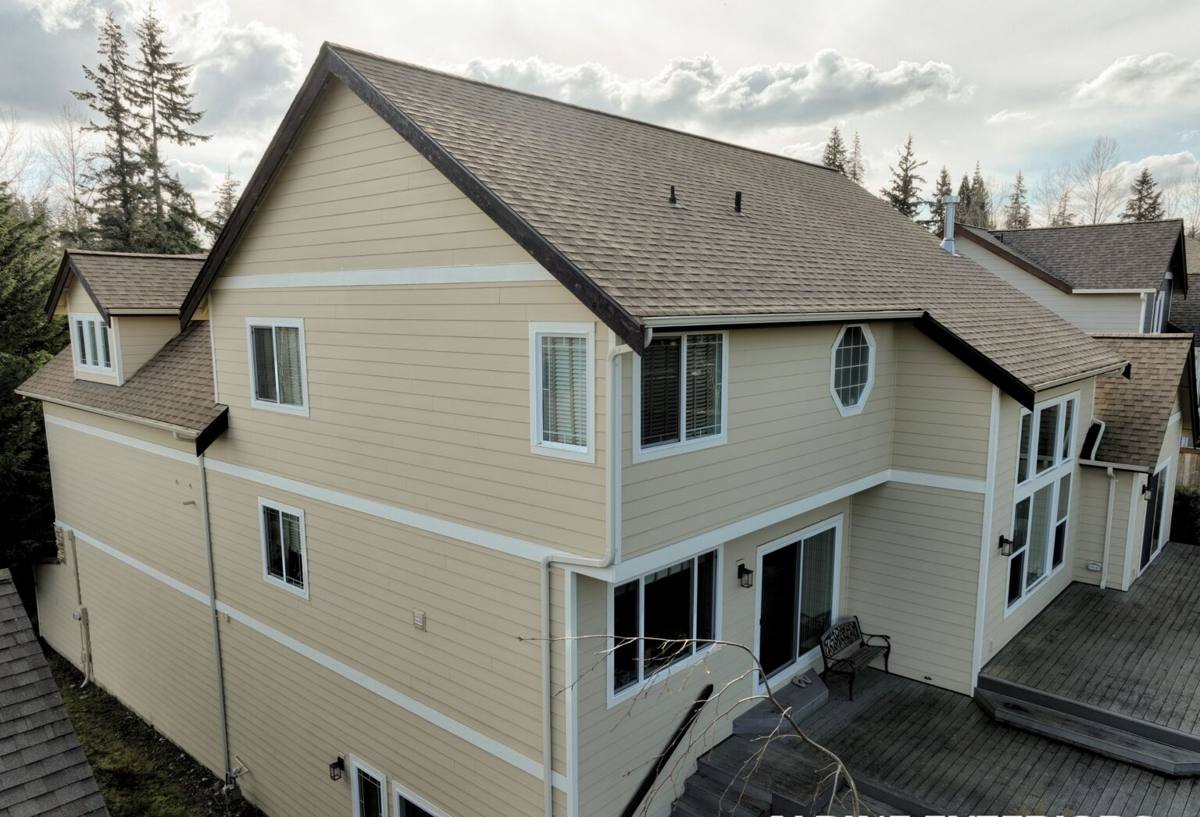
What the Local Climate Does to a Deck Over Time
Salt Air and Metal Fatigue
Proximity to Bellingham Bay means airborne salt is a slow, steady corrosive force on anything metal. Standard galvanized fasteners and hardware can start showing surface rust within a few years in this environment, and once rust starts, it works its way into the wood fibers around the fastener, weakening the connection long before the board itself fails. This is why we default to stainless steel or high-grade coated fasteners rated for coastal exposure on every deck we build here, even when it costs a bit more up front.
Driving Rain and Water Intrusion
Whatcom County storms often come in sideways, not straight down. That means water gets driven under railings, behind ledger boards, and into any gap in the flashing that a calmer climate might get away with ignoring. Ledger board attachment to the house is the single most important structural connection on most decks, and it's also the most common point of failure when flashing is skipped or done poorly. We treat this connection as non-negotiable, not an area to save time on.
Moss Season
Bellingham's long wet season, roughly October through April, gives moss and algae plenty of time to establish themselves on any deck surface that stays damp and shaded. Beyond looking bad, moss holds moisture against the decking material and turns walking surfaces slippery and genuinely dangerous, especially on stairs. Board spacing, surface texture, and how much sun and airflow a deck gets all affect how bad this problem becomes, and it's something we plan for at the design stage rather than leaving homeowners to fight it with a pressure washer every spring.
Choosing the Right Decking Material for This Neighborhood
There's no single correct material for every home, but there are real trade-offs worth understanding before committing. Here's how the common options stack up specifically for a wet, salt-air climate like Sehome's.
| Material | Moisture & Salt Behavior | Maintenance | Typical Lifespan |
|---|---|---|---|
| Pressure-treated wood | Resists rot when sealed regularly; end grain and fastener points are the weak spots | Annual cleaning and re-sealing recommended | 10-15 years with upkeep |
| Cedar | Naturally rot-resistant but softer; can gray and absorb moisture faster near the bay | Regular staining or sealing to maintain appearance and protection | 15-20 years with consistent care |
| Composite decking | Handles moisture well; capped composites resist moss growth better than uncapped | Occasional washing, no staining or sealing needed | 25-30+ years, manufacturer-dependent |
| PVC decking | Fully synthetic, essentially immune to rot and salt corrosion of the board itself | Low; periodic cleaning only | 25-30+ years, manufacturer-dependent |
Wood decks aren't a bad choice, and plenty of homeowners prefer the look and lower upfront cost. But it's an honest trade: wood asks for more of your time and attention in a climate that gives it fewer dry days to recover between rains. Composite and PVC cost more initially but shift that maintenance burden way down, which matters more in a place where a deck rarely gets a full week to dry out. We'll walk through this trade-off with you rather than push one option, because the right call depends on your budget and how much upkeep you actually want to do.
Getting the Structure Right: Framing, Footings, and Drainage
The parts of a deck nobody sees are the parts that determine whether it's still solid in fifteen years. A few details matter more here than they would in a drier climate:
- Footings below frost depth — sized and set to local code so the structure doesn't shift with seasonal ground movement.
- Ledger board flashing — properly integrated with the home's existing water barrier, not just caulked and hoped for.
- Joist tape or protective coating — applied to the tops of joists so standing water doesn't sit directly on cut lumber.
- Corrosion-resistant hardware — joist hangers, screws, and bolts rated for the exposure this area gets.
- Positive drainage slope — a slight pitch away from the house so water doesn't pool against the structure or the foundation wall.
- Adequate ventilation underneath — enough clearance and airflow that the underside of the deck can actually dry between storms.
Skipping any one of these is usually invisible at the time of installation and expensive to fix later, since it often means pulling up decking to get at the framing underneath.
Permits and Code Considerations in Bellingham
Most decks above a certain height or attached to the home require a permit in Bellingham and unincorporated Whatcom County, and inspections typically check footings, ledger attachment, and guardrail height and spacing before the decking goes down. Guardrails generally need to meet a minimum height with baluster spacing tight enough that a small child can't pass through, and stair railings have their own requirements for graspability and height. We handle the permit application and coordinate inspections as part of the job, so you're not the one tracking down what the local building department wants at each stage.
Our Process, Start to Finish
- On-site assessment — we look at your existing structure or building site, sun exposure, drainage patterns, and how the deck will tie into the house.
- Material and design conversation — an honest rundown of options based on your budget, maintenance preference, and how you'll use the space.
- Written estimate — clear pricing with no vague allowances hiding surprise costs later.
- Permit filing — we prepare and submit what's needed and schedule required inspections.
- Demolition or site prep — removing any old structure and confirming the ground is ready for footings.
- Framing and structural work — footings, posts, beams, joists, and ledger attachment, built to hold up in this climate specifically.
- Decking, railing, and stairs — installed with attention to drainage, spacing, and fastener choice.
- Final walkthrough — we go over the finished deck with you, including basic care specific to whatever material you chose.
Maintenance Checklist for a Sehome Deck
Whatever material you choose, a little seasonal attention goes a long way in this climate. A basic annual routine:
- Sweep and rinse debris out from between boards before it composts in place and holds moisture.
- Check for early moss or algae growth in shaded corners and stair treads, and clean it off before it spreads.
- Inspect fasteners and hardware for early rust staining, especially near the ledger board and stair stringers.
- Re-seal or re-stain wood decking on the schedule the product calls for — don't wait until it visibly needs it.
- Confirm gutters and downspouts near the deck are directing water away, not onto the deck surface or framing below.
- Trim back overhanging vegetation that keeps the deck shaded and damp longer than it needs to be.
Why Hiring a Crew Already Familiar With Sehome Matters
A lot of deck problems in this area trace back to a crew applying methods that work fine somewhere drier and never adjusting for what Bellingham actually throws at a structure. Working in this neighborhood regularly means we already know which fastener grades hold up, how to detail flashing for wind-driven rain, and how much slope and airflow a deck needs to keep moss from taking over by winter. It also means we're familiar with how the local building department handles permitting and inspections, which keeps the project moving instead of stalling on paperwork. None of that is complicated, but it only comes from doing the work here consistently, not from a generic playbook.
Getting Started
If you're planning a new deck or replacing one that's showing its age, we're happy to come take a look and talk through honest options for your home and budget. There's no pressure and no obligation — just a straightforward assessment and a written estimate you can think over. Reach out through the form below to get started.