 Bellingham Siding
 Storm Damage in Sehome: A Different Kind of Wear
Sehome sits close enough to Bellingham Bay to catch the salt-laden air coming off the water, and close enough to mature tree cover on the surrounding hillside to take on falling limbs and constant shade. That combination is harder on a roof than either factor alone. Salt air speeds up corrosion on exposed metal fasteners and flashing. Shade and moisture from the tree canopy keep roof surfaces damp for days after a storm passes, which is exactly the environment moss and algae need to take hold. When a windstorm or heavy rain event moves through, it doesn't just test the roof once — it tests a roof that's already been softened by months of that slow, quiet wear.
That's the piece homeowners in this neighborhood often miss. A roof that looks fine on a dry August afternoon can already have compromised fastener holes, lifted shingle tabs, or moss roots working into the granule layer. Add one strong Pacific windstorm or an atmospheric river event and that hidden weakness becomes a leak. Storm damage repair in Sehome isn't just patching what broke during the storm — it's addressing what the storm exposed.
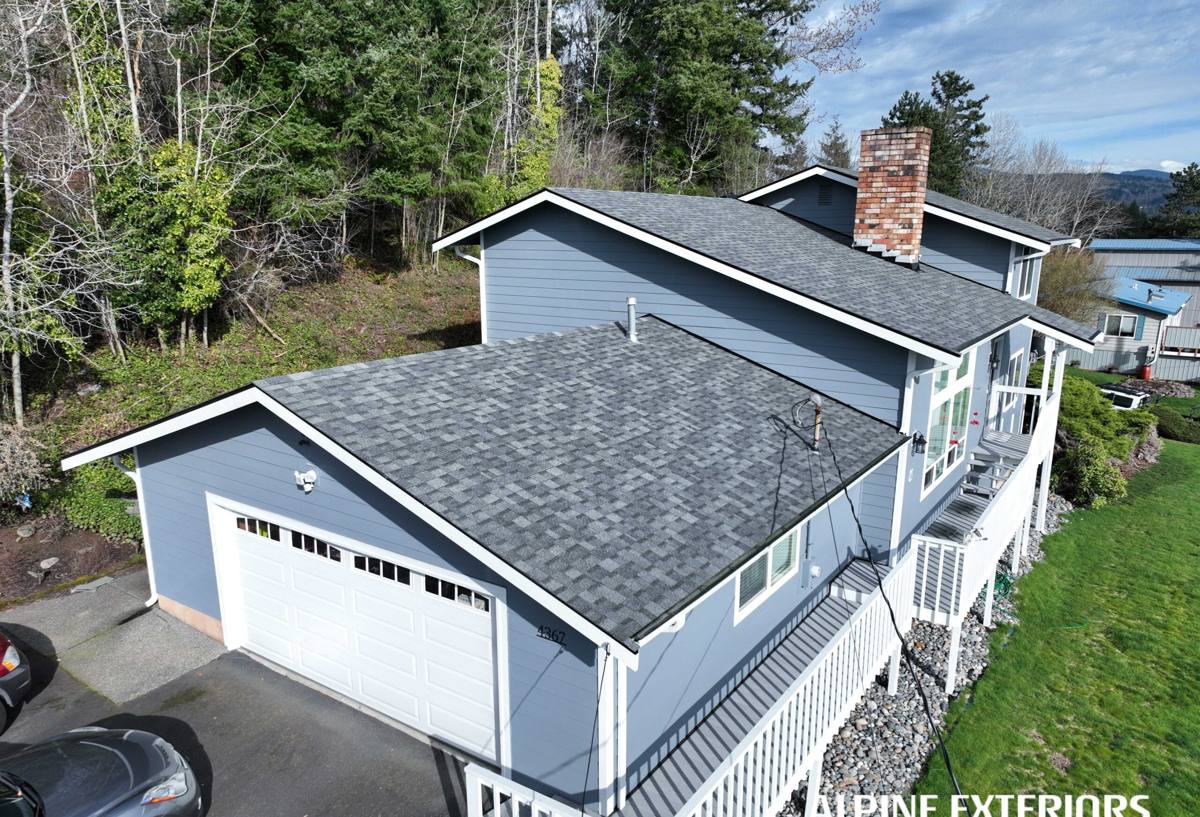
What Actually Counts as Storm Damage
Not every roof problem after a storm is obvious from the ground. Some of it is, and some of it takes a trained eye and a walk on the roof surface to confirm.
Wind Damage
Sustained wind and gusts common to Whatcom County winters can lift shingle tabs, break the sealant bond between courses, and in worse cases tear shingles off completely. Wind-lifted shingles don't always fall off the roof — many just get pushed up and re-settle slightly out of place, which is why a homeowner can miss the damage entirely until a leak shows up weeks later.
Impact Damage
Falling branches and debris are a real factor on tree-lined Sehome lots. Impact damage ranges from cracked or punctured shingles to bent gutters, dented vents, and dislodged flashing around chimneys and skylights. Even a glancing hit from a smaller branch can crack a shingle without tearing it, which is easy to walk right past during a quick visual check.
Water Intrusion Without Visible Damage
Sometimes the roof surface looks intact but wind-driven rain has been forced sideways under a shingle edge or through a gap in flashing. This is common around chimneys, dormers, and any place two roof planes meet. It's the type of damage that shows up as a stain on an interior ceiling long before it's visible outside.
What a Correct Storm Damage Repair Actually Involves
A rushed repair after a storm often causes a second, more expensive problem down the line. A correct repair follows a sequence, not a shortcut.
- Full roof inspection, not just a look at the obviously damaged area — storm damage is rarely limited to one spot
- Emergency tarping if the roof deck is exposed, to stop active water intrusion before repair materials arrive
- Decking inspection underneath removed shingles, since wet or soft plywood needs to be replaced before new roofing goes down
- Flashing check around every penetration — chimneys, vents, skylights — since flashing failure is one of the most common causes of a "mystery leak" after a storm
- Matching materials as closely as possible to the existing roof, both for appearance and to avoid mixing incompatible product lines
- Ventilation check, because trapped moisture under an otherwise sound roof will cause rot and moss growth even after the visible damage is fixed
Skipping any one of these steps is how a $600 repair turns into a $6,000 one two winters later.
Our Process, Start to Finish
- Call or request an estimate. We ask what happened, when, and whether there's active leaking so we can prioritize urgent cases.
- On-site inspection. We walk the roof (not just look from a ladder at the edge) and document what we find — extent of damage, condition of the decking, age and condition of the surrounding roof.
- Written scope and estimate. You get a clear explanation of what needs to be repaired now, what's cosmetic, and what to keep an eye on going forward — no guesswork, no pressure to upsell into a full replacement you don't need.
- Repair work. Most storm damage repairs in Sehome are completed in a single day, weather permitting. Larger jobs involving decking replacement or multiple flashing points may take longer.
- Final walkthrough. We show you what was done and what to watch for, and we clean up debris — old shingles, nails, and branch material — before we leave.
Repair or Replace? How to Think About It
Most storm damage doesn't require a full roof replacement, but it's worth understanding when repair stops making sense.
| Factor | Favors Repair | Favors Replacement |
|---|---|---|
| Roof age | Under 12–15 years, matching shingles available | Nearing or past expected lifespan for the material |
| Extent of damage | Localized to one slope or area | Scattered across multiple slopes or repeated storm events |
| Decking condition | Dry, solid plywood underneath | Soft spots, rot, or repeated water staining |
| Moss/algae history | Minor surface growth, roof otherwise sound | Heavy, long-term moss growth degrading granules broadly |
| Insurance involvement | Claim covers isolated repair scope | Adjuster scope already includes full slope or full roof |
We'll tell you honestly which side of that table your roof falls on. If a repair is the right call, we're not going to talk you into more work than the roof needs.
Working With Insurance After a Storm
Wind and impact damage is often covered under a standard homeowner's policy, but the claims process rewards good documentation. Before any repair begins, we photograph the damage in place — this protects you if there's ever a question about what happened and when. We can also provide a written estimate and scope of damage that your insurance adjuster can reference directly, which tends to move claims along faster than a verbal description alone.
One thing worth saying plainly: be cautious of door-to-door "storm chasers" who show up right after a weather event, pressure for a same-day signature, and disappear once paid. A roofing crew that's actually based in and around Bellingham has a reputation to protect here and will still be reachable if a problem shows up after the repair.
Moss, Algae, and the Long Season That Follows
Whatcom County's moss season runs long — often eight months or more of the cool, damp conditions moss needs to spread. Storm damage repair is a natural point to address moss and algae growth too, since a roof that's already opened up for repair is easier to treat than one that's fully intact.
A few things matter more than people expect here:
- Moss holds moisture against the shingle surface long after rain stops, which accelerates granule loss
- Zinc or copper strips near the ridge can slow regrowth without chemical treatment on the whole roof
- Overhanging branches should be trimmed back where possible — shade and debris are what let moss establish in the first place
- Gutters clogged with moss and needle debris cause water to back up under the shingle edge, which mimics storm damage even when there wasn't a storm
If your roof already has heavy moss coverage, we'll flag it during the storm damage inspection rather than treating it as a separate, unrelated issue — on a Sehome roof, the two are usually connected.
Materials: What We Use and Why
For storm repairs, we prioritize matching what's already on the roof when the existing material is still a sound, available product — mismatched shingle lines can create an uneven look and, in some cases, void manufacturer warranties on the surrounding roof. Where matching isn't possible or the existing product has reached the end of its practical life, we'll walk through options with you honestly, including the real maintenance trade-offs of each — how it handles moss, how it holds up to wind uplift, and what the warranty structure actually covers versus what it sounds like it covers. We're not going to recommend a product because it's cheaper for us to install; we're going to recommend what holds up in this specific climate.
Signs You Need a Storm Damage Inspection Now
- Shingle pieces or granules in the gutters or on the ground after a windstorm
- A new water stain on an interior ceiling or wall, especially near a chimney or skylight
- Visibly lifted, curled, or missing shingles on any slope
- A tree limb that made contact with the roof, even if you don't see obvious damage
- Bent, disconnected, or sagging gutters and downspouts
- Daylight visible through the attic roof deck
- Sudden, heavy moss growth in one concentrated area, which can indicate a spot where water is sitting
Why a Crew That Already Works in Sehome Matters
A contractor who works this neighborhood regularly already knows what a Sehome roof is up against — the salt exposure, the tree cover, the microclimate that keeps things damp longer than other parts of Bellingham. That familiarity shows up in small but real ways: knowing which flashing details tend to fail first on homes with this kind of tree exposure, knowing how the local permitting process works for larger repairs, and being able to respond quickly after a storm because we're not driving in from out of the area. It also means we're still around next year if a question comes up about the work we did.
If you've had storm damage in Sehome — or you're not sure whether what you're looking at is storm damage or ordinary wear — we're happy to take a look. Reach out for a free, no-pressure estimate using the form below.