 Bellingham Siding
 Siding Replacement in Sehome: What Bellingham's Climate Demands
Sehome sits close in to central Bellingham, on hilly terrain near Western Washington University and the Sehome Hill Arboretum, with a mix of older homes and infill construction that spans several decades of building practices. Whatever era your siding dates from, it's been fighting the same fight every house in this part of Whatcom County fights: salt-tinged air off Bellingham Bay, driving rain that hits siding sideways in a fall or winter storm, and a moss and algae season that can run eight months out of the year on shaded, north-facing walls. Siding replacement here isn't a cosmetic upgrade project — it's a chance to correct whatever the original material and installation got wrong for this environment.
We install James Hardie fiber cement siding exclusively, and this page walks through what that looks like specifically for a Sehome home: the signs your siding is done, what a correct tear-off and re-side actually involves, and why the climate here makes material choice and install quality matter more than most homeowners realize until they've lived through a few wet winters.
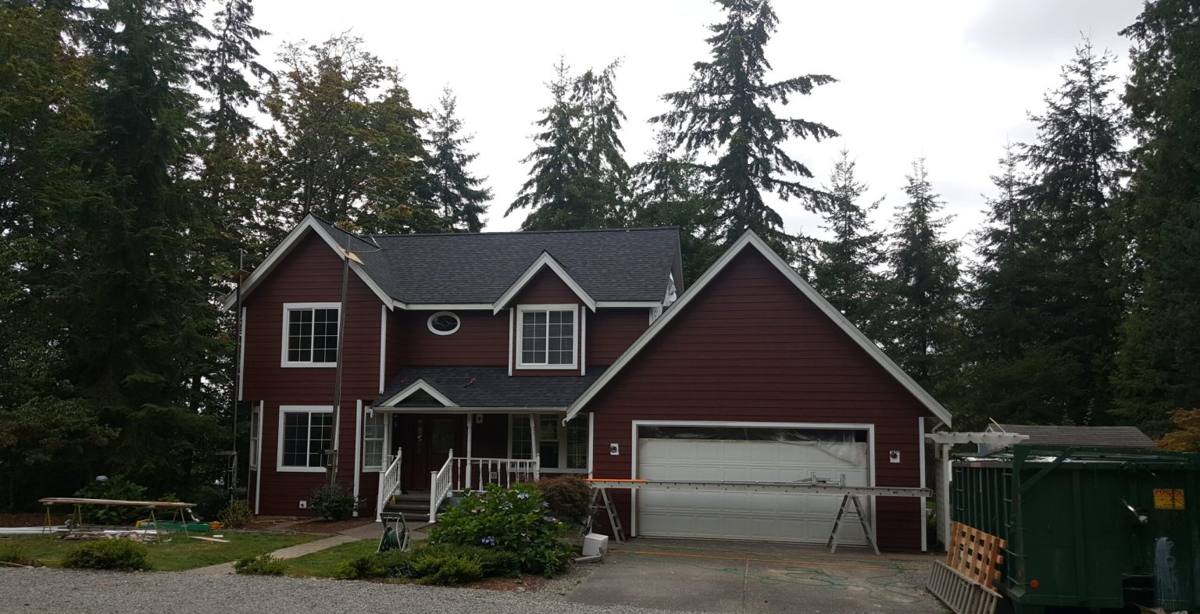
Why Homes in Sehome Wear Out Siding Faster Than the Manual Says
Manufacturer literature tends to assume moderate, dry conditions. Sehome doesn't offer those. A few local factors compound:
- Salt air: Bellingham Bay is close enough that airborne salt reaches inland neighborhoods, accelerating corrosion on fasteners, flashing, and any exposed metal trim — and slowly degrading paint films that aren't formulated to resist it.
- Driving rain: Wind-driven storms push water sideways into lap joints, corner boards, and butt seams instead of letting it simply run down the face of the wall. Siding and flashing details that would be fine in a calm rain often fail here.
- Long moss season: Shaded elevations, mature tree cover, and the region's damp fall-through-spring stretch create ideal conditions for moss and algae to colonize siding surfaces, retaining moisture against the substrate far longer than a dry-climate product was designed to tolerate.
- Hillside exposure: Sehome's terrain means some homes catch more wind and rain on certain elevations than their neighbors just a block away, so wear is often uneven — one wall failing years before the others.
None of this is unique to Sehome specifically, but it's the reality of building anywhere in Bellingham and greater Whatcom County, and it's why we evaluate every re-side job against what the wall actually experiences, not just its age.
Signs Your Sehome Home Is Due for Replacement, Not Another Repair
Spot repairs make sense when damage is isolated and the rest of the siding is sound. Full replacement becomes the honest recommendation when the problems are systemic. Watch for:
- Soft, spongy, or crumbling siding when you press on it, especially near the bottom courses and around window and door trim
- Paint that won't hold — repeated peeling or bubbling within a couple of years of repainting, even on surfaces that get regular maintenance
- Persistent moss or dark streaking that returns within a season of cleaning, particularly on north- and west-facing walls
- Visible gaps, warping, or cupping in individual boards or panels
- Musty smells, soft drywall, or peeling interior paint on exterior-facing walls — signs moisture has already gotten past the cladding
- Rust staining running down from nail heads or trim fasteners
If you're seeing two or more of these across multiple elevations, that's a pattern, not a one-off repair — and it usually means the water-management layer behind the siding, not just the siding itself, needs to be redone correctly.
What a Correct Siding Replacement Actually Involves
A siding replacement that holds up in this climate is only partly about the product on the outside. The work that matters most is often hidden once the job is done.
Tear-off and inspection
We remove the existing siding down to the sheathing and inspect for rot, soft spots, or prior water intrusion — common around window heads, deck ledgers, and lower wall sections where wind-driven rain collects. Any compromised sheathing or framing gets repaired before anything new goes up. Covering damage instead of fixing it just guarantees the next re-side happens sooner.
Water-resistive barrier and flashing
A new weather-resistive barrier goes on correctly lapped, with flashing integrated at every window, door, and penetration so water is directed out and down, never trapped behind the cladding. In a climate with this much sideways rain, flashing details are frequently the difference between a wall that stays dry for decades and one that fails again in five years — regardless of what siding product sits on top.
Rainscreen and ventilation gap
Where appropriate for the wall assembly, we build in a drainage gap behind the siding so any moisture that does get past the cladding can drain and the wall can dry out rather than staying wet against the sheathing. This matters more in a place with Bellingham's rainfall and humidity than it would in a drier region.
Installation to manufacturer spec
James Hardie siding is engineered for wet, coastal Pacific Northwest conditions, but that engineering only pays off when the product is installed to spec — correct fastener placement and spacing, proper clearance at grade and roof lines, factory-mitered or properly caulked joints, and gaps sized for the product's expansion and contraction. Installation errors are the most common reason any siding product underperforms its warranty, and it's where we put the most attention.
Trim, caulking, and paint touch-up
Corner boards, trim, and any field-cut edges get sealed and finished so the whole system — not just the flat wall panels — resists the same rain and salt exposure.
Why We Only Install James Hardie
We standardized on James Hardie fiber cement siding and don't install vinyl, LP SmartSide, or other fiber cement alternatives, because Sehome's climate exposes the weak points in those products faster than it does in drier markets.
| Factor | What It Means for a Sehome Home |
|---|---|
| Moisture resistance | Hardie's fiber cement doesn't absorb and swell the way wood-based composite siding can when repeatedly wetted by driving rain |
| Non-combustible | Fiber cement doesn't burn, unlike vinyl or engineered wood products — a real consideration in a region with wildfire smoke seasons |
| Factory finish (ColorPlus) | A baked-on finish holds color and resists the fading and chalking that salt air and UV accelerate on field-painted surfaces |
| Climate-engineered product lines | Hardie's HZ10 formulation is specifically engineered for wetter, harsher climates like the Pacific Northwest |
| Warranty | A strong, transferable warranty backs the product when it's installed to spec — valuable if you sell the home down the road |
Vinyl siding is inexpensive and low-maintenance in the right setting, but it can warp in temperature swings and doesn't hold up structurally the way fiber cement does over decades. LP SmartSide and other engineered wood products perform well in many climates, but wood-strand composites are more sensitive to sustained moisture exposure than fiber cement — a real trade-off in a region that gets as much driving rain as Whatcom County does. These aren't defects so much as trade-offs, and in Sehome's climate, those trade-offs tip decisively toward fiber cement.
How Long a Sehome Re-Side Project Takes
Most single-family re-sides here run one to three weeks depending on the size of the home, the amount of trim and detail work, and how much sheathing repair the tear-off uncovers. Bellingham's wet season can extend timelines if we hit a stretch of storms mid-project, which is one reason we plan around weather windows rather than fixed calendar dates whenever possible. We'll walk you through a realistic schedule and any weather contingencies before work starts.
What to Ask Before Hiring Anyone for Siding Work in Sehome
Siding replacement is a big investment, and the contractor's experience with this specific climate matters as much as the product they install. Before you hire anyone:
- Ask what happens if they find rotted sheathing during tear-off — get the answer in writing, not verbally
- Ask how they handle flashing at windows, doors, and deck ledgers specifically
- Ask whether they build in a drainage gap or rainscreen, and why or why not for your wall assembly
- Ask for their manufacturer certification status if they're installing James Hardie or another certified product
- Ask how many jobs they've done in Bellingham or Whatcom County specifically, not just generally in Washington
- Get the warranty terms — both material and labor — in writing before signing anything
A crew that already works Sehome and the surrounding Bellingham neighborhoods knows which elevations tend to take the worst weather, how the terrain affects drainage, and what the local building department expects for inspections — none of which shows up on a generic estimate.
Ready to Talk About Your Siding?
If your Sehome home is showing peeling paint, soft spots, or moss that won't quit, we're happy to take a look and give you a straight assessment — no pressure, no upsell to a product we wouldn't put on our own homes. Request a free estimate using the form below and we'll walk the property with you and talk through what your siding actually needs.