 Bellingham Siding
 Asphalt Shingle Roofing Built for Sehome's Conditions
Sehome sits close enough to Bellingham Bay to catch the salt-tinged air off the water, and hilly enough that many homes sit under mature evergreen canopy that keeps roofs shaded, damp, and slow to dry out between storms. That combination — salt air, driving rain off the Strait, and a moss season that can run from October well into spring — is hard on any roof, but it's especially hard on asphalt shingles that weren't installed with this climate in mind. We install and repair asphalt shingle roofs across Whatcom County, and Sehome's mix of older homes near the hill and newer infill construction gives us a good working sense of how local roofs actually age, not just how a manufacturer's spec sheet says they should.
This page covers what asphalt shingle roofing work in Sehome specifically needs to hold up, what a correctly done job looks like, and how our process works from first look to final cleanup.
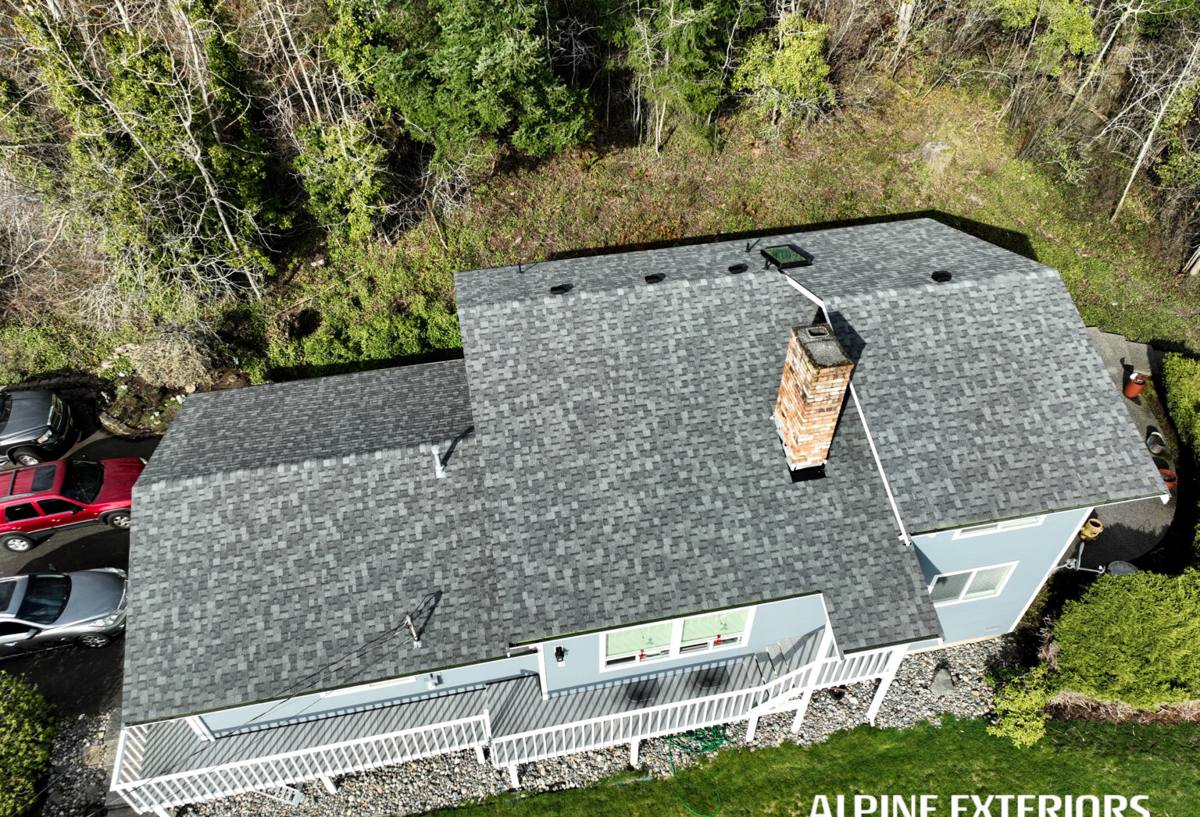
What Bellingham's Climate Does to an Asphalt Shingle Roof
Salt Air and Metal Fasteners
Homes closer to the bay deal with a slow, steady corrosion process on any exposed metal — nails, flashing, vent caps, gutter hardware. Standard electro-galvanized fasteners can start showing rust streaks and weakening well before the shingles themselves are due for replacement. We spec corrosion-resistant fasteners and flashing on every Sehome job, not as an upsell, but because replacing a roof twice as often over metal that failed early costs a homeowner more than doing it right the first time.
Driving Rain and Wind-Driven Moisture
Bellingham doesn't just get rain, it gets rain pushed sideways off the water on a regular basis. That matters more than people expect, because a shingle roof's water resistance depends on overlapping courses shedding water downhill — not on the shingle material being waterproof on its own. Wind-driven rain can force water up and under improperly lapped shingles, especially at eaves, valleys, and anywhere the roof meets a wall or chimney. Underlayment and flashing details carry more of the actual waterproofing load here than they would in a drier climate.
Moss, Shade, and Slow Drying
Moss doesn't cause rot by itself, but it holds moisture against the shingle surface for days after the rest of the roof has dried, which accelerates granule loss and gives algae and lichen a foothold. Shaded, north-facing slopes and roofs under tree canopy — common in Sehome's older lots — are the sections that need the most attention. A roof that looks fine from the street can have a moss-thickened, spongy section on the back slope that's been quietly losing its protective granule layer for a couple of seasons.
What a Correct Asphalt Shingle Roofing Job Involves
"Asphalt shingle roofing" covers a lot of ground, from a small repair to a full tear-off. The work itself is straightforward, but doing it correctly in this climate depends on details that don't show up in a driveway estimate.
Tear-Off vs. Overlay
Layering new shingles over an old roof is sometimes allowed by code and can look fine on day one, but it traps moisture between layers, hides the condition of the decking, and voids or shortens most manufacturer warranties. In a climate that's already working against the roof, we don't recommend overlays. A full tear-off lets us inspect the decking for soft spots, rot, or prior water damage before anything new goes down — problems that are common enough in older homes near the hill that skipping this step is a false economy.
Underlayment
Given how much of the waterproofing burden falls on underlayment here, we don't treat it as a formality. Synthetic underlayment with proper lapping, plus self-adhered ice-and-water barrier at eaves, valleys, and roof-to-wall transitions, gives the roof a second line of defense for the days when wind-driven rain gets past the shingles themselves.
Ventilation
Poor attic ventilation traps heat and moisture under the deck, which shortens shingle life from underneath — invisible until it isn't. Balanced intake and exhaust ventilation matters as much in a cool, wet climate as it does in a hot one; here it's about managing condensation and moisture, not just summer heat.
Flashing Details
Valleys, chimneys, skylights, and wall intersections are where the large majority of roof leaks actually start — not in the open field of shingles. Correctly formed and lapped step flashing, counterflashing, and valley metal, tied properly into the underlayment, is the difference between a roof that sheds Bellingham's rain and one that slowly feeds it into the wall or attic.
Repair, Re-Roof, or Full Replacement?
Not every roofing call in Sehome needs a new roof. Part of an honest estimate is telling a homeowner when a targeted repair will genuinely hold, and when it's a stopgap that's going to cost more in the long run.
| Situation | Usually Needs | Why |
|---|---|---|
| Isolated leak, roof under 12-15 years old | Targeted repair | Localized flashing or shingle failure on an otherwise sound roof |
| Moss buildup, granule loss on a shaded slope only | Cleaning + repair of that section | Rest of the roof may still have useful life left |
| Multiple leaks, curling shingles across the whole roof | Full re-roof | Widespread wear means patching just moves the problem around |
| Roof at or past its rated lifespan with soft decking found | Full replacement, tear-off | Decking damage means the roof system itself has failed, not just the surface |
| Cosmetic algae streaking, no leaks or granule loss | Cleaning only, monitor | Appearance issue, not a performance problem yet |
When we can repair honestly instead of selling a full replacement, we say so. When a repair would just delay an expense that's coming anyway, we say that too, along with the reasoning.
Our Process, Start to Finish
- On-site inspection. We walk the roof (or use a lift/drone where pitch or access makes that unsafe), check the attic side for moisture and ventilation issues, and look specifically at the shaded and valley sections that tend to fail first here.
- Written estimate. Scope, materials, and price in plain terms — no vague allowances that turn into change orders later.
- Material selection. We walk through shingle class, color, and warranty options that fit the home and the budget.
- Tear-off and decking check. Old roofing comes off, decking gets inspected and any damaged sheathing replaced before anything new is installed.
- Underlayment, flashing, and shingle installation. Installed to manufacturer spec and matched to what this climate actually demands, as covered above.
- Cleanup and final walkthrough. Magnetic sweep for nails, debris hauled off, and a walkthrough so the homeowner sees the finished work and asks questions before we consider the job done.
Choosing a Shingle for a Sehome Roof
Shingle choice matters more here than in a mild, dry climate, mostly because of algae resistance and wind rating.
| Shingle Type | Typical Lifespan | Notes for This Climate |
|---|---|---|
| 3-tab (builder-grade) | 15-20 years | Lower wind rating; we generally don't recommend it for wind-exposed Bellingham roofs |
| Architectural / laminate | 25-30 years | Better wind rating and heavier profile; our default recommendation for most homes here |
| Algae-resistant (copper-granule) laminate | 25-30 years | Built-in resistance to the algae staining that shaded, damp roofs are prone to |
| Premium / designer laminate | 30+ years | Heaviest wind rating and thickest profile; worth it on steep, highly visible roofs |
We don't push premium shingles on every job. On a shaded, moss-prone roof, an algae-resistant laminate is usually the better dollar-for-dollar choice than paying more for a premium line that doesn't address the actual problem the location creates.
Keeping a Sehome Roof Healthy Between Roofing Jobs
A correctly installed asphalt shingle roof still needs upkeep in this climate. Most of the premature failures we see trace back to a few skipped basics rather than a defective roof.
- Keep gutters and valleys clear of needles and debris so water has a clear path off the roof
- Have moss on shaded slopes treated and gently removed before it thickens, rather than scraped aggressively, which damages granules
- Trim back branches that keep a section of roof in constant shade and drop debris onto it
- Check attic ventilation isn't blocked by insulation or debris, especially after any attic work
- Have flashing around chimneys, skylights, and vents inspected every few years, since these fail well before the shingle field does
- Walk the roof visually after major windstorms for lifted or missing shingles rather than waiting for an interior leak to show up
Why Hiring a Crew That Already Works in Sehome Matters
Roofing crews who mostly work drier inland climates tend to under-spec underlayment and flashing because they haven't had to answer for what wind-driven rain does over a few winters. A crew that regularly works Whatcom County roofs has already seen which details hold up here and which ones come back as callbacks — moss on the wrong slopes, corroded fasteners near the water, valleys that were flashed for a milder climate. That's not a marketing point, it's just what shows up in the work itself: fewer surprises, fewer callbacks, and an estimate that accounts for Sehome's actual conditions instead of a generic roofing spec.
If you're dealing with a leak, moss buildup, or a roof that's simply getting old, we're happy to take a look and give you a straight answer on repair versus replacement. Use the form below to request a free, no-pressure estimate for your Sehome home.