 Bellingham Siding
 Siding Repair for York Homes in Bellingham
York is one of Bellingham's established, close-in neighborhoods, with the kind of mixed-age housing stock you'd expect from a neighborhood that's been built out over several decades — older homes standing next to newer infill, a lot of mature tree cover, and siding in every condition from recently replaced to original and tired. That mix means the siding repair calls we get from York homeowners cover a wide range: a cracked board near a downspout, a soft spot below a window, trim that's pulling away at a corner, or a section that took a hit from a falling branch. What almost all of them have in common is that the damage looks small on the surface and turns out to matter more once you understand what caused it.
Bellingham's climate isn't gentle on siding. Salt-tinged air off the bay, rain that comes in sideways more often than straight down, and a moss season that runs most of the year on shaded and tree-covered walls all put steady pressure on any exterior. A repair that only patches the visible damage without addressing what let the damage happen in the first place is a repair that fails again — usually in the same spot, usually within a year or two.
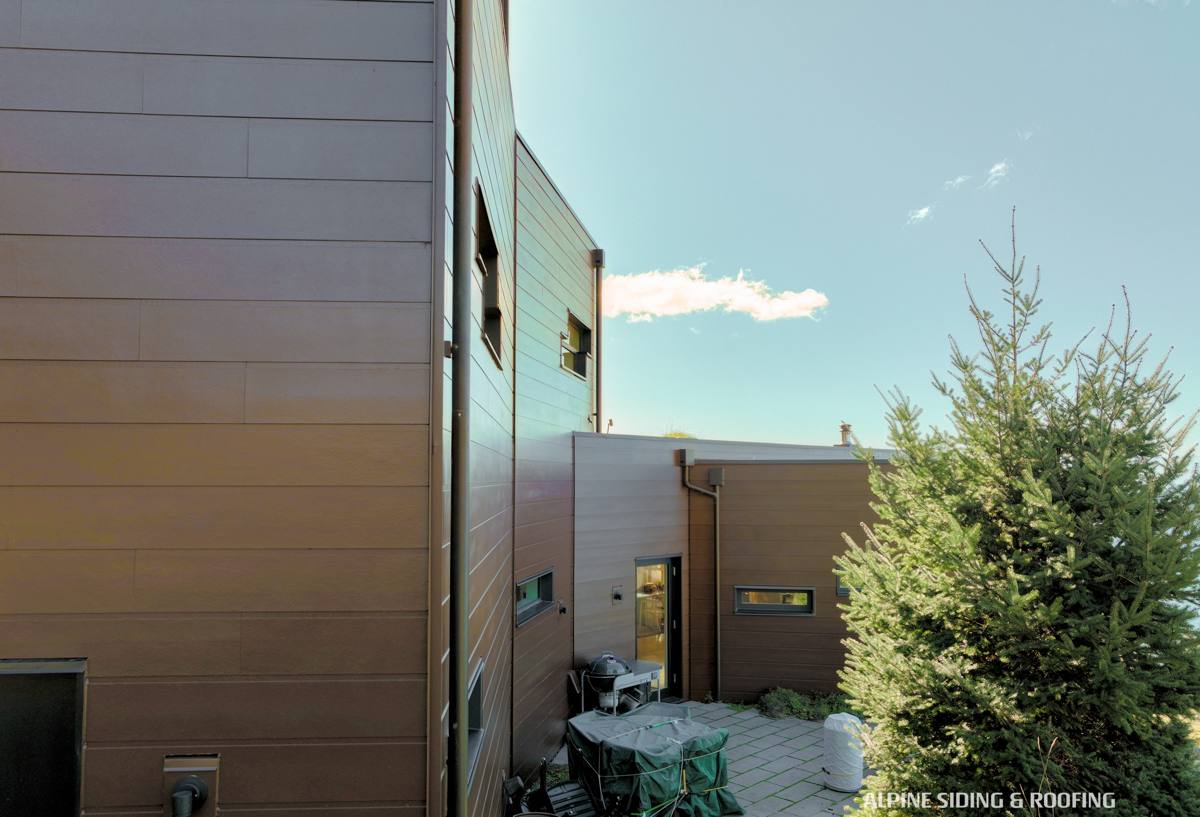
What Bellingham's Climate Does to Damaged Siding
Wind-Driven Rain Finds the Gaps
A crack, a gap at a butt joint, or a piece of siding that's come loose from its fasteners isn't just a cosmetic problem here. Wind off the water pushes rain sideways into exactly those openings, and once water gets behind the siding it doesn't evaporate quickly in this climate — it sits against the sheathing and the framing, working on them long after the rain has stopped.
Moss and Trapped Moisture on Shaded Walls
York's tree cover is part of what makes the neighborhood pleasant to live in, but shaded, slow-drying walls are also where we see the most siding damage. Moss holds moisture against the siding surface, and where a board has already lost paint or finish integrity, that constant dampness accelerates rot at a rate that surprises most homeowners.
Salt Air and Corrosion at Fasteners and Trim
The steady salt exposure common to this part of Whatcom County is hard on any exposed metal — nail heads, trim flashing, corner caps. A repair that reuses the wrong fastener type, or skips flashing that's already failing, tends to fail again for the same reason the original damage happened.
Common Siding Repair Issues We See in York
Some of these are urgent, some can be scheduled around, but none of them get better by waiting through another wet season:
- Cracked or split boards near downspouts, hose bibs, or other spots that see concentrated water
- Soft or spongy siding below windows, where failed flashing has let water track down behind the wall
- Buckled or bowed panels caused by moisture trapped behind the material
- Corner trim or J-channel separating from the wall, opening a path for wind-driven rain
- Impact damage from storms, falling branches, or yard equipment
- Persistent moss or staining that keeps returning to the same section even after cleaning
- Visible gaps at butt joints where caulking has failed or was never installed correctly
Repair or Replace? How We Make That Call
Not every damaged section needs to come out, and not every damaged section should be patched. The honest answer depends on how far the underlying moisture problem has spread, not just on how the surface looks.
| Situation | Usual Recommendation | Why |
|---|---|---|
| Isolated crack or impact damage, sound material around it | Section repair | Underlying sheathing and framing are dry; a targeted patch resolves it |
| Soft or spongy siding with staining spreading to neighboring boards | Wider section replacement | Rot has likely reached the sheathing; patching over it hides the problem, doesn't fix it |
| Repeated moss/moisture issues limited to one shaded wall | Repair plus a drainage or ventilation fix | Replacing siding without correcting airflow or drainage just resets the clock |
| Damage scattered across multiple walls, siding original and aging out | Full re-side discussion | Repeated repairs on siding near the end of its service life cost more over time than one correct replacement |
We'll tell you plainly which category your project falls into, including when a smaller repair is genuinely the right call rather than upselling a full replacement you don't need yet.
What a Correct Repair Actually Involves
A siding repair that holds up in this climate isn't just "cut out the bad piece, nail in a new one." A repair done right in York should include:
- Removing enough surrounding material to see the actual extent of moisture damage, not just the visible crack
- Checking the house wrap or weather-resistive barrier behind the damaged area and repairing any tears or gaps found
- Confirming the sheathing underneath is sound before new siding goes back over it
- Re-flashing any window, door, or trim transition near the repair rather than caulking over an existing flashing failure
- Matching fastener type and spacing to manufacturer specification, not just "close enough"
- Sealing and finishing cut edges so the repaired section isn't the next spot to fail
Skip any of those steps and the repair looks fine on install day. What tends to happen instead is the same failure reappearing eighteen months to three years later, because the actual cause — trapped moisture, a bad flashing lap, an undersized fastener — never got addressed.
Why Repair Material Matters as Much as Repair Technique
We install and repair James Hardie fiber cement exclusively, which shapes how we approach every repair call, including on homes where the existing siding isn't Hardie. Fiber cement's dimensional stability is a real advantage in a repair: it doesn't swell, cup, or move the way wood-based or vinyl products can, so a correctly installed patch stays flush and tight over time instead of working itself loose. James Hardie's ColorPlus factory finish also means a repair section can be color-matched more reliably than field-painted materials, where sun exposure and age have already shifted the original paint's tone.
| Material | Repairability | Color Match Over Time |
|---|---|---|
| James Hardie fiber cement | Stable, holds fastener and joint detail well after repair | Strong with ColorPlus-matched replacement boards |
| Vinyl | Brittle with age; cracks further when disturbed for repair | Poor; sun-faded panels rarely match new stock |
| LP SmartSide (engineered wood) | Repairable but exposed edges need careful resealing | Moderate; field-painted, so match depends on paint condition |
| Cedar | Repairable but prone to the same moisture issues recurring nearby | Variable; depends on stain/paint age and exposure |
When we're called to repair siding that isn't Hardie, we'll still give you an honest assessment and a real repair when that's the right call. But if the damage is extensive enough that we're talking about replacing a full wall or elevation, our recommendation is going to be James Hardie — not because we're pushing our own product line, but because we've made a professional decision not to install materials we don't think hold up as well in this specific climate over the long run.
Our Repair Process in York
Assessment First
We start by looking past the visible damage — checking for moisture behind the siding, evaluating whether nearby sections are affected, and confirming what's actually causing the failure before we quote a fix.
A Clear, Honest Recommendation
You'll get a straight answer on whether this is a contained repair, a larger section replacement, or something that points toward a broader conversation about the siding's remaining service life.
Repair to Manufacturer Spec
Where James Hardie material is involved, every fastener, gap, and flashing detail follows Hardie's published installation requirements for this climate zone — the same standard we hold for full installs, applied to a repair.
Walkthrough When Finished
We show you what was found, what was fixed, and what to watch for going forward, so you're not left guessing about whether the underlying cause is actually resolved.
Cost Factors for Siding Repair in York
Repair costs vary more than replacement costs do, because the range runs from a single-board patch to a multi-section rebuild. A few things that move the price on a given York home:
| Factor | Why It Matters |
|---|---|
| Extent of hidden moisture damage | Sheathing and framing repair adds cost beyond the visible siding |
| Wall height and access | Second-story or hard-to-reach sections take more labor and equipment |
| Color and profile matching | Older siding runs may need a closer color match sourced or blended |
| Number of separate damage locations | Several small repairs across a home can add up to more than one focused replacement |
| Flashing and trim condition | Failed flashing found during the repair often needs replacing along with the siding |
We'll give you real numbers after seeing the actual damage, not a rough estimate over the phone — repair costs are too dependent on what's underneath the siding to price accurately any other way.
Why Hire a Crew That Already Works in York
A neighborhood like York, with its mix of home ages, tree cover, and proximity to the bay, has patterns to its siding failures that a crew only sees by working here repeatedly across different seasons. Which walls tend to hold moisture longest because of shade and tree placement, how far wind-driven rain typically travels up a wall during a real storm, where salt air does the most damage to trim and fasteners — that's the kind of local knowledge that shows up in a faster, more accurate diagnosis, not just a faster repair.
If you're dealing with damaged, soft, or failing siding on a York home, we're happy to come take a look, give you a straight answer on repair versus replacement, and put together a no-pressure estimate. There's a form below — reach out and we'll set up a time to see the damage in person.