 Bellingham Siding
 Why Siding Repair Looks Different in Sunnyland Than It Does Inland
Sunnyland sits close enough to Bellingham Bay that homes here take on a different kind of weather exposure than houses a few miles inland in Whatcom County. Salt-laden air moves in off the water, driving rain comes in sideways during fall and winter storms, and the tree cover that gives the neighborhood its character also means shade, damp ground, and long stretches where siding simply doesn't get a chance to dry out. That combination is hard on any exterior material, but it's especially unforgiving toward siding that was patched incorrectly, painted over problems instead of fixing them, or installed without proper flashing and water management to begin with.
We repair siding in this neighborhood regularly enough to know the pattern: damage rarely announces itself all at once. It shows up as a soft spot near a window, a section of paint that keeps peeling no matter how many times it's redone, or a patch of moss that never fully goes away even after cleaning. Treating those as cosmetic issues instead of moisture issues is how a $500 repair turns into a $5,000 one.
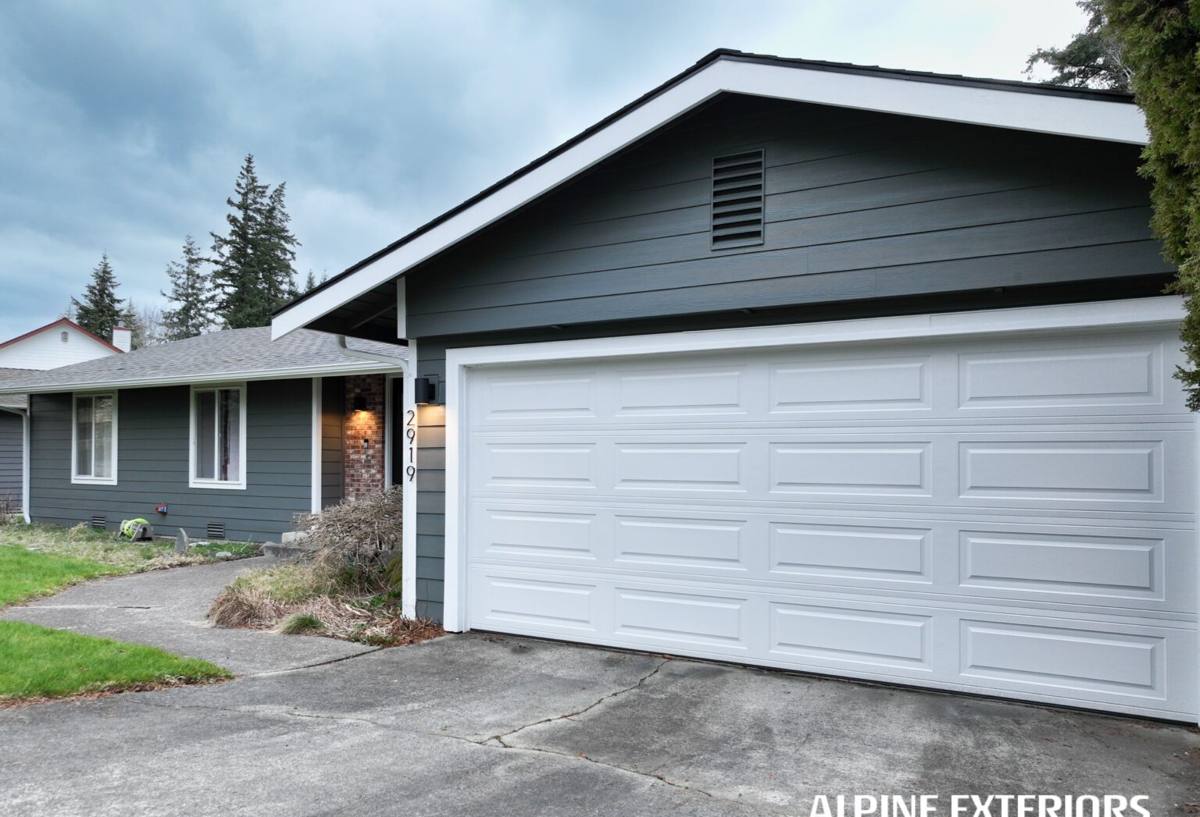
Signs Your Sunnyland Home Needs Siding Repair, Not Just a Repaint
A fresh coat of paint can hide a lot for a season or two, but it doesn't fix what's underneath. Before you call a painter, walk your exterior and look for these:
- Boards that feel soft, spongy, or give slightly when you press on them
- Persistent moss or dark streaking in the same spot after every cleaning
- Paint that bubbles, peels, or fails faster on one section than the rest of the house
- Visible gaps, cracks, or separation at seams, corners, and around window and door trim
- Warping or bowing, especially on the north and west-facing walls that stay shaded and wet longest
- Musty smell or discoloration on interior walls that back up to an exterior wall
- Siding that was previously patched but is failing again in the same location
Any one of these on its own might be minor. Two or three together, especially if they cluster near ground level or under a window, usually mean water has been getting behind the siding for a while.
Where Damage Shows Up First
In our experience working this part of Bellingham, the first failure points are almost always the same: bottom courses near grade where splash-back and moisture sit longest, window sills and trim where caulking has failed, and any spot where two different materials or an old repair meet the original siding. Those transition points are where water finds its way in, even when the surrounding siding looks fine.
What Correct Siding Repair Actually Involves
Diagnosing the Cause Before Touching a Board
Replacing a damaged board without figuring out why it failed just guarantees the same failure a few years later. Before we cut anything out, we check for the underlying cause — failed flashing, a gap in the house wrap, a gutter dumping water where it shouldn't, or grading that pushes water back toward the foundation wall. Fixing the siding without fixing the cause is a cosmetic repair, not a real one.
Matching Material and Profile
A repair only looks and performs right if the replacement piece matches the existing siding's profile, reveal, and finish. Mismatched board width or a different factory finish is the fastest way to make a repair stand out instead of blend in — and it's a common shortcut with lower-end patch jobs.
Restoring the Water Management System
Siding is only one layer of a wall's defense against moisture. Proper repair means reinstalling house wrap correctly, flashing window and door openings, and using kick-out flashing where a roofline meets a wall so water is directed away from the siding instead of behind it. Skipping this step is the single most common reason a "repaired" section fails again within a year or two.
Repair or Replace? How We Make That Call
Not every problem area needs a full re-side, and we won't tell you it does. But there's a point where patching individual sections costs more over time than doing the job right once. Here's generally how we think through it:
| Factor | Leans Toward Repair | Leans Toward Replacement |
|---|---|---|
| Extent of damage | Isolated to one or two sections | Spread across multiple walls |
| Cause of damage | One identifiable, fixable source | Systemic — bad original install, missing flashing throughout |
| Age of existing siding | Newer, otherwise in good shape | Original siding is decades old and failing broadly |
| Underlying wall condition | Sheathing and framing are sound | Rot has spread into sheathing or framing |
| Typical cost range | Roughly a few hundred to a couple thousand dollars | A full re-side runs into the tens of thousands, depending on home size |
We'll tell you honestly which category your home falls into, and we won't push a full replacement on a house that just needs a competent, localized repair.
Why We Only Repair With James Hardie Fiber Cement
We install and repair exclusively with James Hardie fiber cement siding. We don't install vinyl, LP SmartSide, Cemplank, Allura, or primed wood siding, and that standard applies to repair work too. There's a practical reason beyond preference: patching a wall with a different material than what's already there creates a mismatch in how the two products expand, contract, and shed water, which sets up future problems at the seam.
Hardie's fiber cement holds up well to the salt air and moisture cycling common near Bellingham Bay — it doesn't rot, it resists moss and mildew far better than wood, and it isn't a food source for pests the way wood siding can be. Its ColorPlus factory finish is also formulated to hold color and resist the fading that comes from constant damp, low-light conditions, which matters in a neighborhood with as much tree cover as Sunnyland. When a Hardie repair is done correctly and matched to the existing product line, it should be difficult to tell where the repair was made.
If your existing siding is a different material entirely, we'll say so plainly and talk through your options — including what a Hardie replacement would look like — rather than force a mismatched patch onto a wall it wasn't designed for.
Our Sunnyland Siding Repair Process
- On-site inspection. We look at the damaged area and the surrounding wall, not just the obvious spot, to catch related issues before they become their own separate repair.
- Moisture and cause check. We identify what let water in — failed caulking, missing flashing, drainage issues — so the fix addresses the source, not just the symptom.
- Honest scope and estimate. You get a clear picture of what needs to happen, what it will cost, and why — including if a small area has actually spread further than it looks from the outside.
- Removal and inspection of the wall behind it. Damaged boards come off, and we check the sheathing and house wrap underneath before closing anything back up.
- Correct rebuild. House wrap and flashing are restored to spec, then matching Hardie siding is installed to the same reveal and profile as the surrounding wall.
- Final check. We walk the repair with you so you can see the work and ask questions before we consider the job done.
Why Hiring a Crew That Already Works in Sunnyland Matters
Siding repair is a trade where local familiarity actually changes outcomes. A crew that already works this part of Bellingham has seen how homes in older, tree-shaded neighborhoods age differently than new construction on open lots — where moss tends to build up fastest, which orientations stay damp longest through a Whatcom County winter, and what a house built decades ago is likely to have (or be missing) behind its original siding. That's not marketing — it's the difference between a repair that guesses and one that already knows what to check first.
It also means straightforward logistics: material can be matched and sourced without guesswork, scheduling isn't complicated by long travel distances, and if something needs a second look after the first hard rain of the season, we're not far away.
Keeping Repaired Siding Solid Through the Next Wet Season
A correct repair should hold up, but a little seasonal attention keeps it — and the rest of your siding — performing the way it should:
- Keep gutters clear so water isn't overflowing directly onto siding below
- Trim back vegetation and tree limbs that keep siding shaded and damp
- Rinse off moss and grime buildup before it has a chance to hold moisture against the surface
- Check caulking around windows, doors, and trim annually and touch up before winter rains start
- Watch the same problem areas each fall — if something looks off early, a small fix is far cheaper than a rebuild
If you're noticing soft spots, recurring moss, failing paint, or a section of siding that just doesn't look right, it's worth having someone look at it before another Whatcom County winter sets in. We're happy to come take a look, tell you honestly what we find, and put together a free, no-pressure estimate — no obligation either way.