 Bellingham Siding
 What "New-Construction Windows" Actually Means
New-construction windows are not the same product or the same job as a replacement window. A new-construction window has a nailing fin (also called a nail flange) built into the frame, and it gets installed into a bare, framed rough opening before the exterior wall is closed in — before house wrap goes fully on and long before siding or trim shows up. A replacement window, by contrast, gets inserted into an existing frame after the original sash is pulled, with the old exterior finish already in place around it.
For homeowners building new in Sudden Valley, finishing out an addition, or replacing a wall of windows down to the studs, this distinction matters. New-construction windows give us the chance to build the water management system correctly from the framing out — flashing, weather-resistant barrier (WRB), and drainage plane all sequenced in the right order — instead of working around decisions someone else already made. Done right, it's the single best opportunity you'll have to keep water out of that wall assembly for the life of the house.
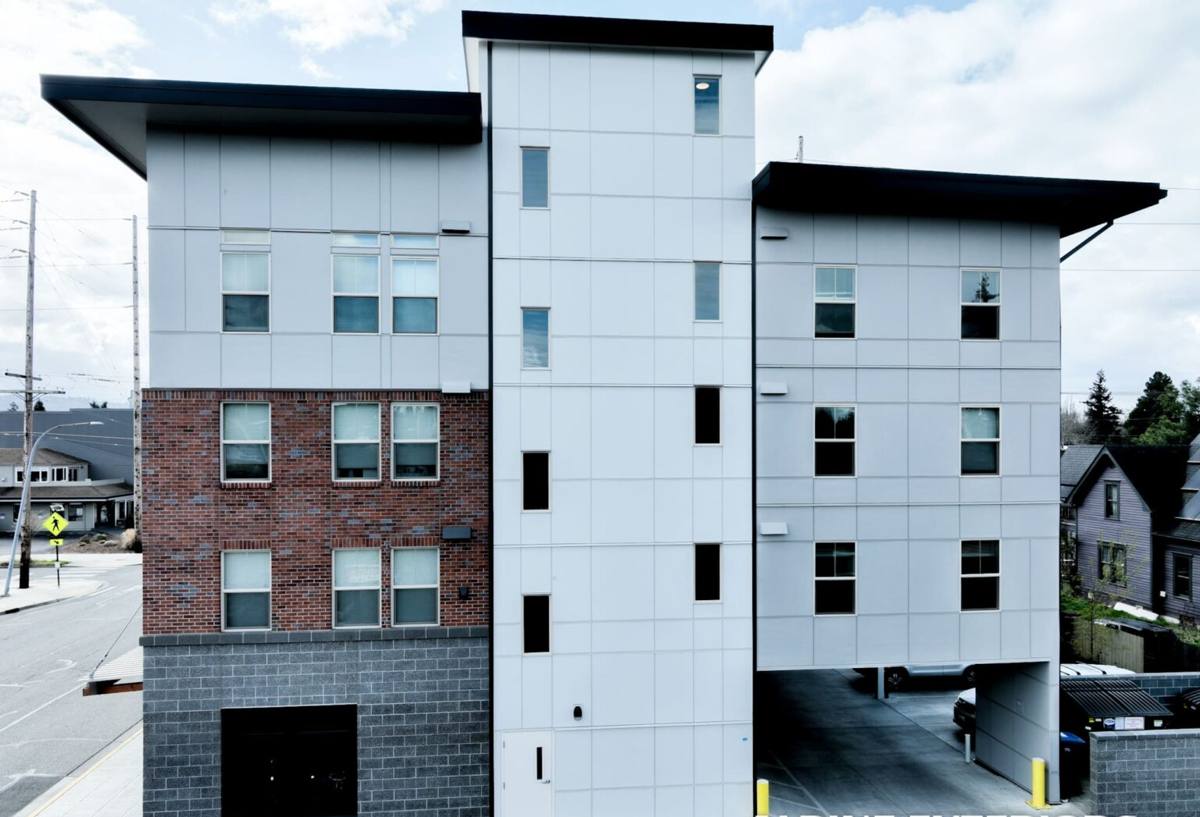
Why Sudden Valley's Climate Puts Extra Demands on the Install
Whatcom County's marine climate doesn't do a house any favors. Moisture-laden air moves in off Bellingham Bay and the Sound, and on windy fall and winter days it carries salt further inland than most homeowners expect — enough to accelerate corrosion on hardware and fasteners that aren't rated for it. Add in driving, wind-blown rain that hits window openings at an angle rather than straight down, and you have conditions that will find any gap in flashing or sealant within a few seasons, not decades.
Sudden Valley's setting around Lake Whatcom adds its own wrinkle. Many lots sit under heavy tree cover, which means shaded, slow-drying elevations that stay damp longer after a storm — exactly the conditions that grow moss and algae on trim, siding, and window sills. A window opening that drains poorly or traps moisture behind the trim in that kind of shade will show problems — soft wood, staining, failed caulk lines — years before an identical window on a sunny, open lot would. None of this is exotic engineering; it just means the flashing, drainage gaps, and material choices have to be right the first time, because this climate doesn't forgive shortcuts.
What a Correct Installation Actually Involves
A lot of what separates a window that performs for thirty years from one that leaks in five happens before the window is ever set in the opening, and again in the few inches of detail around its edges.
Flashing and the Drainage Plane
Every new-construction window needs a sloped sill pan flashing under it — not just a bead of caulk — so any water that gets past the glazing or frame drains back out to the exterior instead of pooling on the sill. Jamb flashing and head flashing then get shingle-lapped with the WRB, meaning each layer overlaps the one below it like roof shingles, so water is always directed down and out, never trapped behind a layer that's lapped backward. This sequence is the single most common place we find mistakes on jobs we're asked to fix — usually because someone worked around the window instead of building the flashing continuous through the opening.
Fastening and Fit
The window has to sit square, level, and plumb in the rough opening, shimmed so the frame doesn't bow when it's fastened — a bowed frame binds the sash and lets air and water past the weatherstripping even on a window that was manufactured correctly. The nailing fin gets fastened per the manufacturer's schedule (spacing and fastener type matter for both wind load and warranty compliance), not just "enough nails to hold it."
Sealing, Insulating, and Finishing
The gap between the frame and rough opening gets filled with a low-expansion foam or backer rod and sealant — never packed solid with standard expanding foam, which can bow the frame. On the interior, air sealing at the frame keeps conditioned air from leaking out around the window, which matters for both comfort and condensation control in our winters. On the exterior, the trim and siding then integrate over top of properly lapped flashing, so the finished wall sheds water at every layer, not just at the caulk line.
Choosing the Right Window for This Climate
Frame material and glass package both affect how a window holds up here, not just how it looks. For a heating-dominated marine climate like ours, we generally steer clients toward a lower U-factor (better insulating value) paired with a moderate solar heat gain coefficient, since Sudden Valley homes benefit more from retaining heat than from blocking summer sun. Washington's state energy code sets minimum performance requirements for new construction, and window selection is one of the more cost-effective ways to hit those targets without over-spending elsewhere in the building envelope.
| Frame Material | Moisture Tolerance | Maintenance | Typical Lifespan |
|---|---|---|---|
| Vinyl | Good — won't rot; seams need proper welding | Low | 20–30 years |
| Fiberglass | Very good — dimensionally stable, low expansion/contraction | Low | 30–40+ years |
| Wood-clad | Good on the exterior; interior wood needs care if exposed to moisture | Moderate — periodic finish upkeep | 20–30+ years with maintenance |
| Aluminum | Fair — conducts cold and can condense without thermal breaks | Low | 20–30 years |
We don't push one brand or material as the only "correct" answer — the right call depends on your budget, the home's design, and how much upkeep you want to take on. What we won't do is install a window whose installation instructions or warranty terms conflict with proper flashing practice for this climate, because that's a trade-off that shows up as a callback a few winters later, not a savings.
Our Process, Start to Finish
For new builds and additions in Sudden Valley, we typically get involved once framing is up and the rough openings are cut, so we can verify sizing against the window order before anything is manufactured — a rough opening that's off by half an inch is a lot cheaper to catch on paper than after the windows arrive. From there:
- Site visit and plan review with you or your builder to confirm window schedule, sizes, and performance specs against code requirements.
- Ordering, with realistic lead times built into your construction schedule — window manufacturing lead times can run several weeks, and we plan around that rather than letting it become a surprise.
- Install day sequencing: WRB and flashing prep, window set and fastened, flashing tie-in, and interior/exterior sealing, coordinated with the framing and siding crews so nothing gets closed in before it's inspected.
- Documentation of the install — photos of flashing and sill pans before they're covered — so there's a record if a question ever comes up, and so your manufacturer's warranty registration has what it needs.
Because we're also a siding contractor, we handle the trim and exterior finish work that meets the window, which removes one of the most common failure points on new builds: the handoff between the window installer and the siding crew, where each assumes the other handled a detail neither actually did.
Why a Crew That Already Works Sudden Valley Matters
Sudden Valley isn't a typical subdivision. Many lots are wooded, several sit on slopes above the lake with tighter or steeper driveways, and the community operates under its own architectural and covenant review through the homeowners' association — separate from whatever permitting applies through Whatcom County. A crew that's worked the neighborhood before knows to check for those covenant requirements early, plans material deliveries around narrower access, and isn't guessing at how a shaded, tree-covered lot will behave differently than an open one across town in Bellingham.
There's also a simple accountability argument: if a flashing detail needs a second look two years after installation, you want a local crew that's still around and still doing this work in your neighborhood — not a contractor from out of the area who did one job and moved on.
What Drives the Cost
Every job is different, but a few factors consistently move the price on new-construction window work:
| Factor | Why It Matters |
|---|---|
| Number and size of windows | More openings and larger units mean more material and labor per opening |
| Frame material | Vinyl generally costs less upfront than fiberglass or wood-clad |
| Window style | Fixed picture windows cost less to install than operable casements or awnings of the same size |
| Code upgrades | Tempered glass near doors/floors and egress-sized windows in bedrooms add cost but aren't optional |
| Site access | Sloped, wooded, or tight-access Sudden Valley lots can add time for material handling |
As a broad range across the industry, installed new-construction windows commonly run somewhere from a few hundred to well over a thousand dollars per opening depending on size and material — but the only way to know your actual number is a walkthrough of your specific plans and openings.
Before You Sign: A Practical Checklist
- Does the contract specify sill pan flashing, not just caulk, under every window?
- Is the fastening schedule for the nailing fin spelled out or left to "as needed"?
- Are window U-factor and SHGC values specified, and do they meet Washington's current energy code for our climate zone?
- Who is responsible for the WRB tie-in and flashing lap sequence — the window crew, the siding crew, or is that gap unassigned?
- Will you get photos or documentation of the flashing before it's covered by siding or trim?
- Does the manufacturer's warranty require a specific installation method, and will the installer follow it exactly?
If a contractor can't answer these clearly before work starts, that's worth pausing on — these are the details that determine whether the window performs for decades or becomes a problem in a few wet winters.
If you're planning new-construction windows for a build or addition in Sudden Valley, we're happy to walk the plans with you and give you a straight, no-pressure estimate — just fill out the form below.