 Bellingham Siding
 Deck Replacement in Sudden Valley: Why This Neighborhood Wears Decks Out Differently
Sudden Valley sits in a setting that most Bellingham neighborhoods don't share: heavy tree canopy, hilly lots, and close proximity to Lake Whatcom. That combination is beautiful to live in and hard on a deck. Homes tucked under conifers get less direct sun on their deck boards through most of the year, which means less drying time after every rain. Add in the humidity that sits close to the lake and the driving rain that blows through Whatcom County from fall through spring, and you have a recipe for decks that hold moisture longer than decks out in the open would.
We've replaced enough decks in this area to know the pattern before we even walk the site: shaded boards with soft or spongy spots, ledger boards showing rot where they meet the house, railing posts that have loosened because the wood around the fasteners has broken down, and a steady green-black film of moss and algae that makes the surface slick even when it isn't raining. None of that is a reflection on the original builder — it's just what happens to a deck that spends years in a shaded, moisture-heavy microclimate without the right materials or maintenance behind it.
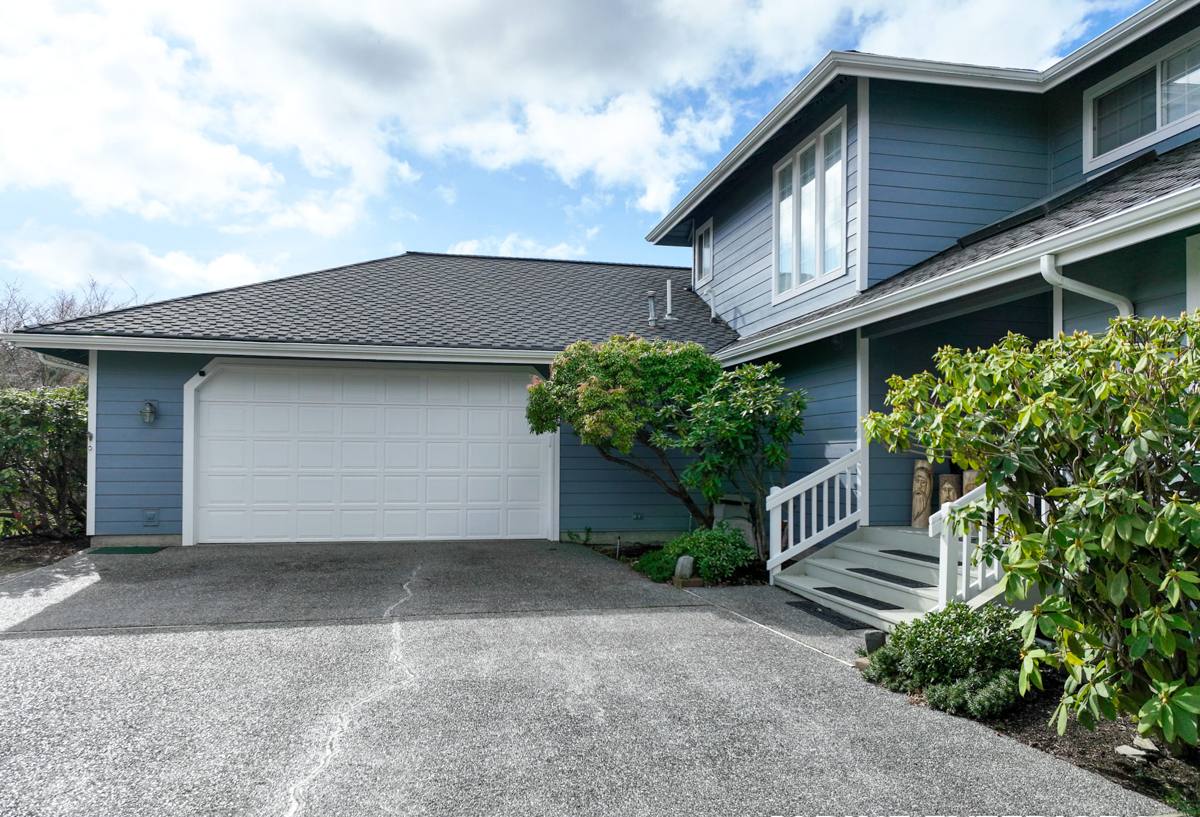
What Sudden Valley's Climate Actually Does to a Deck
It helps to understand the specific mechanisms at work, because they shape how we approach the replacement.
Extended Moss Season
Where a deck in full sun might dry out within a day of rain, a shaded deck under mature trees can stay damp for several days at a stretch. Moss and algae take hold in that moisture and, over time, hold water directly against the wood fibers or composite surface, accelerating decay and making the boards genuinely dangerous to walk on when wet.
Driving Rain and Wind-Driven Moisture
Storms coming off the water don't just fall straight down — wind pushes rain sideways into railings, fascia boards, and the point where the deck meets the house. That's why ledger board rot is one of the most common failures we find, even on decks that look fine from a few feet away.
Salt and Airborne Moisture
Bellingham's proximity to Puget Sound means a steady low level of salt-laden air moves through the region. Over years, that airborne moisture speeds up corrosion on fasteners, brackets, and any exposed metal hardware — which is part of why we don't cut corners on hardware grade when we rebuild a deck out here.
Hilly, Wooded Lots
Many Sudden Valley homes are built on sloped ground with a deck that's elevated well above grade, sometimes significantly. That raises the stakes on structural integrity — a failing ledger connection or rotted post on an elevated deck isn't just a cosmetic problem, it's a safety issue.
Signs Your Sudden Valley Deck Needs Replacement, Not Just Repair
Not every deck problem calls for a full tear-off. But there's a point where patching individual boards is throwing money at a structure that's already failing underneath. Here's how we tell the difference on-site.
- Soft, spongy, or bouncy spots when you walk across the deck, especially near the house or in shaded corners
- Visible rot, splitting, or discoloration at the ledger board where the deck attaches to the house
- Railing posts that wiggle or have separated slightly from the frame
- Persistent moss or black staining that comes back within weeks of cleaning
- Fasteners that are rusted, streaking, or backing out of the wood
- Gaps opening up between boards, or boards that have cupped and no longer sit flat
- The deck is more than 15-20 years old and has never had the substructure inspected
- You can see daylight or standing water under the deck near support posts
If you're only seeing one or two of these on a deck that's otherwise solid, a repair may genuinely be the right call — we'll tell you that honestly during the estimate. If several of these show up together, especially anything involving the ledger board or support posts, that's usually a structural conversation, not a cosmetic one.
What a Correct Deck Replacement Involves
A deck replacement done right isn't just pulling up old boards and screwing down new ones. Given what this climate does to decks, we treat the substructure and moisture management as the most important part of the job — the parts you won't see once it's finished are what determine whether the new deck lasts.
Tear-Off and Structural Assessment
We remove the old decking and take a real look at the frame: joists, beams, posts, and footings. This is where hidden rot usually shows up, especially in shaded areas or anywhere water has been collecting against wood. Anything compromised gets replaced — there's no point building a new deck surface on top of a weak frame.
Ledger Board and House Connection
Because wind-driven rain concentrates at the point where the deck meets the house, this connection gets particular attention. Correct flashing and a properly sealed ledger board are what keep water from working its way behind the siding and into the house structure itself, not just into the deck.
Framing and Fastener Grade
Given the salt-air exposure common to this region, we use fasteners and structural hardware rated for coastal or high-moisture conditions rather than standard-grade hardware that corrodes faster here than it would inland. Corroded fasteners are one of the quiet failure points that shorten a deck's life well before the visible boards look bad.
Decking Material Selection
This is where homeowners have real choices, and we walk through the honest trade-offs rather than pushing one option.
| Material | How It Handles Shade & Moisture | Maintenance | Typical Lifespan |
|---|---|---|---|
| Pressure-treated wood | Needs regular cleaning and sealing to resist moss and rot in shaded spots | Annual cleaning, periodic sealing | 10-15 years with upkeep |
| Cedar | Naturally rot-resistant but still needs care in persistently damp, shaded areas | Periodic cleaning and finish renewal | 15-20 years with upkeep |
| Composite decking | Resists rot and moss growth far better in shaded, damp conditions | Occasional washing, no sealing needed | 25-30+ years |
In a neighborhood like Sudden Valley, where tree cover keeps large sections of a deck shaded for much of the day, composite decking tends to hold up noticeably better against the moss and moisture problems we see most often — but wood has its place too, particularly on lots with more open sun exposure or for homeowners who prefer the look and are willing to keep up with maintenance. We'll give you our honest read on your specific lot during the estimate rather than a one-size answer.
Railings and Fasteners
Railings take the brunt of wind-driven rain and are often the first thing to loosen on an aging deck. We rebuild these with the same attention to hardware grade and moisture protection as the deck frame itself, since a loose or rotted railing post is a safety problem, not just an eyesore.
Final Grading and Drainage
Where the deck sits low or on sloped ground, we make sure water is directed away from posts and footings rather than pooling underneath. Standing water under a deck is one of the most common causes of early post failure on hilly lots like the ones common throughout Sudden Valley.
Our Process for a Sudden Valley Deck Replacement
- On-site assessment. We inspect the existing deck, including the substructure where accessible, and give you a straight answer on whether replacement or repair makes sense.
- Material walkthrough. We discuss decking material, railing style, and hardware grade based on your lot's sun exposure, slope, and how the deck will be used.
- Written estimate. You get a clear scope of work and cost before anything is scheduled — no surprise change orders for work that should have been identified up front.
- Tear-off and structural repair. Old decking and any compromised framing come out; the frame is rebuilt or reinforced as needed.
- Decking, railing, and hardware install. New materials go in with attention to the moisture-management details this climate demands.
- Final walkthrough. We go over the finished deck with you, including any care instructions specific to the material you chose.
Why Hiring a Crew That Already Works Sudden Valley Matters
A deck built to a generic regional standard isn't necessarily built for this neighborhood's conditions. A crew that hasn't worked shaded, sloped, lake-adjacent lots before may not think twice about ledger flashing or hardware grade — details that don't show up as a problem for a year or two, but shorten a deck's life by a decade once moisture starts working through the weak points. We've seen what fails first out here and we build against those specific failure points from the start, not as an afterthought.
There's also a practical side to local familiarity: navigating Sudden Valley's private roads and any community guidelines around exterior work goes more smoothly with a crew that's done it before. It's a small thing, but it keeps a project on schedule instead of losing days to logistics that a local crew would have anticipated.
Maintaining Your New Deck in This Climate
Whatever material you choose, a few habits go a long way toward getting the full lifespan out of a deck in a shaded, moisture-heavy setting like this one.
- Sweep debris — leaves, needles, seed pods — off the deck regularly, especially in fall; trapped organic matter holds moisture and feeds moss
- Clean the surface at least once or twice a year to stay ahead of moss and algae before they take hold
- Check railings and stair connections periodically for looseness, especially after winter storms
- Keep gutters and downspouts near the deck clear so runoff isn't dumping extra water onto or under the structure
- For wood decking, stay on top of the sealing schedule rather than letting it lapse a season or two
- Trim back overhanging branches where practical to give the deck a bit more sun and airflow
None of this replaces a well-built deck, but it does buy you more years out of whatever material you choose — and it's a lot cheaper than another full replacement down the line.
What This Typically Involves Cost-Wise
Every deck replacement is priced around its own scope — square footage, decking material, railing style, height above grade, and how much structural repair the frame needs. A straightforward wood deck replacement generally costs less upfront than composite, while composite costs more initially but requires less ongoing spend on sealing and repair over its longer lifespan. Elevated decks, decks with extensive railing, or decks where the substructure needs significant rebuilding will run higher than a simple ground-level replacement. We'll give you specific numbers for your project during the on-site estimate rather than a broad range that may not reflect your actual deck.
If your deck in Sudden Valley is showing soft spots, persistent moss, or loose railings, it's worth having it looked at before another wet season adds to the damage. We offer free, no-pressure estimates — fill out the form below and we'll take a look at what your deck actually needs.