 Bellingham Siding
 Edgemoor Roofs Deal With a Different Set of Problems
Edgemoor sits close to the water and under a heavy tree canopy, and that combination puts more stress on a roof than most people realize. Bellingham Bay sends salt-laden air inland on a regular basis, which accelerates corrosion on fasteners, flashing, and any exposed metal. Add in Whatcom County's long wet season, frequent wind events off the water, and mature trees dropping needles and branches onto rooflines year-round, and you get roofs that age faster and fail in ways that are easy to miss until water is already inside the attic.
Storm damage in this neighborhood rarely looks like a single dramatic event. It's usually a windstorm that lifts a few shingles, followed by weeks of driving rain finding that opening before anyone notices a stain on the ceiling. By the time a leak is visible indoors, the damage has often been spreading under the roof surface for a while. That's the pattern we look for when we inspect a roof here — not just obvious storm damage, but the slow damage storms leave behind.
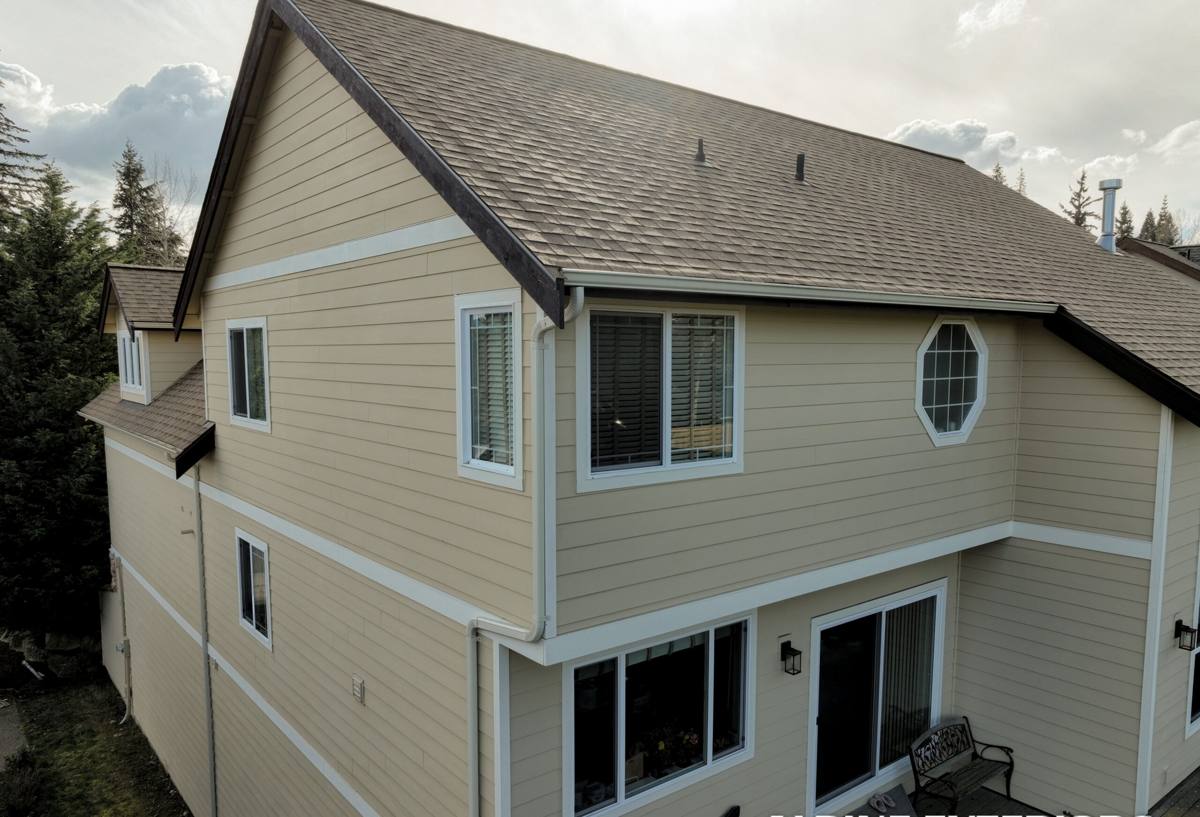
What Storm Damage Actually Looks Like on a Wooded, Coastal Roof
After a windstorm or a heavy rain event, homeowners usually expect to see missing shingles or an obvious hole. Real damage is often more subtle, and it's worth knowing what to check for:
- Wind-lifted or creased shingles — the sealant strip breaks loose, the shingle looks fine from the ground, but it no longer seals against wind-driven rain.
- Flashing separation around chimneys, skylights, and roof-to-wall junctions, where salt air corrosion and repeated wind flex work fasteners loose over time.
- Branch and debris impact — punctures, cracked shingles, or dented metal flashing from falling limbs, which is common under Edgemoor's mature trees.
- Moss and organic buildup holding moisture against the roof surface long after a storm has passed, slowly breaking down shingle granules and decking underneath.
- Clogged or overwhelmed gutters that push water back under the roof edge instead of away from the house during heavy rain.
Any one of these on its own might not cause an immediate leak. Combined — which is common after a real storm — they create the conditions for water intrusion that can go undetected for months.
Why Moss Season Complicates Storm Repair
Bellingham's long moss season means most roofs in Edgemoor already have some moss or algae growth by the time storm season arrives. Moss retains moisture against the shingle surface, and that moisture accelerates granule loss and wood rot at the decking level. When we assess storm damage on a roof that already has moss coverage, we have to distinguish between damage the storm caused and deterioration that moss has been causing gradually. Repairing storm damage without addressing the moss underneath it is a short-term fix — the same spot will fail again within a season or two.
Our Storm Damage Assessment Process
We don't quote storm repair work from a quick look at the roofline. A proper assessment means getting on the roof (weather permitting) and checking the full system, not just the spot where the leak showed up indoors.
- Exterior walkaround — checking for visible shingle damage, gutter condition, and debris accumulation.
- On-roof inspection — examining shingles, flashing, vents, and valleys for wind damage, impact damage, and moss or algae buildup.
- Attic check — looking for water staining, damp insulation, or daylight coming through the decking, which often reveals a leak's true entry point isn't where the ceiling stain appears.
- Documentation — photos and notes of everything found, which matter for both our repair plan and any insurance claim.
- Written scope — a clear explanation of what's damaged, what's simply aged, and what we recommend fixing now versus monitoring.
We're upfront when damage is minor and doesn't need a full repair yet. Recommending unnecessary work to pad an invoice isn't how we want to be known in this neighborhood, and word travels fast among Edgemoor homeowners.
What a Correct Storm Repair Actually Involves
A rushed storm repair — a few new shingles nailed over the damaged area — often fails within a year, especially with the moisture load this area gets. A correct repair addresses the whole assembly, not just the visible surface:
- Removing and replacing damaged shingles down to sound decking, not just patching over cracked or lifted material.
- Checking the decking itself for soft spots or rot where water has been sitting, and replacing any compromised sections.
- Re-sealing or replacing flashing at penetrations, since a shingle repair with failing flashing underneath will leak again regardless of how new the shingles look.
- Confirming underlayment integrity in the repaired area — this is the layer that actually stops water if a shingle fails again later.
- Clearing moss and debris from the surrounding roof area so the repair isn't immediately undermined by the same conditions that contributed to the damage.
Repair or Full Roof Replacement?
Not every storm-damaged roof needs full replacement, but not every roof should be patched indefinitely either. The decision usually comes down to the roof's age, how widespread the damage is, and how much moss-related deterioration already existed before the storm.
| Factor | Leans Toward Repair | Leans Toward Replacement |
|---|---|---|
| Roof age | Under 12-15 years, good overall condition | Nearing or past its expected service life |
| Damage extent | Localized to one section or slope | Spread across multiple slopes or the whole roof |
| Decking condition | Sound, no rot found on inspection | Soft spots or rot found in multiple areas |
| Moss/algae history | Minor, surface-level growth | Long-term buildup with granule loss underneath |
| Prior repairs | Roof has no history of repeated patch jobs | Roof already has several past repairs in different spots |
We'll tell you honestly which side of this table your roof falls on. If a repair is the right call, we won't push a replacement — and if the roof is genuinely at the end of its life, we'll explain why continuing to patch it is spending money without solving the underlying problem.
Materials We Use and Why
For storm repairs in a coastal, tree-covered area like Edgemoor, material choice matters as much as workmanship. We use corrosion-resistant fasteners and flashing rather than standard galvanized components, since salt air shortens the life of anything that isn't rated for it. For underlayment, we favor synthetic or self-adhering ice-and-water membrane in vulnerable areas — valleys, eaves, and around penetrations — because it performs better under sustained moisture exposure than older felt products.
We're selective about products marketed as instant fixes for moss and algae, like adhesive-backed patches or spray coatings applied over existing damage. These can look fine short-term but tend to trap moisture rather than let the roof dry properly, which works against you in a climate that's wet as much of the year as ours is. Our standard is to fix the underlying assembly correctly rather than cover a problem with a product that manages appearance instead of moisture.
Why a Crew That Already Works Edgemoor Matters
Edgemoor's mix of mature trees, sloped lots, and proximity to the water creates access and site conditions that aren't the same as a flat, open subdivision. A crew unfamiliar with the neighborhood may underestimate setup time, tree clearance for equipment, or the extra care needed around established landscaping. Knowing the area also means recognizing patterns — which roof orientations catch the worst of the wind off the bay, which tree species drop the most debris, and where moss tends to build up fastest based on shade and slope.
Familiarity with local permitting and insurance processes helps too. Whatcom County and City of Bellingham requirements can differ depending on the scope of repair, and insurance adjusters move faster when documentation is presented clearly and consistently. A crew that's done this repeatedly in the same neighborhood moves through that process with less back-and-forth and fewer surprises for the homeowner.
Working With Your Insurance Claim
Most storm damage repairs in this area involve an insurance claim, and the process goes smoother when the documentation matches what the adjuster needs to see. We provide detailed photos, a written scope of damage, and a clear repair estimate that separates storm-caused damage from pre-existing wear — insurers distinguish between the two, and vague documentation can slow down or reduce a claim. We're happy to meet an adjuster on-site if that's helpful, but the final decision on how to proceed with the repair is always yours.
After a Storm: A Quick Homeowner Checklist
If Edgemoor has just come through a windstorm or heavy rain event, here's what's worth checking before calling anyone:
- Look for shingle debris (granules, shingle pieces) in gutters or on the ground around the house.
- Check the attic for damp insulation, staining, or musty smell, especially after several days of rain.
- Note any new ceiling stains, even small ones — they're worth investigating even if they don't seem to be growing.
- Check gutters and downspouts for clogging from storm debris, which can cause water to back up under the roof edge.
- Take photos of anything unusual you can see from the ground — this helps with both our assessment and any insurance claim.
- Avoid getting on the roof yourself after a storm; wet, moss-covered surfaces are genuinely dangerous, and it's not worth the risk.
If you're seeing any of these signs, or you just want a roof that's been through a storm looked at by someone who knows what to check, we're glad to come out and take a look. The estimate is free, there's no pressure to move forward, and you'll get a straight answer about what's actually going on with your roof.