 Bellingham Siding
 Why Lynden Decks Take More Abuse Than People Expect
Lynden sits inland from Bellingham Bay in the flat, open farmland of northern Whatcom County, but that distance from saltwater doesn't spare it from the region's weather. Storms still roll in off the Sound carrying salt-tinged, driving rain, and the open exposure across the valley means wind-driven water hits deck surfaces and railings at angles a covered porch never sees. Add the long, damp shoulder seasons typical of this part of Washington and you get months at a stretch where a deck simply doesn't fully dry out between rain events. That's the environment a deck built here actually has to survive, not the dry, sunny conditions most decking products are marketed around.
The result, if a deck is built to a generic national standard instead of a Pacific Northwest one, is predictable: moss and algae taking hold on shaded boards, fasteners weeping rust streaks within a couple of seasons, and soft spots developing at the ledger board or stair stringers years before they should. None of that is inevitable. It's a function of material choice, detailing, and whether the crew building it actually understands Whatcom County's climate or is just following a plan that was written for Arizona.
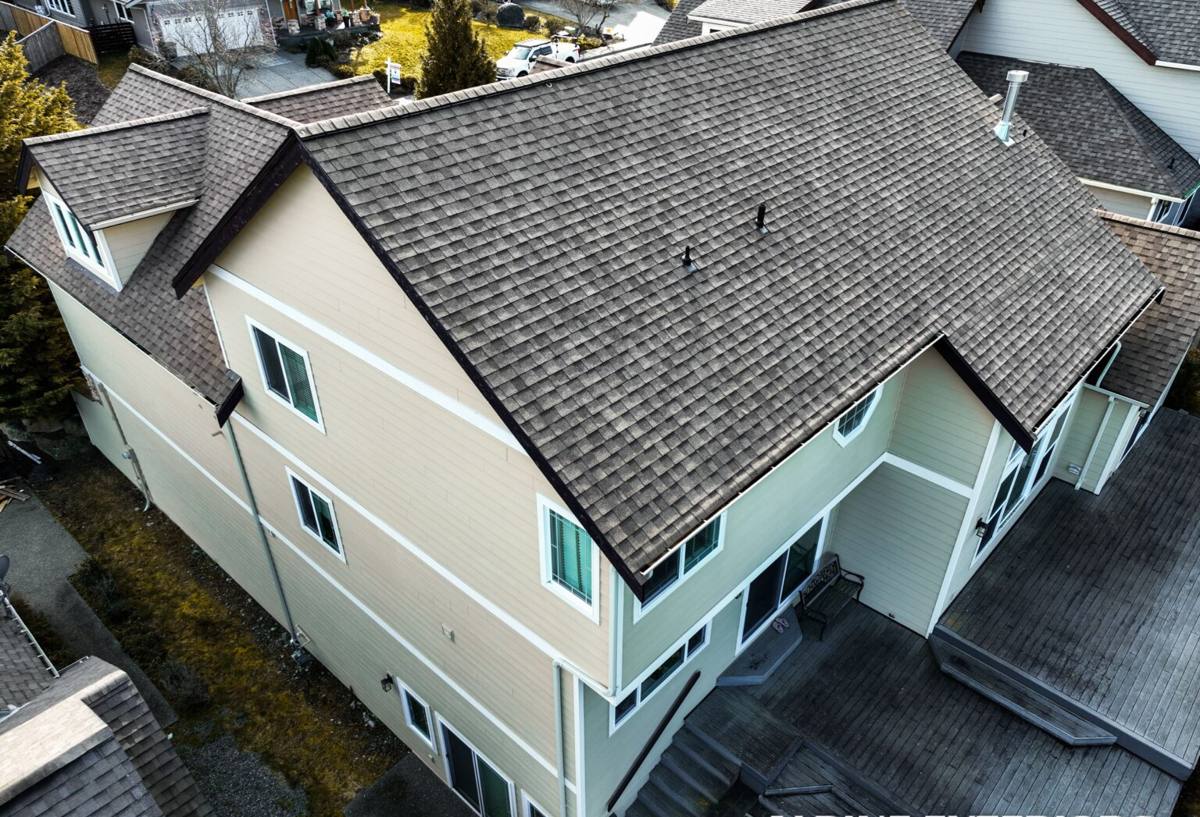
What a Deck Actually Needs to Survive Here
Flashing at the Ledger Board
The single most common point of failure on any deck attached to a house isn't the decking itself — it's the ledger board, the framing member that bolts the deck to the house and carries a large share of its structural load. Water that gets behind an unflashed or poorly flashed ledger has nowhere to go, and in a climate with as much sustained rainfall as this one, that moisture doesn't dry out between storms. It sits against the house rim joist and starts rot from the inside, often invisibly, until the deck itself begins to sag or pull away. Proper ledger flashing — a rigid metal flashing under the siding, self-adhering membrane over the fasteners, and a gap that lets water drain rather than pool — is not optional detailing. It's the difference between a deck that lasts decades and one that needs structural repair in five to seven years.
Footings Set Below Frost Depth
Whatcom County doesn't see deep, prolonged freezes most winters, but it does get enough freeze-thaw cycling, combined with wet clay-heavy soils common in the Lynden area, to move footings that weren't set deep enough or poured wide enough to resist frost heave. A footing that shifts even slightly will telegraph up through the posts and framing as a deck that feels bouncy, doors and gates that stop closing square, or a noticeable lean over a few years. Footing depth and diameter are set by Whatcom County's adopted building code, not by guesswork, and they get inspected for a reason.
Fasteners and Hardware That Won't Corrode
Constant moisture and salt-influenced air are hard on standard fasteners. Galvanized nails and screws can start showing rust bleed on lighter-colored decking within a season or two, and once corrosion starts on a structural fastener like a joist hanger nail, its holding strength is compromising quietly, out of sight. We use stainless steel or heavy hot-dip galvanized hardware rated for exterior ground-contact and moisture-heavy environments on every deck we build, not just where it's visible.
Choosing the Right Decking Material for a Lynden Property
There's no single "best" decking material — there's a best material for your budget, your maintenance appetite, and how much shade and moss exposure the deck will actually get. Here's how the common options hold up under the rain, humidity, and moss pressure typical of this area:
| Material | Moisture & Rot Resistance | Moss/Algae Resistance | Maintenance | Typical Lifespan |
|---|---|---|---|---|
| Pressure-treated wood | Good if sealed regularly | Low — needs regular cleaning | Annual cleaning/sealing | 15-20 years |
| Cedar | Naturally decay-resistant, but softer | Moderate — still needs cleaning | Periodic staining/sealing | 15-20 years |
| Capped composite | Excellent — won't rot or absorb water | Good, but still needs periodic washing | Occasional washing, no sealing | 25-30+ years |
| PVC decking | Excellent — fully synthetic, non-porous | Best of the group | Lowest — soap and water | 30+ years |
Pressure-treated wood and cedar cost less up front and give a deck a natural look many homeowners prefer, but they demand real upkeep in this climate — skip a year of sealing and moss gets a foothold fast, especially on shaded north- or east-facing decks. Capped composite and PVC cost more initially but largely take moss and rot resistance off your maintenance list, which matters if the deck sits under tree cover or on the shaded side of the house, both common situations on Lynden lots.
The Substructure: Where Most Deck Failures Actually Start
Homeowners judge a deck by its surface, but the framing underneath is what determines whether it's still solid in twenty years. Joists should be sized and spaced for the actual span and decking material — composite decking, in particular, often requires tighter joist spacing than natural wood to avoid flexing over time. Every joist should sit in a metal hanger rated for exterior use rather than being toe-nailed, and joist tape or a similar protective flashing over the top edge of each joist keeps rainwater from soaking into the end grain, which is where wood framing rots first.
Drainage matters just as much below the deck as above it. On a low deck with little clearance underneath, water that isn't directed away from the house and posts will sit in the crawlspace beneath the structure, keeping the framing damp long after a storm has passed. Grading the ground under the deck to shed water, and in some cases installing an under-deck drainage system, keeps that space dry and keeps moss and mildew from creeping up into the framing from below.
Railings, Stairs, and Code Requirements
Any deck built to code in Whatcom County has to meet the same baseline safety rules regardless of style: guardrails at least 36 inches high on decks more than 30 inches above grade, baluster spacing that won't pass a 4-inch sphere, and stair rise/run and handrail requirements that are inspected, not optional. Beyond the code minimums, railing choice affects how much maintenance you're signing up for — wood railings need the same sealing schedule as wood decking, while metal or composite rail systems hold up with far less attention in a climate this wet. We pull the permit, schedule the inspections, and build to the code that's actually in effect for your project, so you're not left guessing whether your deck will pass if you ever sell the house.
How Our Deck-Building Process Works
- Site visit and design — We walk the property, look at drainage, sun/shade exposure, and how the deck will attach to the house, then talk through material options that fit your budget and how much upkeep you actually want to do.
- Permitting — We handle the permit application and drawings required for your project and schedule the required inspections, so nothing gets built that has to be torn out later.
- Demolition and framing — Any old structure is removed, footings are poured to code depth, and the ledger, framing, and hardware go in with the flashing and fastener details this climate requires.
- Decking, railing, and stairs — Your chosen material goes down and the railing system is installed and checked for level, square, and code compliance.
- Final walkthrough — We go over the finished deck with you, including what maintenance it needs (if any) and when, before calling the job complete.
Maintenance: What Keeps a Lynden Deck Looking Good for Decades
Whatever material you choose, a little seasonal attention goes a long way in a climate that stays damp for months at a stretch:
- Sweep leaves and debris off the deck regularly in fall — trapped organic matter is what feeds moss and holds moisture against the boards.
- Rinse or gently power-wash the surface at least once a year, more often on shaded sections, before moss gets established.
- Reseal or restain wood decking on the manufacturer's recommended schedule, typically every one to two years depending on sun exposure.
- Check railing posts and stair stringers annually for any softness or movement, especially where they meet the ground or the house.
- Keep gutters and downspouts near the deck clear so runoff isn't dumping extra water onto the structure.
- Trim back overhanging branches to cut down on shade and falling debris that accelerate moss growth.
Why Hiring a Crew That Already Works in Lynden Matters
A deck built from a generic national plan set doesn't account for Whatcom County's soil conditions, the specific frost depth requirements our local code sets, or how much moss pressure a shaded, humid site is going to see. A crew that regularly works in and around Lynden already knows the county's permitting process, has a working relationship with the local building department, and has seen firsthand which details — flashing, fastener choice, drainage — actually matter here versus in a drier climate. That local experience shows up less in what a deck looks like on day one and more in how it holds up ten and twenty years down the road.
If you're planning a new deck or replacing one that's showing its age, we're happy to come take a look and walk you through honest options for your property, no pressure and no obligation. Fill out the form below to request a free estimate.