 Bellingham Siding
 Ferndale's Climate Is Harder on Siding Than It Looks
Ferndale sits low in the Nooksack River lowlands, close enough to Bellingham Bay and the Strait of Georgia that salt-tinged marine air is a constant, not an occasional event. Combine that with Whatcom County's long, wet winters and the shoulder seasons where surfaces barely dry out between storms, and you get a wall assembly that spends a huge share of the year damp. Add the tree cover and shade common on Ferndale lots, and moss and algae get months of undisturbed moisture to work with. None of this is dramatic on its own, but stacked together year after year, it's exactly the combination that finds every weakness in a siding system — bad flashing, thin paint, soft trim, gaps that were never sealed right the first time.
This is a page about one job in one place: installing fiber cement siding correctly on a Ferndale home. Not a general product overview, not a citywide pitch — what this specific climate demands, what a correct installation actually involves, and why it matters that the crew doing the work already knows this area.
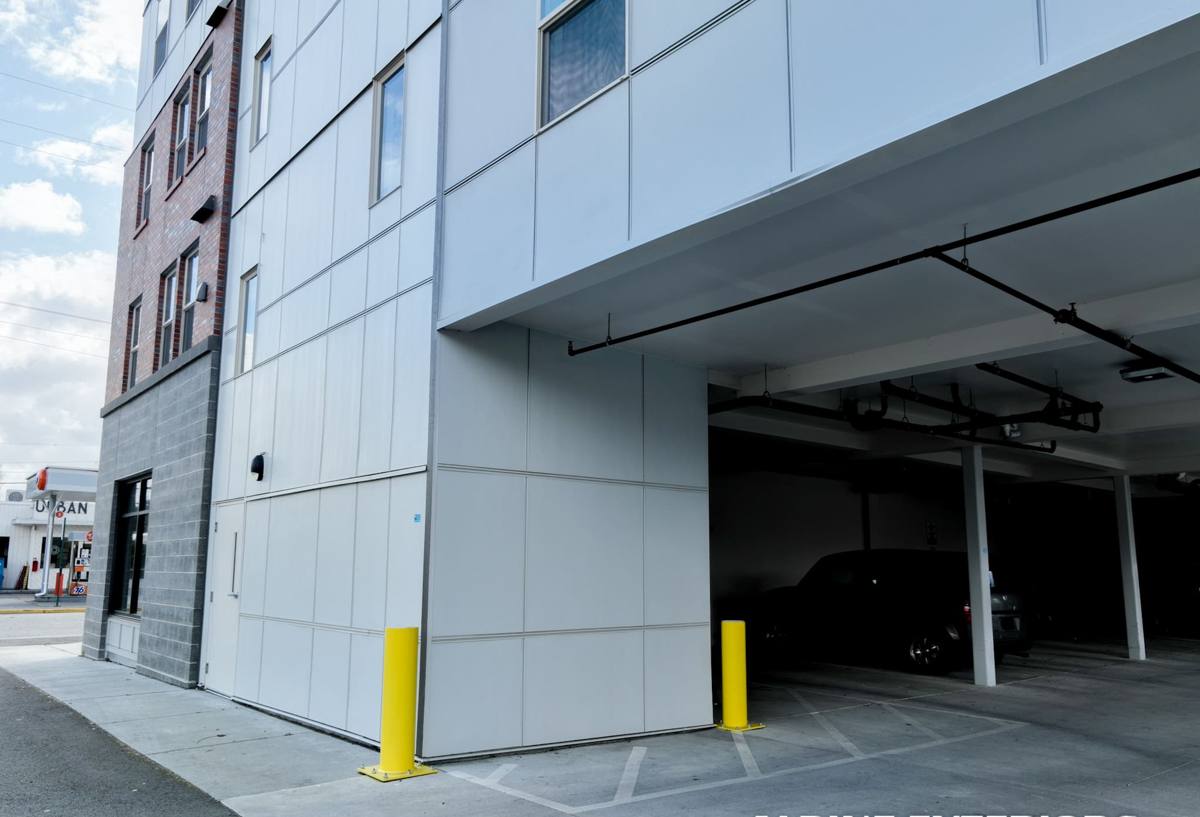
What Ferndale Homes Actually Need From Their Siding
Salt air, driving rain, and a long moss season don't require exotic materials — they require a siding system that resists moisture intrusion, doesn't feed organic growth, and holds its finish without constant repainting. Three things matter most for a Ferndale exterior:
Moisture Management, Not Just Moisture Resistance
No siding is waterproof — the goal is a wall that sheds water and lets any that gets behind the cladding dry out and drain away. That means a drainage gap or rainscreen behind the siding, a continuous weather-resistive barrier underneath, and flashing at every window, door, and penetration that actually directs water outward instead of trapping it against the sheathing.
A Finish That Doesn't Depend on Repainting
Field-painted siding in this climate is fighting a losing battle — damp air and long dry-out windows mean paint failure shows up faster here than in drier parts of the state. A factory-applied finish that's baked on and warranted against peeling and cracking removes that maintenance burden almost entirely.
Material That Doesn't Feed Moss and Rot
Wood-based products — cedar, primed spruce trim, engineered wood siding — give moss, algae, and fungal growth something to hold onto and, eventually, feed on. A non-combustible, cement-based product doesn't offer that food source, which matters enormously in a place where moss season isn't a few weeks but a good chunk of the year.
Why This Company Installs Only James Hardie Fiber Cement
We don't install LP SmartSide, vinyl, Cemplank, Allura, primed spruce, or cedar. That's not a marketing line — it's a standard we hold because of what we've seen those products do over time in exactly this kind of climate. Vinyl expands, contracts, and can warp or crack in temperature swings and gets brittle with UV and salt exposure. Engineered wood products rely on their outer coating staying intact; once moisture gets past that layer, the substrate underneath doesn't recover. Wood siding needs ongoing maintenance that most homeowners don't want to sign up for indefinitely.
James Hardie fiber cement is non-combustible, doesn't rely on a painted or laminated surface to resist moisture the way wood-based products do, and comes with a factory-applied ColorPlus finish backed by its own warranty against fading and peeling. Hardie also engineers its siding by climate zone — the HZ5 product line used in the Pacific Northwest is formulated for regions with the moisture and freeze-thaw exposure Whatcom County actually sees. That's the product we put on Ferndale homes, and it's the only one we stand behind for this climate.
Signs a Ferndale Home Needs Siding Attention
Some of these show up gradually enough that homeowners don't notice until the problem is well established:
- Green or black staining that comes back within a season or two of cleaning
- Paint that's peeling, chalking, or needing a fresh coat more often than every 5-7 years
- Soft, spongy, or crumbling spots, especially near ground level or under windows
- Visible gaps or separation at trim boards and butt joints
- Siding that's bowed, delaminating, or swollen at the edges
- Interior signs — musty smell, peeling interior paint, or damp drywall near exterior walls
Any one of these on its own might just need a repair. Several at once, especially on a home with older wood-based or hardboard siding, usually means the material has reached the end of what it can handle in this climate.
Our Process for a Ferndale Fiber Cement Project
The steps themselves aren't unusual — what matters is doing each one correctly, in order, without shortcuts, because this climate doesn't forgive gaps in the system.
- Inspection and moisture check. We look at the existing siding, sheathing, and framing where accessible, checking for hidden rot or moisture damage before any pricing is finalized.
- Tear-off and sheathing assessment. Old siding comes off and the sheathing underneath gets a real look — this is often where problems that weren't visible from outside get found and addressed.
- Weather barrier and drainage plane. A continuous weather-resistive barrier goes on, with a drainage gap behind the siding so any moisture that gets past the cladding has somewhere to go besides the wall cavity.
- Flashing at every penetration. Windows, doors, vents, and any other wall penetration get properly lapped, integrated flashing — the single most common source of hidden leaks when it's skipped or done casually.
- Installation to Hardie's fastening and clearance specs. Correct fastener spacing, proper clearance from grade, decks, and roof lines, and joints sealed or left to drain as the system requires — not just nailed up and caulked over.
- Final walkthrough. We go over the finished work with the homeowner before calling the job done.
What Drives the Cost of a Fiber Cement Siding Job
Every Ferndale home is different, so we don't quote off square footage alone. These are the factors that actually move the number:
| Cost Factor | Why It Matters | Ferndale-Specific Note |
|---|---|---|
| Sheathing condition underneath old siding | Hidden rot or damage found during tear-off requires repair before new siding goes on | More common on homes with older wood siding that's absorbed years of damp air |
| Home's wall complexity | More corners, dormers, and trim details mean more cutting, flashing, and labor | No regional difference, but affects every quote |
| Siding profile and accessories | Lap siding, panel systems, and trim boards vary in material and install cost | Wider exposure and standard lap profiles are common choices locally |
| Color and finish | Factory ColorPlus finish costs more up front than primed board but eliminates repainting | Worth weighing given how fast field paint fails in this moisture-heavy climate |
| Site access and prep | Landscaping, decks, and tight lot lines add labor time | Varies lot to lot; assessed during the estimate |
Living With Fiber Cement Through a Ferndale Winter
A correctly installed Hardie system needs very little upkeep, but "very little" isn't "none." A short, honest maintenance routine keeps it performing the way it's designed to for the long haul:
- Rinse siding down once or twice a year to clear off salt residue and organic buildup before it takes hold
- Keep gutters clean and downspouts directing water away from the foundation and wall base
- Trim back shrubs and trees so siding gets airflow and isn't sitting in constant shade and moisture
- Check caulking at trim joints and penetrations annually — caulk is a maintenance item even on a low-maintenance product
- Address moss or algae as soon as it appears rather than waiting for a heavier buildup
- Watch for any soft spots, cracks, or impact damage after storms and have them repaired promptly
Why Hiring a Crew That Already Works Ferndale Matters
Installation quality is what determines whether a fiber cement system actually performs the way it's engineered to — and that quality depends on a crew that understands the conditions they're building for. A contractor who works this area regularly already knows how exposed a given wall orientation gets in a winter storm, how much drainage detail a shaded, moss-prone wall needs versus a sun-exposed one, and how to sequence a tear-off around Whatcom County's wet season instead of leaving sheathing exposed longer than it should be. That local familiarity shows up in the details — flashing choices, fastening, where extra drainage attention goes — not in anything a homeowner would see on a brochure.
If you're weighing a siding project in Ferndale, we're happy to take a look at your home, walk through what condition your current siding is in, and put together a straightforward, no-pressure estimate. There's no obligation — just an honest assessment of what your home needs.