 Bellingham Siding
 Siding Built for the Way Sudden Valley Actually Weathers
Sudden Valley sits in a pocket of Whatcom County that gets less direct sun and more standing moisture than open, exposed lots closer to town. Mature tree cover, proximity to Lake Whatcom, and long stretches of shade mean siding here dries slower after every rain event than it would on a treeless south-facing lot. Add in the marine-influenced air that moves through the whole Bellingham area — carrying salt and moisture inland off the Sound — and you get a climate that's genuinely harder on exterior materials than most homeowners realize until they're scraping moss off a north wall for the third year in a row.
None of this means siding is doomed to fail here. It means the siding, the water management behind it, and the installation details all have to be matched to this specific set of conditions. A product and installation approach that works fine in a dry, sunny neighborhood can underperform badly on a shaded, tree-lined Sudden Valley lot. That's the starting point for every siding job we do in this neighborhood.
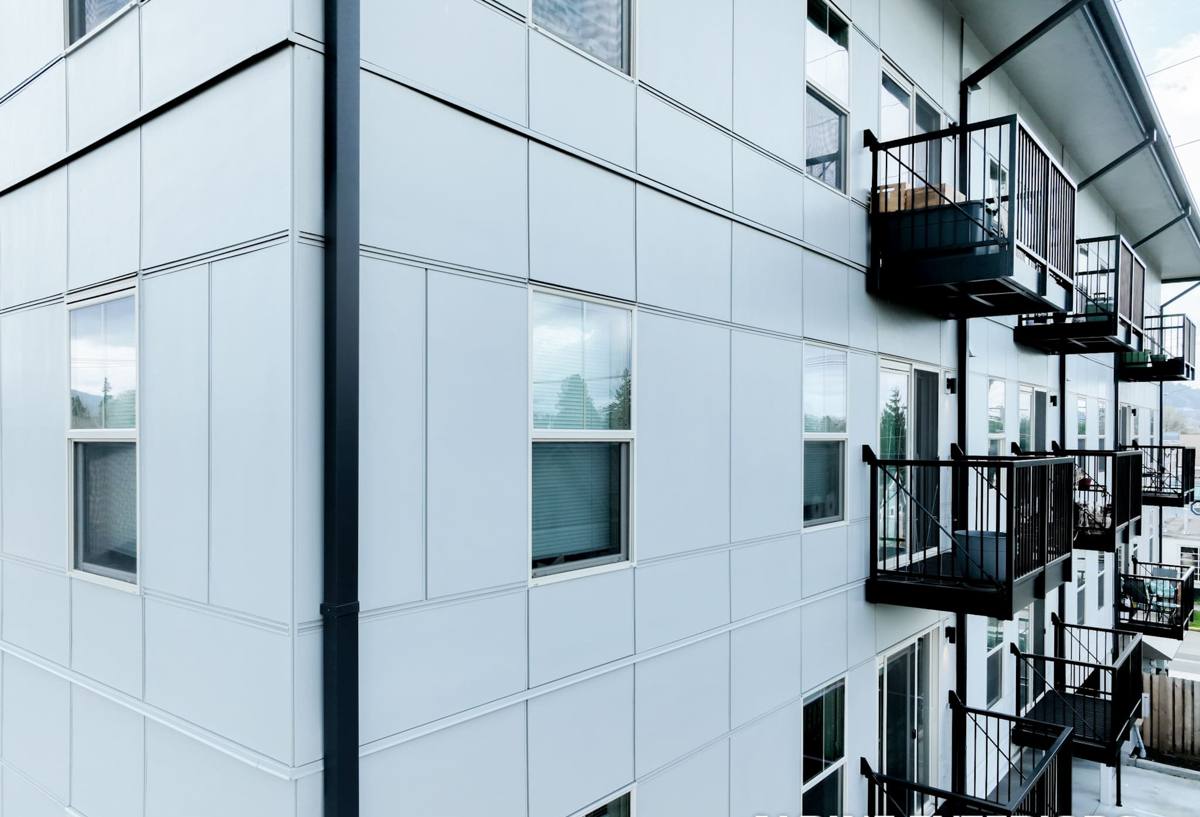
What Driving Rain and a Long Moss Season Do to a Wall
Moisture That Doesn't Get a Chance to Dry
Driving rain off the water and through gaps in tree cover doesn't just wet a wall — it drives water sideways into seams, laps, and fastener points. On a shaded lot, that moisture sits longer before it evaporates. Over years, siding that isn't properly lapped, flashed, and fastened lets water track behind the cladding, where it can soak sheathing and framing long before anything looks wrong from the curb.
Moss, Algae, and Organic Growth
Whatcom County's long, wet, low-light stretches are exactly what moss and algae need to take hold. On shaded north- and west-facing walls in Sudden Valley, that growing season runs longer than it does in more open parts of Bellingham. Moss holds moisture against the surface it grows on, and on materials that aren't dimensionally stable or properly sealed, that constant dampness accelerates rot, paint failure, and warping.
Why We Install Only James Hardie Fiber Cement
We don't install vinyl, LP SmartSide, Cemplank, Allura, or unprimed cedar or spruce siding, and Sudden Valley is a good example of why. Vinyl expands and contracts with temperature swings and can warp or gap over time, opening seams that let driving rain track behind it. Engineered wood products and untreated wood siding are dimensionally stable when new, but any product with a wood-fiber or wood-based core is more vulnerable to swelling, edge softening, and rot once it stays damp for extended periods — exactly the condition a shaded, moss-prone wall creates.
James Hardie fiber cement is cement-based, not wood-based. It doesn't swell when wet, it doesn't feed rot the way organic materials can, and it holds its shape and paint line over decades of freeze-thaw and wet-dry cycling. It's also non-combustible, which is a genuine, verifiable material property — not a marketing claim — and one more reason it's the only product we put our name behind.
Choosing the Right Hardie System for a Wooded Lot
James Hardie makes climate-engineered product lines, and for the Pacific Northwest that means the HZ5 formulation, engineered specifically for freeze-thaw cycling and sustained moisture exposure rather than the hot-dry formulation used in other regions. On a shaded Sudden Valley lot, that engineering matters more than it would on a dry, sun-exposed site.
Lap Siding vs. Panel Siding
HardiePlank lap siding is the most common choice for traditional home styles and gives water an obvious, shingled path to shed downward instead of pooling. HardiePanel vertical siding works well on accent areas, gables, or more modern designs, but needs careful joint and batten detailing to manage water the same way lap siding does by design. On heavily shaded walls we lean toward details that maximize drainage and airflow behind the cladding, regardless of profile.
ColorPlus Factory Finish
ColorPlus finish is baked on at the factory under controlled conditions, rather than field-painted after installation. On a lot where moss and algae growth is a recurring maintenance issue, a consistent, factory-cured finish holds up to washing and scrubbing far better than a field-applied coat, which matters if you're cleaning growth off the siding every year or two.
What a Correct Installation Actually Involves
The siding itself is only part of the system. Most siding failures we're called out to inspect — on any brand — trace back to installation shortcuts, not the material. On a moisture-heavy lot like Sudden Valley, these details aren't optional extras:
- A continuous, properly lapped weather-resistive barrier behind the siding, with no gaps at seams or penetrations
- Correct flashing at every window, door, and roof-to-wall intersection, installed in the right shingled order
- Proper fastener type, spacing, and depth per Hardie's installation specifications — not generic nailing patterns
- Minimum clearance between the bottom of the siding and roofing, decks, and grade, so water has somewhere to go
- Rainscreen or drainage-plane detailing where the wall assembly needs a way for incidental moisture to drain and the wall to breathe
- Caulking and sealant only where Hardie's specifications call for it — over-caulking traps moisture instead of shedding it
Skipping any one of these doesn't show up on day one. It shows up two, five, or ten years later as staining, soft trim, or paint failure — usually on the shaded side of the house first.
Our Process for a Sudden Valley Installation
We start with an on-site walk of the exterior, checking existing siding, trim, and sheathing condition, not just measuring square footage. If we find soft sheathing or moisture damage under the old siding, we deal with it before anything new goes up — covering damage over is how small problems become expensive ones.
From there we remove the old siding and trim, inspect and repair sheathing as needed, install a new weather-resistive barrier, and address flashing at every penetration before a single piece of Hardie siding goes on. Siding installation itself follows Hardie's published fastening and clearance specs, with attention to the drainage and ventilation details that matter most on shaded, tree-covered lots. We finish with trim, caulking only where specified, and a final walk-through.
What Affects the Cost of the Job
Every Sudden Valley home is different, and a firm number only comes from an on-site look. The factors below are the ones that actually move the price, so you know what you're paying for and why two similar-looking homes can quote differently.
| Factor | Why It Matters |
|---|---|
| Home size and wall complexity | More square footage, gables, and corners mean more material and labor |
| Condition of existing sheathing | Hidden moisture damage found during tear-off adds repair scope |
| Siding profile chosen | Lap widths, panel styles, and trim details vary in material and labor cost |
| Access and site conditions | Tree cover, slope, and limited driveway access can affect staging and labor time |
| Trim and detail work | Window, door, and corner trim complexity adds labor beyond flat wall square footage |
Signs It's Time to Replace, Not Patch
Homeowners in Sudden Valley often ask whether a patch or partial repair will hold them over. Sometimes it will. Other times, patching just delays a job that's going to need doing anyway, on a wall where the underlying problem is spreading. Watch for:
- Persistent moss or algae growth that returns within months of cleaning
- Soft, spongy siding or trim when pressed by hand
- Paint that's peeling or bubbling rather than just fading
- Visible warping, cupping, or gapping at seams
- Staining on interior walls near exterior corners, which often points to water already behind the siding
If more than one or two of these show up, especially on shaded walls, it's worth a proper inspection before deciding between repair and full replacement.
Why It Matters That We Already Work This Neighborhood
Sudden Valley isn't a drive-through neighborhood for us. Knowing the tree cover, the shaded lot patterns, and the way moisture behaves on this side of Bellingham changes real decisions on a job — where extra drainage detailing matters most, which walls need the most attention to moss and algae resistance, and how to sequence work around wooded, sometimes tighter site access. A crew that's worked here before isn't guessing at those things on your dime.
If your siding is showing its age, or you're planning ahead for a home that's due in the next year or two, we're happy to come take a look and give you a straight, no-pressure estimate — no obligation, just an honest read on where your home stands.