 Bellingham Siding
 Fairhaven Decks Face a Different Kind of Weather
Fairhaven sits close to Bellingham Bay, which means homes here get a version of Whatcom County weather that inland neighborhoods don't see as intensely. Salt-laden air off the water accelerates corrosion on anything metal, driving rain off the Sound finds its way into every gap and seam a deck offers, and the long, gray moss season coats north-facing and shaded surfaces for months at a time. A deck built or repaired without accounting for this combination tends to show problems years before it should.
We work on decks throughout Bellingham and Whatcom County, but Fairhaven's mix of older homes, hillside lots, and waterfront exposure means the failure patterns we see here are fairly consistent. That's useful information — it means we're not guessing when we inspect a deck, we're checking the specific spots that fail first in this climate.
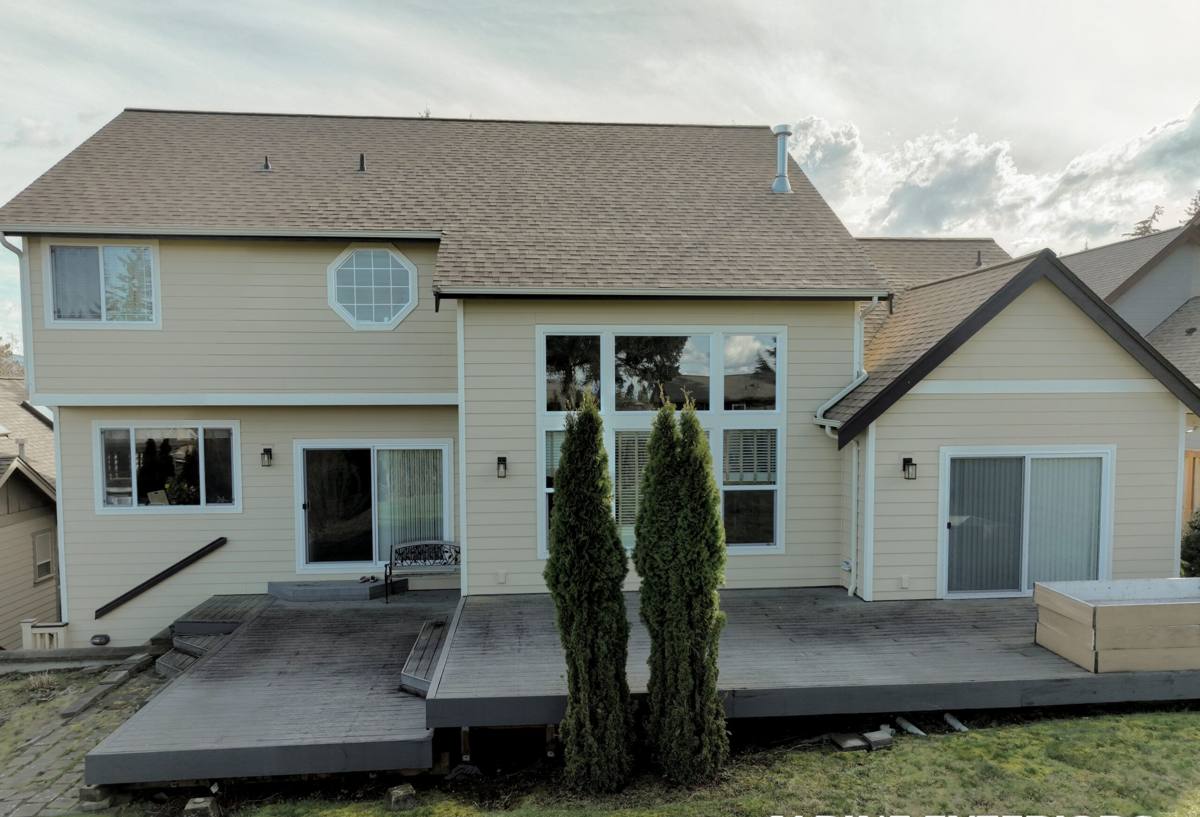
Common Deck Problems We See in Fairhaven
Ledger Board and Structural Connections
The ledger board — where the deck attaches to the house — is the single most important structural connection on most decks, and it's also the most common place we find hidden rot. If the original flashing was undersized, missing, or installed before current best practices, water gets behind the ledger and soaks into the framing where you can't see it. On homes near the water, that moisture problem is compounded by salt air keeping the wood damp longer between dry spells.
Post Bases and Footings
Wood posts that sit directly on or too close to concrete footings wick up moisture over time, and driving rain off the bay pushes water sideways into areas that would otherwise stay relatively dry. We regularly find soft, spongy wood at the base of support posts on decks that look structurally fine from a few feet away. This is a safety issue, not just a cosmetic one — post bases carry the deck's load.
Decking Surface Wear
Moss and algae on the deck surface aren't just unsightly — they hold moisture against the wood or composite material, which accelerates rot in wood decking and can affect the wear layer on some composite products. Shaded, north-facing decks and any area under trees are the first to show green growth each year, and it tends to come back faster in Fairhaven than in drier parts of the county.
Repair vs. Replace: How We Decide
Not every deck problem calls for a full rebuild, and not every "quick fix" is actually the right long-term answer. We assess based on what's structural versus cosmetic, and how much of the deck's frame is still sound.
| Condition | Usually Repairable | Usually Needs Replacement |
|---|---|---|
| Surface boards | Isolated splintering, graying, or a few soft boards | Widespread soft spots across most of the deck surface |
| Ledger board | Minor flashing gaps caught early, board still solid | Soft or rotted ledger, especially with visible water staining on the house siding |
| Support posts & footings | One or two posts showing early softness | Multiple posts compromised, or footings undersized for current code |
| Railings | Loose balusters, worn hardware | Railing height or spacing that doesn't meet current guardrail code |
| Fasteners | Localized corrosion, rust staining around a handful of screws | Widespread corroded or failing fasteners throughout the frame |
As a general rule: if the framing and structural connections are sound and the problems are limited to the surface or isolated components, repair is the honest recommendation. If we're finding rot in multiple structural areas, patching it piece by piece usually costs more over a few years than doing the job right once.
What a Correct Deck Repair Actually Involves
A repair that looks fine for a season but fails again in two years isn't a repair — it's a delay. Here's what we consider non-negotiable on any deck repair in this climate:
- Proper flashing at the ledger board connection, sized and installed to shed water away from the house, not just caulked over
- Corrosion-resistant fasteners and hardware rated for treated lumber and coastal exposure, since standard hardware corrodes faster with salt air in the mix
- Post bases that keep wood off concrete and allow water to drain rather than pool
- Joist hangers and structural connectors checked and replaced if rusted or undersized, not just left in place because they're "still attached"
- Railing height, baluster spacing, and stair details brought up to current guardrail requirements when we're already working in that area
- Any replaced decking or framing matched appropriately to what's staying, so the repair doesn't create a weak transition point
Skipping any of these to save time is how a five-year fix turns into a one-year fix.
Our Process for Fairhaven Deck Repairs
We keep the process straightforward because deck repair isn't a place for surprises after the work has started.
1. On-Site Inspection
We check the ledger connection, probe posts and framing for soft wood, look at the condition of fasteners and hardware, and assess the decking surface itself. We'll tell you plainly what's structural and what's cosmetic.
2. Clear Scope and Estimate
You get a written plan for what needs to happen, why, and what it will cost — no vague allowances that turn into add-ons once we've started.
3. The Repair Itself
We remove and replace only what needs it, matching materials and reinforcing structural connections properly rather than just covering problems with new boards.
4. Final Walkthrough
We walk the deck with you when it's done so you can see exactly what was addressed.
Material Choices That Hold Up Near the Water
What we use for decking and structural components matters more in a salt-air, high-moisture climate than it does further inland. There's no single "best" material for every situation — each comes with trade-offs worth understanding.
Pressure-Treated Lumber
Cost-effective and widely used for framing, but it still requires proper flashing, drainage, and periodic sealing to perform well here. It's a solid choice for structural framing when installed correctly, less ideal as a low-maintenance surface option.
Cedar
Naturally resistant to rot and a good look for the Pacific Northwest, but it's a softer wood that needs regular maintenance — cleaning, sealing, and moss removal — to keep performing well in a wet, shaded environment.
Composite Decking
Composite surface boards resist rot and don't need staining, which appeals to a lot of homeowners dealing with moss season every year. The trade-off is higher upfront cost and the fact that composite still requires proper ventilation and drainage underneath — moisture problems in the framing below don't go away just because the surface material doesn't rot.
We'll walk you through what fits your deck, your budget, and how much maintenance you actually want to keep up with — there's an honest case for each option depending on your situation.
Maintenance That Extends the Life of a Repair
A well-done repair still needs some upkeep, especially with the moss and rain pattern Fairhaven sees for a good chunk of the year.
- Clear leaves, needles, and debris from between boards and along the ledger board regularly, especially in fall
- Treat moss and algae growth early in the season before it spreads across the whole surface
- Check that gaps between boards remain clear for drainage — clogged gaps hold water against the wood
- Inspect visible fasteners and hardware once a year for early rust staining
- Keep gutters and downspouts near the deck clear so runoff isn't dumping extra water onto the structure
- Re-seal or re-stain wood decking on the manufacturer's recommended schedule, not just when it looks faded
Why Hire a Crew That Already Works in Fairhaven
Fairhaven's mix of hillside lots, waterfront proximity, and older housing stock means access, drainage, and existing construction quality vary a lot from house to house. A crew that regularly works this neighborhood already understands how to plan around tight or sloped access, what condition to expect from decks of a certain age, and how aggressively moss and salt exposure typically affect a given exposure or orientation.
That local familiarity translates into a more accurate estimate up front and fewer surprises once the work is underway. It also means we're not learning Bellingham's rain patterns and Whatcom County code requirements on your project — we already know them.
Get an Honest Look at Your Deck
If your deck has soft spots, rust staining, persistent moss, or you're just not sure whether it needs a repair or a full rebuild, we're happy to take a look and give you a straight answer. Reach out for a free, no-pressure estimate using the form below.