 Bellingham Siding
 Decks Built for the Way Sudden Valley Actually Weathers
Sudden Valley sits in the trees outside Bellingham, and that changes what a deck has to survive. Most lots here have real tree canopy, north-facing slopes, or a spot close to Lake Whatcom that keeps the air damp long after the rest of Whatcom County has dried out. Add in the broader marine climate we all live with — salt-tinged air rolling in off the Sound, driving rain for months at a stretch, and a moss season that can run from October into May — and a deck built with generic, one-size-fits-all methods just doesn't hold up as long as it should. We build decks for this area specifically, not a national template.
This page is about one thing: custom deck construction for Sudden Valley homeowners, done the way this climate actually requires.
What Sudden Valley Lots Demand From a Deck
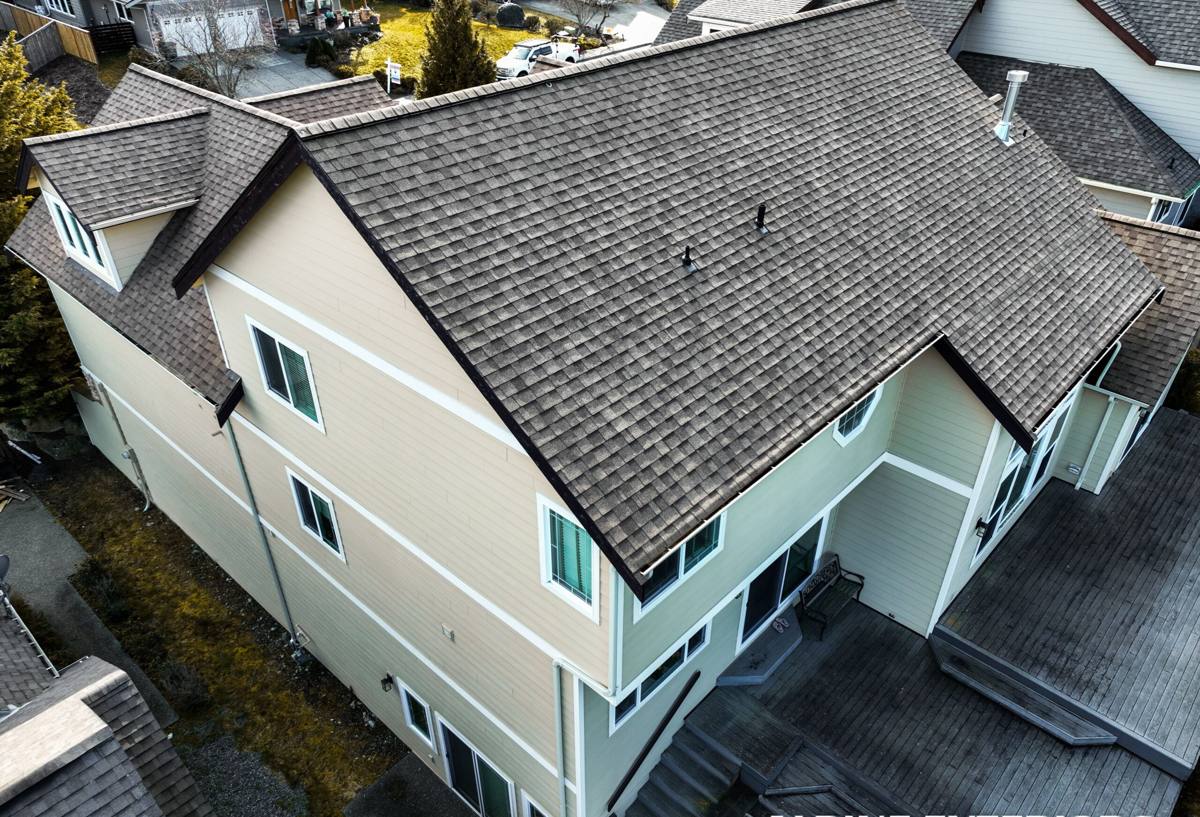
A deck on an open, sunny lot in eastern Washington dries out fast after every rain. A deck tucked under fir and cedar canopy in Sudden Valley doesn't get that luxury. Shade slows evaporation, keeps humidity higher at the deck surface, and gives moss, algae, and mildew a longer window to take hold every year. Sloped, wooded sites also mean more variability in footing depth, drainage, and how water moves under and around the structure.
The three factors we plan around
- Shade and airflow — decks under heavy canopy need wider board gaps, smarter joist spacing, and materials that don't trap moisture against the frame.
- Slope and drainage — hillside lots need footings and ledger attachments engineered for the actual grade, not a flat-lot assumption.
- Moisture cycling — wet-dry-wet cycles through a long Pacific Northwest fall and winter stress fasteners, flashing, and finishes more than steady weather ever would.
Choosing the Right Decking Material
There's no single "best" decking material — there's the right material for a specific lot, budget, and how much upkeep a homeowner actually wants to do. For shaded, moisture-prone Sudden Valley sites, the tradeoffs below matter more than they would on a dry, open lot.
| Material | How it handles shade & moisture | Maintenance | Typical lifespan |
|---|---|---|---|
| Pressure-treated pine | Absorbs moisture readily; needs gaps and airflow to dry between rains | Annual cleaning, periodic sealing | 10–15 years with upkeep |
| Cedar | Naturally resists rot and insects; still needs to breathe in shaded spots | Sealing every 1–2 years to hold color and resist mildew | 15–20 years |
| Capped composite | Doesn't absorb water into the board itself; surface can still grow moss/algae film if never cleaned | Occasional washing; no staining or sealing | 25–30 years |
| PVC decking | Fully moisture-resistant board; performance depends entirely on substructure venting | Low — mostly rinsing | 25–30+ years |
We don't push one product on every job. What we do insist on is honesty about maintenance: a beautiful cedar deck that never gets sealed in a shaded Sudden Valley yard will green up and gray out fast, and a composite deck installed without proper under-deck ventilation will trap moisture just as badly as wood. Material choice only works if it's matched to the site.
Cost factors worth understanding up front
| Factor | Why it moves the price |
|---|---|
| Site grade & access | Sloped or tree-crowded lots often need more footings, retaining details, or hand-dug piers where equipment can't reach |
| Height above grade | Elevated decks need railing, stair, and structural engineering that ground-level decks don't |
| Decking material | Composite and PVC cost more up front than wood but less over the deck's life |
| Ledger attachment | Older homes may need siding or sheathing repair to flash the ledger board correctly — skipping this is where rot starts |
| Railing & features | Cable rail, built-in seating, or multi-level designs add labor beyond a basic rectangle deck |
The Structural Details That Actually Determine Lifespan
A deck's finish is what homeowners notice first, but it's the parts you can't see that decide whether it lasts eight years or twenty-five. This is where a lot of decks — especially older ones we get called out to inspect around Sudden Valley — start failing long before the boards look bad.
Ledger board flashing
The ledger board bolts the deck to the house, and it's the single most common point of hidden rot. In a climate with this much driving rain, the ledger needs proper flashing that sheds water away from the house band joist, not just a bead of caulk. We treat this as non-negotiable on every attached deck.
Footings sized for the actual soil and slope
Whatcom County frost depth and soil drainage vary by site, and Sudden Valley's hillier lots add grade to the equation. Footings need to be sized and set to local code for the specific soil conditions on that lot, not a generic minimum.
Joist hardware and fasteners
Galvanized or coated hardware isn't optional in a marine climate — it's the difference between hardware that lasts the life of the deck and hardware that starts staining and weakening within a few wet seasons. We spec fasteners rated for the exposure this region actually delivers.
Under-deck ventilation
Especially under shade, trapped moisture beneath the deck is what feeds rot and mildew from below where nobody's looking. Framing layout and any skirting need to allow air to actually move underneath.
Moss, Algae, and the Long Season That Feeds Them
Moss doesn't just grow on roofs. On a shaded deck surface — especially wood, and especially composite that's never been rinsed — moss and algae film build up through the fall and winter and turn a deck surface slippery and slick well before spring. This isn't a cosmetic issue only; a slick deck surface near stairs or a raised edge is a real fall hazard.
Design choices that reduce this problem long-term:
- Board spacing and orientation that lets water run off instead of pooling
- Avoiding dead-end corners where standing water and debris collect
- Choosing a surface texture that doesn't hide grime while still offering grip when wet
- Planning gutter or drip-edge details so roof runoff doesn't dump directly onto the deck surface
No deck material is maintenance-free in a canopy-covered, wet climate. The goal is a design and material combination that keeps maintenance realistic instead of constant.
How We Approach a Sudden Valley Deck Project
- Site walk and honest assessment — we look at slope, sun exposure, existing structure (if replacing a deck), and how water currently moves across the lot.
- Design and material conversation — we lay out realistic options and their upkeep, not just the upfront number.
- Permitting — most new and replacement decks in Whatcom County require a permit; we handle that process rather than leaving it to the homeowner.
- Framing and structural work — footings, ledger flashing, and joist layout done to code for the specific site conditions.
- Decking, railing, and finish work — installed with the spacing and hardware suited to a shaded, wet climate.
- Final walkthrough — we go over maintenance expectations honestly, based on the material chosen, before we call the job done.
Permits and Local Code Considerations
Deck permitting in Whatcom County depends on size, height above grade, and whether the structure attaches to the house. Homeowners are sometimes surprised that a deck replacement needs the same permit rigor as new construction, especially once the ledger connection or footings are being redone. We pull the required permits and coordinate inspections as part of the build rather than treating it as an extra step — it protects the homeowner if the property is ever sold or insured.
A Practical Checklist Before You Hire Anyone for a Deck
- Do they carry current Washington contractor licensing and liability insurance?
- Will they pull the permit themselves, or expect you to?
- Do they ask about your lot's shade and drainage, or quote from a phone call alone?
- Do they explain ledger flashing and footing depth, or skip straight to material color choices?
- Are maintenance expectations for your chosen material explained honestly, before you sign?
- Do they have experience with sloped, tree-covered lots like the ones common in Sudden Valley?
Why a Crew That Already Works Sudden Valley Makes a Difference
A deck built by a crew unfamiliar with this specific pocket of Whatcom County tends to get the general climate right and the local details wrong — the wrong footing approach for a sloped, tree-rooted lot, or a decking layout that ignores how much shade a site actually holds through the year. A crew that regularly works Sudden Valley knows the difference between designing for open Bellingham lots near the water and designing for shaded, hillside lots further inland, and builds accordingly from day one instead of learning it on your project.
That local familiarity also shows up in smaller ways: knowing which permit questions Whatcom County will ask first, recognizing early signs of ledger rot on an older attached deck, and not underestimating how much moss and moisture a shaded lot will deal with compared to a sunny one down the road.
Get a Straight Answer for Your Property
Every Sudden Valley lot is a little different — shade, slope, and existing structure all change what the right deck build looks like. If you're planning a new deck or need an honest look at an aging one, we're glad to walk the site and give you a clear, no-pressure estimate using the form below.