 Bellingham Siding
 Windows Built for Cordata's Weather, Not Just Cordata's Curb Appeal
Cordata sits in north Bellingham, close enough to Bellingham Bay and the Strait of Georgia that the marine climate shapes everything about how a window performs here. It's not just about keeping heat in during the winter and out during the rare August heat wave. In Whatcom County, a window has to survive months of saturated air, wind-driven rain that hits siding sideways, and a moss and algae season that can run from October well into May. A window that's "energy-efficient" on a spec sheet but poorly suited to this climate will still cost you comfort, in the form of cold drafts near the sash, fogged glass, and trim that rots out from behind before the glass itself ever fails.
We install and replace windows for homeowners throughout Cordata and the surrounding north Bellingham area, and the pattern we see is consistent: most window problems in this neighborhood aren't caused by bad glass. They're caused by moisture finding a path in around the frame, hardware corroding faster than it should because of salt-laden air, or a low-quality installation that skipped proper flashing. This page covers what an energy-efficient window actually needs to do in Cordata's conditions, what a correct installation looks like, and why the details matter more here than they would in a drier inland climate.
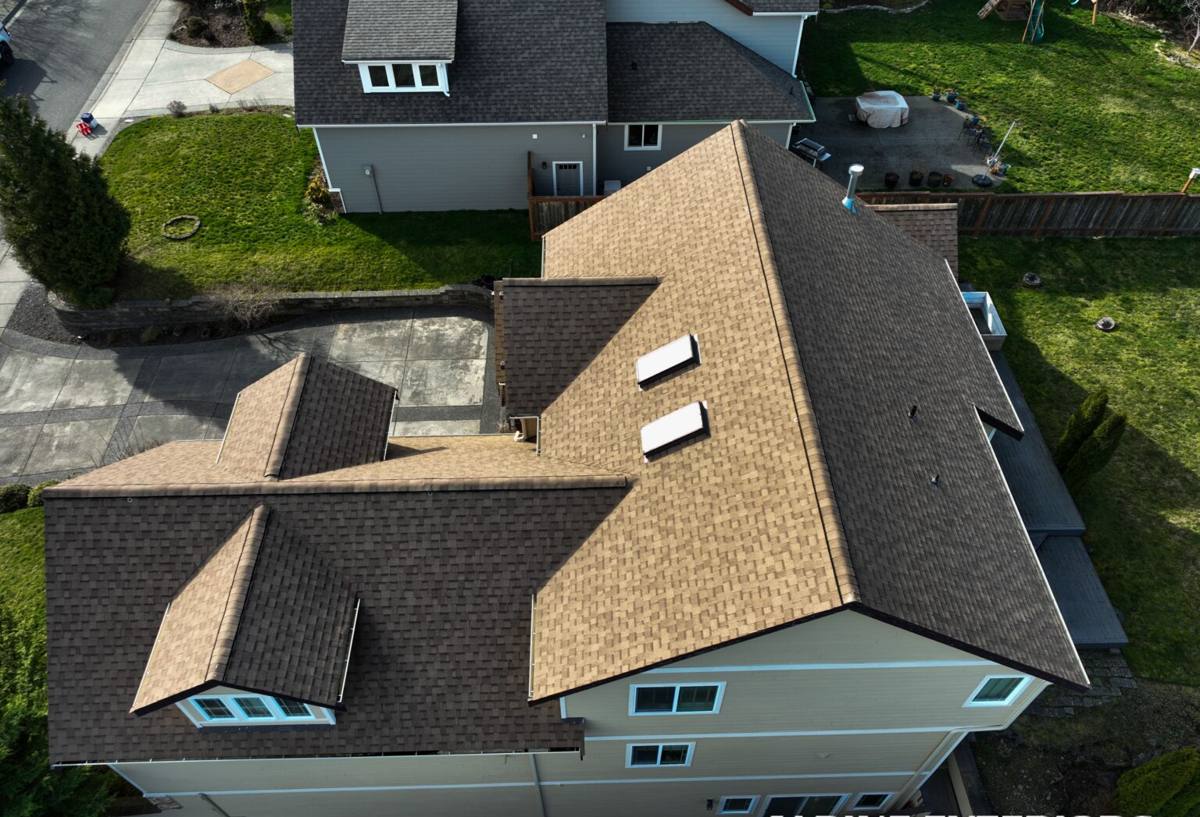
What "Energy-Efficient" Actually Means for a Whatcom County Home
Energy efficiency in a window comes down to a handful of measurable properties, not marketing language. The two numbers worth knowing are U-factor and Solar Heat Gain Coefficient (SHGC), both rated by the National Fenestration Rating Council (NFRC) and printed on the sticker every legitimate window ships with.
U-Factor: How Well the Window Resists Heat Loss
U-factor measures how much heat escapes through the window. Lower is better. In our climate, where the heating season runs long but temperatures rarely swing to extremes, a mid-to-low U-factor window paired with good installation detailing does more for comfort than chasing the absolute lowest number on the market.
SHGC: How Much Solar Heat Comes Through
Solar Heat Gain Coefficient matters less here than it would in a sunnier climate, but it's still a factor on south- and west-facing walls that get direct afternoon sun in summer. For most Cordata homes, a moderate SHGC balances winter solar gain against summer overheating better than an extreme rating in either direction.
Glass Package and Frame Material
Double-pane, low-E glass with an argon or krypton gas fill is the baseline for a genuine efficiency upgrade in this region. Triple-pane glass adds cost and weight for a smaller marginal gain in a climate like ours, where winters are mild compared to colder inland regions — it's worth considering for noise-sensitive rooms or homes near busier roads, but it's not automatically the right call for every project.
The Cordata-Specific Challenges We Design Around
Salt Air and Hardware Corrosion
Proximity to the bay means airborne salt reaches further inland than people expect, especially on windier stretches of the year. Cheap window hardware — hinges, locks, balance mechanisms — corrodes faster under that exposure. We pay attention to hardware quality and finish, not just glass performance, because a window with a seized lock or a corroded balance stops being "efficient" the moment it won't close tight anymore.
Wind-Driven Rain
Storms coming off the Strait don't just fall straight down — they drive rain sideways into wall assemblies, which puts real pressure on window flashing and sill pans. A window can have excellent glass and still leak if the flashing detail behind the trim wasn't done correctly. This is the single most common cause of window-related water damage we see in this climate, and it has nothing to do with the window unit itself.
Extended Moss and Algae Season
Shaded, moisture-retentive sites in north Bellingham hold onto damp conditions for much of the year, which is exactly what moss and algae need to take hold on sills, trim, and low-slope surfaces near windows. Left alone, that growth holds moisture against wood trim and finish long after the rain has stopped, accelerating rot at the exact point where a window is most vulnerable — the perimeter seal.
Condensation and Indoor Humidity
Tighter, more efficient windows reduce air leakage, which is good for comfort and heating bills — but it also means indoor humidity has fewer places to escape. In a climate that's already damp outside, we talk with homeowners about ventilation (bath fans, kitchen exhaust, whole-house ventilation where appropriate) as part of a window upgrade, not as an afterthought, so the improvement doesn't just push moisture problems from the glass to somewhere else in the house.
Frame Material: What Actually Holds Up Here
| Frame Material | Performance in Our Climate | Maintenance |
|---|---|---|
| Vinyl | Good thermal performance, handles moisture well, doesn't corrode | Low — occasional cleaning, no repainting |
| Fiberglass | Excellent dimensional stability, resists expansion/contraction from temperature and moisture swings | Low — very durable finish |
| Wood / Wood-Clad | Strong insulating properties but the wood core is vulnerable if the exterior clad or finish is ever breached | Higher — finish and seals need monitoring, especially near sills |
| Aluminum | Weakest thermal performance and most prone to condensation; hardware and frame corrode faster in salt-influenced air | Moderate, but corrosion risk is a real long-term concern here |
We don't install every product on that list for every home. Where a homeowner wants the traditional look of a wood window, we're upfront about the added maintenance commitment it takes to keep that assembly watertight in a climate this wet — it's a legitimate choice, but it's a different maintenance conversation than vinyl or fiberglass.
What a Correct Installation Involves
The window unit itself is maybe half of what determines long-term performance. The other half is installation detail, and it's where most of the difference between a window that lasts 20+ years and one that fails early actually shows up.
- Remove the existing window and inspect the rough opening for hidden rot or water staining before installing anything new
- Install a proper sloped sill pan so any water that gets past the exterior cladding drains out, not into the wall
- Flash the opening in the correct shingle-lap sequence — head flashing over side flashing over sill pan — so water always sheds outward and down
- Use closed-cell or low-expansion foam and backer rod at the perimeter, not just caulk, to control both air leakage and moisture
- Set the window level, plumb, and square, and confirm it operates smoothly before finishing trim
- Seal and finish exterior trim in a way that resists moss and algae takeover, and that can be inspected and re-sealed over time
- Verify weep holes and drainage paths are clear and functioning, not blocked by sealant or trim
Any one of these steps done wrong can undo the benefit of an otherwise good window. This is the part of the job that a lower bid often skips, because it's labor and attention to detail rather than a line item you can see on a quote.
Our Process for a Cordata Window Project
1. On-Site Assessment
We look at existing window condition, framing, current flashing (or lack of it), and any signs of past water intrusion — not just the glass that's visibly failed.
2. Product Selection
We walk through frame material, glass package, and performance ratings based on the specific exposure of each wall — a north-facing wall in shade has different needs than a west wall catching afternoon sun and driving rain.
3. Prep and Removal
Old units come out carefully, with the opening inspected and any rot or damage addressed before a new window ever goes in. Installing a new window into a compromised opening just hides a problem instead of fixing it.
4. Installation and Flashing
Sill pan, flashing sequence, air sealing, and finish work are done to manufacturer specification and standard building practice for our climate zone — this is the step that determines whether the window stays dry for the next few decades.
5. Final Check and Cleanup
Every window is operated, checked for square and smooth function, and inspected for a clean, sealed exterior finish before we consider the job done.
Why a Locally Established Crew Makes a Real Difference
Whatcom County's building code and permitting requirements, along with the realities of our specific microclimate, aren't identical to what a crew coming from a drier region is used to working with. A contractor who works Bellingham and the surrounding communities regularly already understands how wind-driven rain behaves against different wall orientations, how much moss and algae pressure to expect on a shaded north Bellingham lot, and what flashing details actually hold up through a full Whatcom County winter. That's not something you can fully substitute with a generic install guide.
There's also the practical matter of being reachable afterward. If a question comes up two years down the road — a sticking sash, a spot of condensation, a trim seam worth a look — a crew based here can actually come back out.
Signs Your Cordata Home Might Need a Window Upgrade
- Visible condensation or fogging between the panes of a double-pane unit (a sign the seal has failed)
- Drafts you can feel near the sash or frame even when the window is fully latched
- Soft or discolored trim and sills, especially on walls that face prevailing wind and rain
- Persistent moss or algae buildup on sills or trim that keeps returning within a season of cleaning
- Windows that are difficult to open, close, or lock — often a sign of frame movement or hardware corrosion
- A noticeably colder room near older single-pane or original aluminum-frame windows
If any of that sounds familiar, or you're simply planning ahead for a window upgrade in Cordata, we're glad to take a look and give you a straightforward, no-pressure estimate — just fill out the form below and we'll go from there.