 Bellingham Siding
 Birchwood is one of Bellingham's older, well-established neighborhoods, and that means a lot of its homes are wearing siding that was installed decades ago — under different building codes, with different materials, and often without the water-management details that Whatcom County's climate actually demands. When that siding finally fails, it rarely fails quietly. It shows up as soft trim, streaked paint, dark patches of moss, or a wall that just never seems to dry out between storms. This page is about what a correct siding replacement looks like for a Birchwood home, and why the climate here changes almost every decision along the way.
What Birchwood's Climate Actually Does to Siding
Bellingham sits close enough to salt water and open exposure that homes throughout the area — Birchwood included — deal with a combination most siding products were never designed to handle well: airborne salt, near-constant damp air, and long stretches of low sun angle that keep north- and west-facing walls wet for days at a time. None of these factors alone is extreme. Together, over years, they're what separates a wall that ages gracefully from one that rots from the inside out.
Salt Air and Slow Corrosion
Salt-laden air doesn't just affect homes directly on the water. It travels, and in a coastal county like Whatcom, it settles on siding, fasteners, and trim well inland. Salt is hygroscopic — it pulls moisture out of the air and holds it against whatever surface it's on. On siding materials with weak moisture tolerance, that means swelling, delamination, or paint failure years before a manufacturer's warranty would suggest. On fasteners and flashing that aren't corrosion-rated, it means rust stains bleeding down the face of the wall long before the siding itself gives out.
Driving Rain, Not Just Rain
Bellingham's rain is rarely a straight-down soaking; it comes with wind, which pushes water sideways into laps, seams, and butt joints. A siding system that relies on paint or caulk alone to keep water out will eventually let some in — the question is whether the wall behind it is built to shed that water back out, or whether it traps it against sheathing and framing. Driving rain is the reason lap spacing, flashing details, and weather-resistive barrier work matter more here than in drier climates.
The Long Moss Season
Shade, humidity, and mild temperatures give moss and algae a long growing season on Birchwood's north- and east-facing walls, especially where mature trees or neighboring structures block sun and airflow. Moss holds moisture directly against the siding surface far longer than open air would, which accelerates whatever moisture damage the material is already prone to. On a wood-based product, that's a direct path to rot. On fiber cement, it's mostly a cosmetic and cleaning issue — a meaningful difference in a neighborhood with as much tree cover as this one.
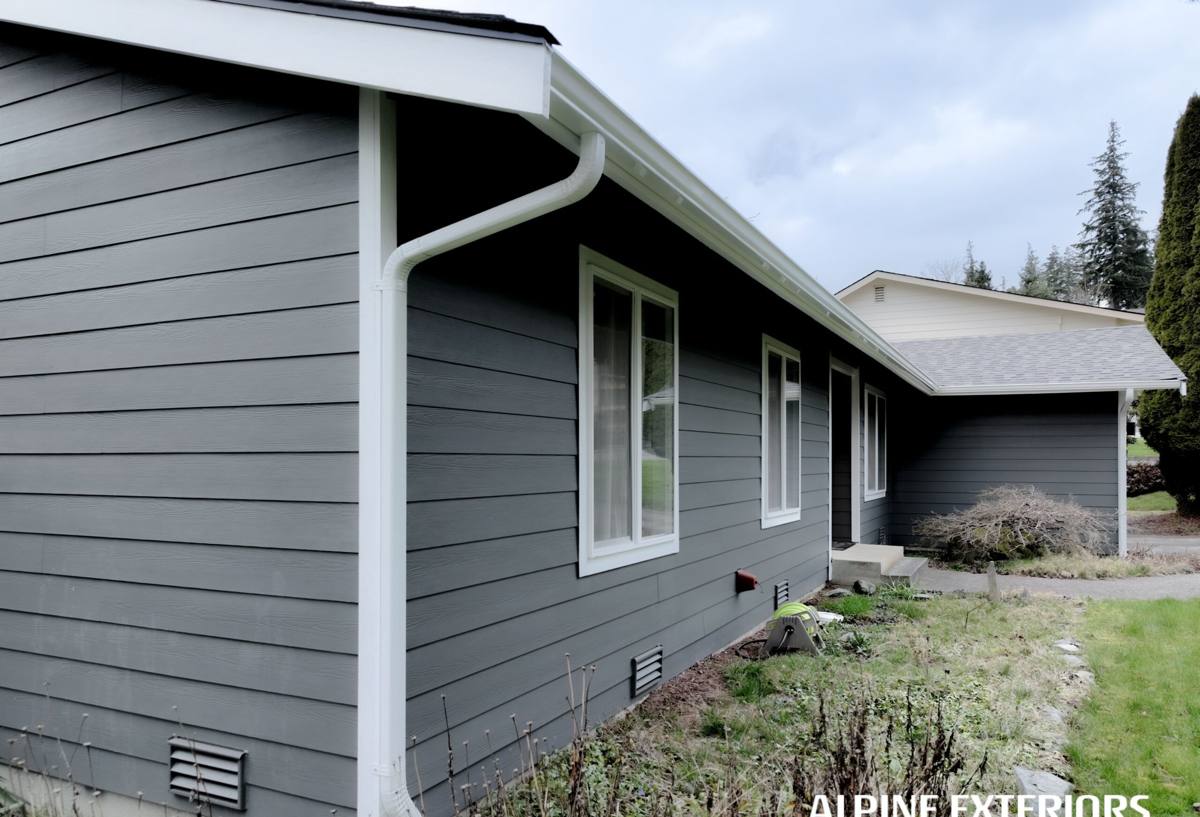
Signs a Birchwood Home Needs Siding Replacement
Not every issue means a full tear-off. But in this climate, small problems compound quickly if they're left alone through another wet season. Homeowners in Birchwood should watch for:
- Soft or spongy spots when you press on siding near the bottom courses, corners, or under windows
- Paint that's peeling, bubbling, or needing repainting far more often than it used to
- Persistent moss or dark streaking that comes back within months of cleaning
- Visible gaps, warping, or buckling in lap siding
- Rust streaks below fasteners or trim pieces
- Musty smell or visible staining on interior walls that share an exterior wall with damaged siding
- Siding that was installed more than 20-25 years ago and has never been fully inspected behind the surface
Any one of these can be a minor repair. Two or three together, especially on the wetter or shadier sides of the house, usually mean the water-resistive barrier underneath has been compromised and a full section — or the whole exterior — needs to come off to see what's really going on.
What a Correct Siding Replacement Actually Involves
Siding replacement is not just removing old boards and nailing up new ones. In a climate like Whatcom County's, most of the work that determines whether a wall lasts 10 years or 40 happens in layers the homeowner never sees again once the job is finished.
Tear-Off and Sheathing Inspection
Once old siding comes off, the sheathing underneath gets a real look. Any water damage, soft spots, or rot found at this stage needs to be repaired before anything new goes back on — covering damaged sheathing with new siding just hides a problem that will resurface, usually worse.
Water-Resistive Barrier and Flashing
A correctly detailed weather barrier, properly lapped and sealed around every window, door, and penetration, is what actually keeps driving rain out of the wall assembly. Flashing at horizontal surfaces — window heads, trim boards, roof-to-wall intersections — needs to direct water outward, not let it pool or wick backward into the wall.
Fastening, Clearances, and Ventilation
Fasteners need to be corrosion-resistant given the salt exposure common throughout the area, and driven to the manufacturer's specified depth — not too shallow, not overdriven. Siding also needs proper clearance from grade, roof lines, and decks so it isn't sitting in standing water or trapped moisture. A rainscreen gap behind the siding, where called for, gives the wall a way to dry out between storms instead of staying damp.
Finish Work
Trim, caulking at the right joints only (not everywhere — over-caulking can trap moisture), and touch-up painting finish the job. On a factory-finished product, this step is minimal by design, which is one less place for a future callback to originate.
Why This Company Installs Only James Hardie Fiber Cement
We don't install vinyl, LP SmartSide, primed wood, cedar, or other fiber cement brands. That's a deliberate standard, not a sales pitch, and it matters most in a climate like this one. James Hardie's fiber cement is non-combustible, dimensionally stable in freeze-thaw and wet-dry cycling, and doesn't feed moss or rot the way wood-based products can. Its ColorPlus factory finish holds up to UV and salt exposure better than field-applied paint, and Hardie's HZ5 product line is engineered specifically for climates with the freeze-thaw and moisture exposure the Pacific Northwest sees. We've seen enough call-backs on other materials in this kind of weather to have stopped installing them — Hardie is what we're willing to put our name behind on a Birchwood roof.
How Siding Materials Compare in This Climate
| Factor | James Hardie Fiber Cement | Vinyl | Wood / LP SmartSide |
|---|---|---|---|
| Moisture tolerance | Excellent — won't rot or swell | Good, but seams can let water behind panels | Vulnerable if coating fails or edges aren't sealed |
| Moss/algae resistance | High — hard, non-porous surface | Moderate — can trap moisture behind it | Low — organic material feeds growth |
| Salt air performance | Strong, with corrosion-rated fasteners | Can become brittle over time | Coatings degrade faster; edges are vulnerable |
| Fire resistance | Non-combustible | Combustible | Combustible |
| Finish durability | Factory-baked ColorPlus, long repaint intervals | Color can fade; can't easily repaint | Needs regular repainting/staining |
| Typical lifespan when installed to spec | 30-50+ years | 20-30 years | 15-25 years, climate dependent |
Cost Factors for a Birchwood Siding Replacement
Every home is different, so we won't quote a number without seeing the house, but the main variables that move the price on a real project are consistent:
| Factor | Why it matters |
|---|---|
| Sheathing condition | Rot or water damage found during tear-off adds repair scope before new siding goes up |
| Home size and wall complexity | More corners, gables, and trim details mean more labor and cut material |
| Siding profile chosen | Lap width, panel vs. plank, and shingle-style siding vary in material and install time |
| Access and site conditions | Tree cover, tight lot lines, and multi-story walls affect scaffolding and staging |
| Trim and accessory scope | Full trim replacement versus reusing sound existing trim changes the total |
Our Process for Birchwood Projects
- On-site assessment — we walk the exterior, check for soft spots, and look at exposure on each side of the house before recommending anything
- Written estimate — a clear scope covering tear-off, repairs anticipated, siding profile and color, and timeline
- Tear-off and sheathing check — old siding comes off and we inspect and repair what's underneath before moving forward
- Weather barrier and flashing installation — detailed around every window, door, and penetration
- Hardie installation — installed to manufacturer fastening and clearance specifications
- Final trim, caulk, and walkthrough — we go over the finished job with you before calling it done
Why a Crew That Already Works in Birchwood Matters
A crew that's worked other homes in this neighborhood already knows which walls tend to hold moisture longest, how tree cover affects drying time, and what the existing housing stock's older siding and trim details typically look like once they're opened up. That's not a guess — it's pattern recognition built from doing the work in this specific pocket of Bellingham, on homes built in similar eras with similar exposure. It means fewer surprises mid-project and a more accurate estimate up front, because we're not learning Whatcom County's weather behavior for the first time on your roof.
If your Birchwood home's siding is showing its age — or you just want an honest opinion on whether it needs full replacement or targeted repair — we'll come take a look and give you a straight answer. Request a free, no-pressure estimate using the form below.