 Bellingham Siding
 Why Birch Bay Windows Wear Out Faster Than You'd Expect
Birch Bay sits right on the water, and that changes what a window has to survive day to day. Salt-laden air corrodes hardware and pits vinyl and aluminum finishes faster than it would a few miles inland. Wind off the Strait drives rain sideways into wall assemblies, pushing water into gaps that would stay dry on a more sheltered lot. And the long gray stretch from fall through spring keeps everything damp long enough for moss and mildew to take hold on sills, tracks, and exterior trim. None of this means Birch Bay is a bad place to own a home — it just means windows here need to be installed with that exposure in mind from the start, not as an afterthought.
A window that's a fine choice in a dry inland neighborhood can underperform here if the installer doesn't account for wind-driven rain and salt exposure. That's the gap we try to close: matching the product and the install method to what this specific stretch of Whatcom County actually throws at a house.
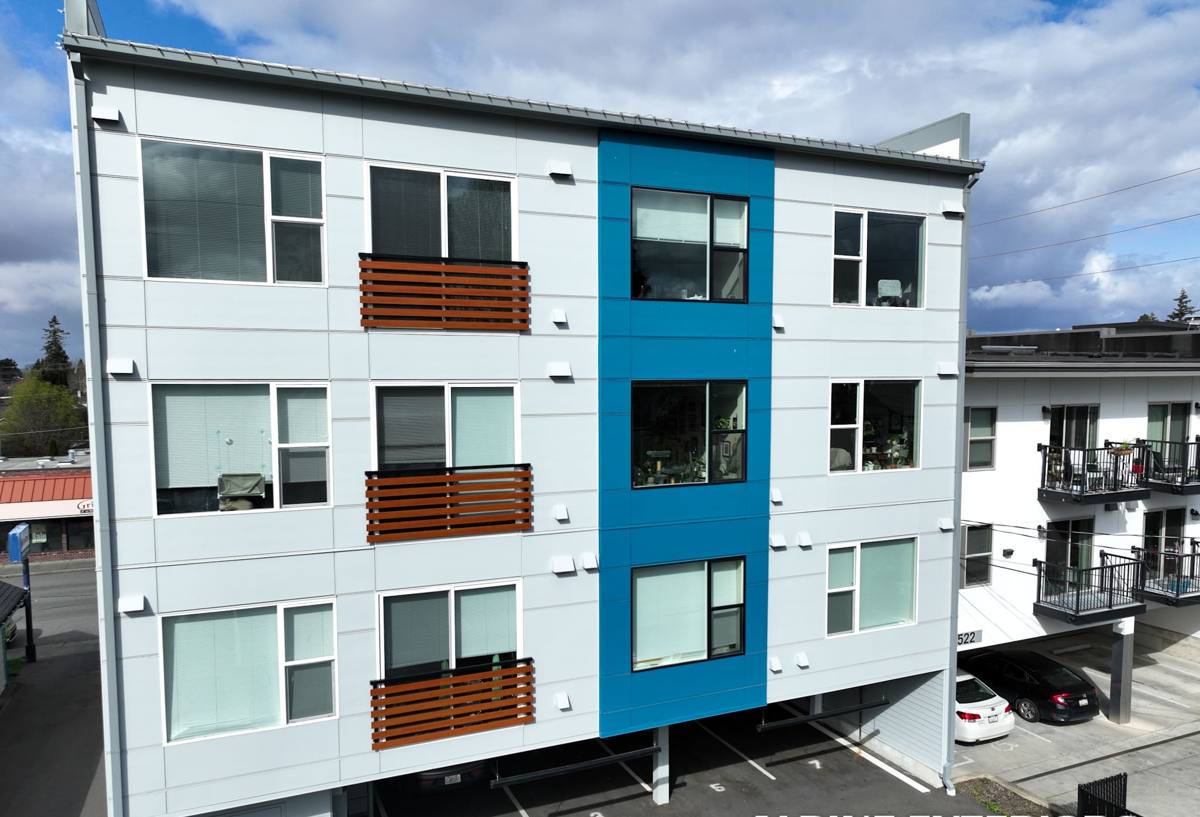
What "Correct" Actually Means for a Coastal Install
Flashing and Water Management
Most window failures we're called out to fix aren't glass or frame problems — they're water management problems. Rain that gets past the exterior trim needs somewhere to go besides the wall cavity. That means a sloped sill pan under every unit, proper head flashing that laps correctly with the water-resistive barrier above it, and side flashing that ties the window into the wall's drainage plane rather than just caulking around the edges and hoping. On a wind-exposed lot like a lot of Birch Bay properties, we treat this step as non-negotiable, even on a straightforward retrofit.
Sealants and Materials for Coastal Air
Salt air breaks down some sealants and fastener coatings faster than a standard product spec sheet accounts for. We use sealants and fasteners rated for coastal or marine-adjacent exposure where the window faces open water or prevailing wind, rather than the cheapest compatible option. It costs a little more up front and saves a callback in three years when a bead of the wrong sealant has already chalked and cracked.
Choosing a Window Frame Material for a Birch Bay Home
Frame material matters more here than in a sheltered inland neighborhood, because salt air and constant moisture cycling stress every material differently. Here's how the common options hold up under that kind of exposure:
| Frame Material | Coastal Performance | Maintenance | Typical Trade-Off |
|---|---|---|---|
| Vinyl | Good — won't rust or corrode; UV and heat cycling matter more than salt | Low; occasional rinse to clear salt film | Lower upfront cost; frame color/finish is fixed for its life |
| Fiberglass | Very good — dimensionally stable, resists pitting and corrosion | Low | Higher upfront cost than vinyl |
| Aluminum | Poor to fair unless marine-grade and properly finished — prone to pitting and corrosion near salt air | Higher — finish needs monitoring | Slim sightlines, but exposure risk is real here |
| Wood-clad | Fair — the exterior cladding protects it, but any breach exposes wood to rot | Highest — cladding seams need regular inspection | Best interior look; most exposure risk if installed poorly |
We don't refuse to install any of these outright, but we'll tell you plainly if a material is a poor match for how exposed your particular wall or elevation is. A window facing open water on the windward side of the house is a different decision than one tucked on a sheltered back wall, even on the same property.
Signs Your Current Windows Are Losing the Fight
Coastal wear shows up gradually, and homeowners often adjust to it without noticing how far it's gone. Worth checking for:
- Fogging or a hazy film between panes of double-pane glass — a sign the seal has failed and the gas fill is gone
- Soft, discolored, or bubbling paint and trim around the window frame, especially at the bottom corners
- Visible moss or persistent black streaking on the sill or lower frame that comes back within weeks of cleaning
- Hardware — locks, cranks, hinges — that's stiff, corroded, or won't fully latch
- A draft you can feel with a hand near the frame on a windy day, even with the window fully closed
- Rot or a screwdriver sinking softly into the sill or jamb when you press it
- Condensation forming on the interior frame or glass regularly through fall and winter
Any one of these on its own might just need attention. Several together, especially on the same window, usually mean the unit or its flashing has been letting water in for a while.
Our Installation Process
Assessment and Measurement
We start on site, not with a phone quote. We look at each window's exposure — which direction it faces, how much wind and rain it takes, what condition the existing flashing and sheathing are in — and measure for an exact fit rather than a standard size. This is also when we flag anything that changes the job, like rot in the framing that needs to be cut out and replaced before a new window goes in.
Removal and Inspection
Once the old window comes out, we can actually see the wall cavity and sill condition, which you can't fully judge from outside. If there's hidden water damage, we address it before anything new gets installed — sealing a new window over a compromised sill just hides the problem for another season.
Install, Flash, and Seal
The window goes in plumb, level, and square, shimmed correctly so it isn't relying on the fasteners to hold its shape. Flashing is layered correctly with the wall's drainage plane, and sealant goes where it should — and only where it should, since sealing the wrong spots can trap water instead of keeping it out.
Final Check and Cleanup
We test operation, check the seal, and walk the job with you before we call it done. Site cleanup includes hauling away the old units and debris, not leaving that to you.
Full-Frame Replacement vs. Retrofit (Pocket) Installation
Not every window needs the wall opened up. A retrofit, or pocket, installation sets the new window into the existing frame and is faster and less disruptive — a reasonable option when the existing frame and flashing are still sound. A full-frame replacement removes the window down to the rough opening, which costs more and takes longer but is the right call when there's rot, failed flashing, or water damage behind the existing frame — all more common on a wind- and rain-exposed Birch Bay wall than on a sheltered inland one. We'll tell you honestly which one your situation actually calls for rather than defaulting to the cheaper option when it isn't the right fix.
Cost Factors Worth Understanding Upfront
Every window job is priced on its own specifics, but the main variables are consistent:
- Frame material and glass package (standard double-pane vs. upgraded low-E or impact-rated glass)
- Retrofit vs. full-frame replacement, and whether hidden rot or flashing repair is needed once the old window is out
- Number of windows and whether they're all done in one visit or staged over time
- Window size, shape, and accessibility — a large picture window or an upper-story unit takes more time than a standard bedroom window
- Trim and finish work needed to match existing interior and exterior details
We give a written estimate that breaks these out so you know what you're paying for, not a single lump number with no explanation behind it.
Why Hiring a Crew That Already Works Birch Bay Matters
A contractor who mostly works drier, more sheltered parts of Whatcom County can still do a technically fine window install and have it underperform here within a few years, simply because they didn't plan for wind-driven rain or salt exposure the way a job on the water requires. Working this area regularly means knowing which elevations take the worst weather, which materials hold up and which don't, and what local permitting through the county actually requires for a window replacement versus a full-frame change. It also means we're not learning on your house — we've already seen what goes wrong on lots like yours and build the install to avoid it.
Keeping New Windows Performing Through Moss Season
A correctly installed window doesn't need much upkeep, but a few habits extend its life here specifically. Rinse accumulated salt film off frames and glass periodically, especially after storms. Keep weep holes and drainage tracks clear of moss, needles, and debris so water can actually exit the frame instead of sitting in it. And take a look at exterior caulking once a year — UV and salt exposure break it down faster here than in a typical inland yard, and catching a failed bead early is a lot cheaper than dealing with the water damage it eventually causes.
If your windows are showing wear, fogging, or drafts, or you're planning ahead for a remodel, we're happy to take a look and give you a straightforward, no-pressure estimate — just fill out the form below.