 Bellingham Siding
 Window Installation in Barkley: A Different Job Than It Looks
Window installation gets treated as a simple swap more often than it should be — pull the old unit, set the new one, caulk the edges, done. In Barkley, that shortcut is exactly how homeowners end up with rot hidden behind trim a few years later. This part of Whatcom County deals with salt air drifting in off the water, driving rain that hits walls sideways as often as it falls straight down, and a moss season that runs long enough to keep shaded siding and trim damp for months at a stretch. A window opening is the single most vulnerable point in a wall for all three of those conditions to do damage, because it's a deliberate gap cut through the weather barrier that has to be resealed correctly by hand, every time.
We install windows throughout Barkley with that reality in mind. The window itself matters, but in this climate the flashing, sealing, and integration with the surrounding wall matter just as much — often more, since a good window installed carelessly will still leak, and a modest window installed correctly will still perform.
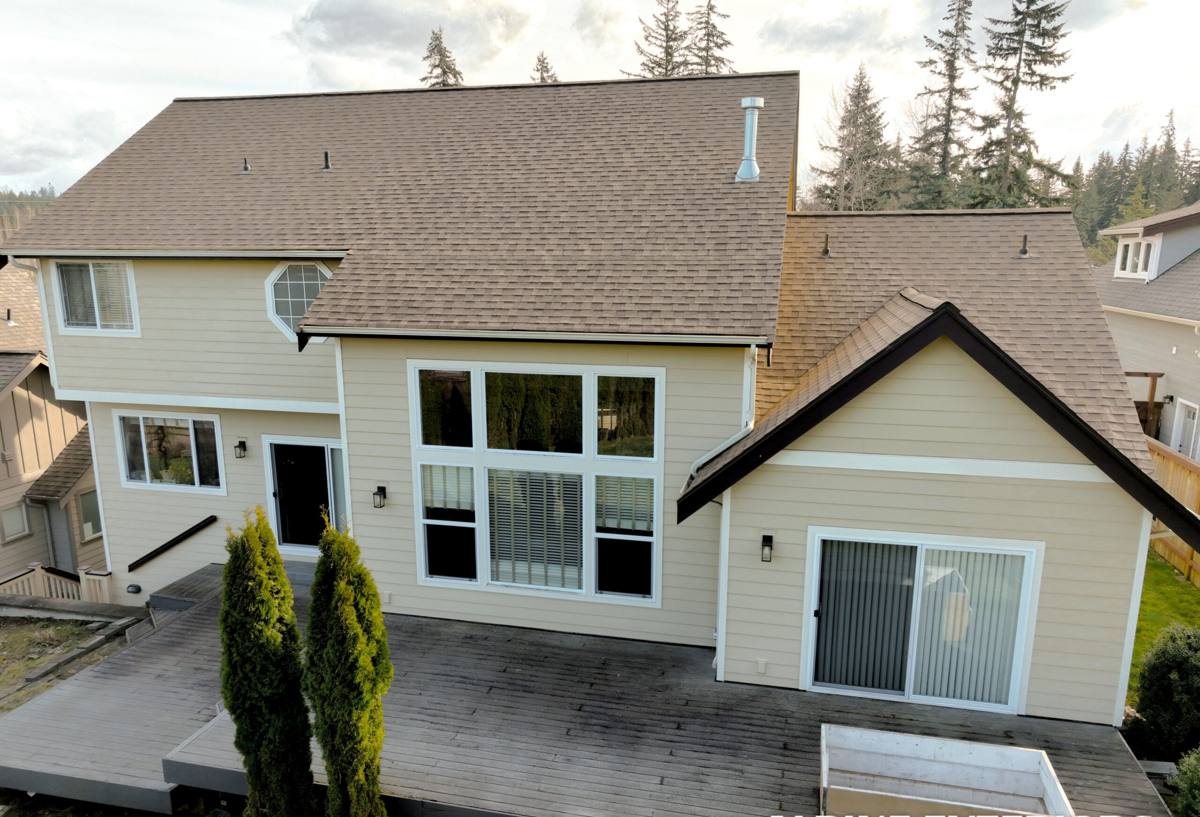
What Barkley's Climate Actually Does to Window Openings
Salt Air
Salt-laden air speeds up corrosion on exposed hardware — hinges, cranks, screws, and any fastener that isn't rated for coastal exposure. It also keeps painted trim and sealants wet longer than they'd stay in a drier inland climate, which shortens the working life of anything that depends on a surface coating to keep water out.
Driving Rain
Wind-driven rain doesn't run down a wall the way it would in a calm, straight-down shower. It gets pushed sideways and upward into laps, seams, and the joint between a window frame and the rough opening around it. A flashing detail that would be adequate in a sheltered, low-wind location isn't automatically adequate on a wall that takes rain at an angle for months of the year, which is the norm here.
A Long Moss Season
Shaded walls, north-facing exposures, and window openings under eaves with limited sun stay damp for extended stretches through fall, winter, and much of spring. That's exactly the condition moss and mildew need to take hold on sills, trim, and casing. Beyond the cosmetic staining, sustained dampness against wood trim eventually leads to softening and rot at the corners and joints — usually starting at the bottom sill, where water naturally collects.
What Correct Window Installation Actually Involves
A window performs the way it's rated to only when the opening around it is built and sealed correctly. That's a sequence, not a single step, and skipping or shortcutting any part of it can undercut the window's real-world performance no matter how good the unit itself is.
- Removing the old unit without damaging the rough opening or surrounding sheathing
- Inspecting the opening for hidden rot, soft framing, or prior water damage before anything new goes in
- Installing sill pan flashing so any water that gets past the window has a way out, not a place to pool
- Lapping house wrap or weather-resistive barrier correctly at the head, jambs, and sill so water sheds outward and downward at every layer
- Setting the window level, plumb, and square, with shims placed so the frame isn't stressed once fasteners go in
- Fastening with corrosion-resistant hardware appropriate for a salt-air environment
- Sealing with the right sealant at the right joints — not caulk used as a substitute for proper flashing
- Finishing interior and exterior trim so the whole assembly sheds water rather than trapping it
The sill pan and the flashing sequence are where most installation failures actually originate. A window can be a well-built, well-rated product and still leak within a couple of wet seasons if the sill wasn't pitched to drain or the house wrap wasn't lapped in the correct order. That's not a defect in the window — it's an installation detail that a driving-rain climate exposes quickly, where a milder climate might mask it for years.
Choosing the Right Window for a Barkley Home
Frame material and glass package both affect how a window holds up here, and it's worth being direct about the trade-offs rather than treating the decision as already settled.
| Frame Material | Performance in This Climate | Typical Maintenance |
|---|---|---|
| Vinyl | Doesn't rot or corrode; performs well against moisture but can expand and contract with temperature swings if not installed with proper clearance | Low — occasional cleaning, no repainting |
| Fiberglass | Very stable dimensionally, holds paint well, strong resistance to moisture and temperature movement | Low to moderate depending on finish |
| Aluminum | Durable but a poor thermal performer, and prone to condensation in a consistently damp, cool climate unless thermally broken | Moderate — condensation management, corrosion checks near salt air |
| Wood (unclad) | Best appearance to many homeowners, but the most moisture-sensitive option in sustained damp conditions without diligent upkeep | Highest — regular repainting or refinishing, especially on rain-exposed elevations |
| Wood-clad | Wood interior with a protective exterior cladding; shifts most of the moisture exposure risk to the cladding material and its seal | Low exterior, moderate interior finish care |
For most Barkley homes, we lean toward vinyl or fiberglass frames on rain-exposed elevations specifically because they don't depend on a maintained paint film to keep water out. That's a professional preference based on how each material behaves under sustained wind-driven rain and salt exposure — not a claim that wood windows are a bad product. A wood or wood-clad window installed correctly and maintained on schedule can perform well here too; it just carries a higher ongoing maintenance burden than most homeowners want to sign up for on a coastal-influenced wall.
Glass packages matter less for weather resistance and more for comfort and efficiency, but a double- or triple-pane unit with a warm-edge spacer does help reduce the condensation that shows up on interior glass during Whatcom County's cool, damp winters.
Our Process for a Barkley Window Project
We start with an on-site look at the actual openings being replaced — not a generic estimate based on square footage alone. That includes checking for existing rot or soft framing around current windows, since openings on shaded or rain-exposed walls are the ones most likely to already have hidden moisture damage that needs addressing before a new window goes in.
From there, we walk through frame material and glass options relative to each wall's actual exposure, since a south-facing wall under an overhang and a north-facing wall with no eave protection don't need to be treated the same way. Installation follows the flashing and sealing sequence above, and we finish with interior and exterior trim work so the whole opening looks and performs as one finished assembly, not a window dropped into a hole and caulked around the edges.
We also treat window openings as connected to the siding and trim around them rather than as an isolated task. A correctly flashed window paired with siding that dumps water into the same wall cavity from somewhere else just relocates the moisture problem. Getting the sequencing right where these systems meet is what actually determines how long the whole wall assembly holds up.
Signs a Barkley Home's Windows Need Attention
Most homeowners reach out because of one specific symptom, not a full inspection. It's worth knowing the fuller list of what to look for before a small issue turns into a framing repair:
- Soft or spongy wood at the sill or bottom corners of the frame
- Visible moss or green staining on the sill, casing, or nearby trim
- Paint that keeps failing on the trim no matter how often it's redone
- Drafts or visible daylight around the sash when the window is closed
- Fogging or moisture trapped between panes on double- or triple-glazed units
- Difficulty opening, closing, or locking a window that used to operate smoothly
- Water staining on interior drywall or trim below or beside a window
Any one of these can be a minor fix on its own. But in this climate, moisture-related damage around a window opening tends to spread rather than stay contained, since water that's found one way in will keep using it until the opening is properly resealed or rebuilt.
Why a Crew That Already Works Barkley Matters Here
A lot of what separates a window installation that holds up for decades from one that leaks within a few wet seasons comes down to judgment calls that a generic, out-of-area crew tends to make on autopilot: how much wind-driven rain a specific wall orientation actually sees, how far up a sill pan needs to extend given local rain intensity, where a shaded opening is likely to develop moss first, and how much clearance a frame needs given how consistently damp the surrounding wall stays through the winter.
A crew that installs windows across Whatcom County regularly starts to recognize these patterns property by property. That shows up in decisions homeowners rarely notice directly — where flashing tape gets an extra course, where a sealant joint needs to be backed with proper flashing instead of relied on alone, how fastener spacing accounts for local wind exposure — but absolutely feel in how the windows perform through the next decade of Barkley winters.
What to Expect From an Estimate
An honest, no-pressure look at your current windows and the openings around them is always the starting point before we recommend anything. We'll assess what condition the existing frames, sills, and surrounding trim are actually in, explain which openings are highest priority based on exposure and visible wear, and give a straightforward read on frame material and glass options suited to each wall — not a one-size answer applied to the whole house.
If your Barkley-area home needs new windows, window repair, or simply an honest second opinion on whether an opening is holding up the way it should, we're glad to take a look. Reach out using the form below to schedule a free, no-pressure estimate.