 Bellingham Siding
 Window Installation Built for York's Weather, Not Just Any Weather
Windows in the York area of Bellingham don't fail the way windows do in drier parts of the country. Out here, the problem usually isn't a cracked pane or a broken latch — it's slow moisture failure. Wood sash swells and sticks. Aluminum frames sweat and corrode. Seals around older vinyl units give up years before the glass does. By the time most homeowners notice a problem, water has usually already found its way behind the trim.
That's the environment we install into. Bellingham sits close enough to the water that salt-laden air is a real factor on window hardware and exterior finishes, and Whatcom County's long wet season means new windows spend a good chunk of the year dealing with driving rain rather than just sitting in it. A window installed correctly here needs to shed water actively, not just look sealed on install day.
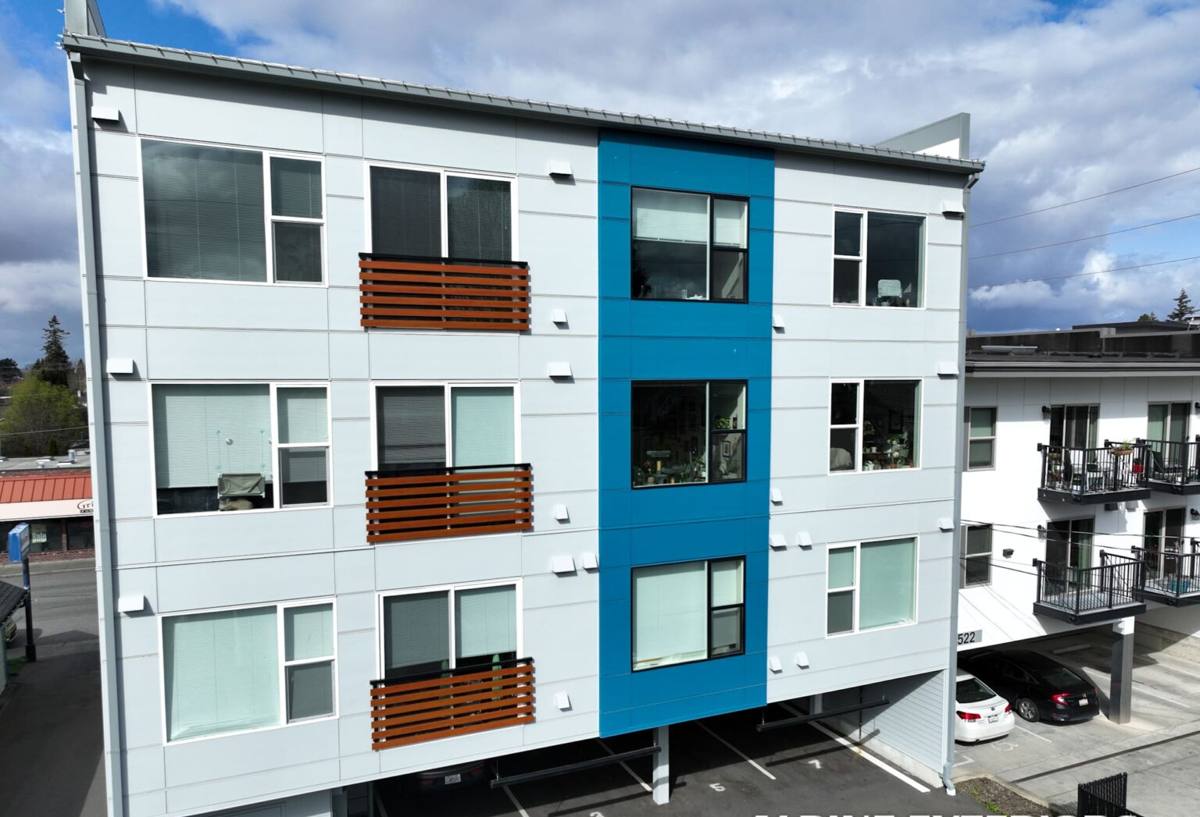
What Bellingham's Climate Actually Does to Windows
Driving Rain, Not Just Rain
A lot of our weather doesn't fall straight down — it comes in sideways off wind gusts, especially on exposed walls. That matters for window installation because it means flashing details and sill pans have to do real work, not just satisfy a checklist. A window that would be fine in a calm, dry climate can leak here if the flashing sequencing is off.
Salt Air and Metal Hardware
Proximity to Bellingham Bay means the air carries a fine amount of salt, especially on days with onshore wind. Over years, that accelerates corrosion on cheaper hinges, cranks, and screws, and it can dull or pit unprotected aluminum trim. It's one more reason we pay attention to hardware quality and finish, not just glass and frame.
Moss Season
Whatcom County's wet season runs long, and moss doesn't need much encouragement to take hold on north-facing siding, trim, and window sills that stay damp. Moss holds moisture against wood and caulk lines far longer than open air would, which quietly shortens the life of both the window and the trim around it if the installation doesn't account for drainage and airflow.
Signs a York-Area Home Needs New Windows
- Fogging or a permanent haze between panes — the seal has failed and the gas fill is gone
- Sashes that stick, won't stay open, or are painted shut from repeated swelling and drying
- Soft or discolored wood at the sill or bottom corners of the frame
- Visible daylight or a noticeable draft along the frame edge in windy weather
- Condensation forming on the inside of the glass regularly, even in mild weather
- Moss or dark staining building up on the sill or the trim just below the window
- A noticeable jump in heating costs without any other explanation
Any one of these on its own isn't necessarily urgent. Several at once, especially on the same wall, usually means the window and the flashing behind it are both due for replacement.
What a Correct Window Installation Actually Involves
Swapping the window unit itself is the easy part. The work that determines whether a window lasts 20 years or leaks in year three happens in the rough opening, before the new window ever goes in.
Removing the Old Unit Without Guessing
We pull the old window and inspect the opening before assuming anything about its condition. Framing lumber, sheathing, and any existing flashing get a real look — not a glance — because this is the only point in the project where that structure is actually visible.
Dealing With What We Find
If there's rot, soft sheathing, or old flashing that's failed, that gets addressed before the new window goes in. Installing a new window over a compromised opening just hides the problem for a while — it doesn't fix it, and in a climate like ours it tends to resurface faster than people expect.
Sill Pan and Flashing
A sloped sill pan and properly lapped flashing (so each layer sheds water onto the layer below it, not behind it) are what actually keep driving rain out. This is the detail that separates a window that will hold up through a Whatcom County winter from one that looks fine until the first real storm.
Air Sealing and Insulation
The gap between the window frame and the rough opening gets sealed and insulated correctly — not overpacked with spray foam, which can bow the frame, and not left with gaps that let air and moisture track through.
Interior and Exterior Finish Work
Trim goes back on clean, caulk lines are tooled properly, and the finished opening should look like nothing ever happened — except that it's now sealed and draining the way it's supposed to.
Our Window Installation Process
- Walkthrough and assessment — we look at each window from both sides, check for soft wood, drafts, and failed seals, and talk through which windows genuinely need replacing versus which can wait
- Measuring and ordering — exact measurements matter more than people expect; an ill-fitting window creates gaps that no amount of caulk fixes long-term
- Scheduling around the weather — we plan installation days with an eye on the forecast, since an open rough opening and a Bellingham rainstorm don't mix
- Removal and opening inspection — old unit comes out, framing and sheathing get checked before anything new goes in
- Flashing, sill pan, and air sealing — the parts of the job that don't show but determine whether the window leaks in five years
- Setting and securing the new window — leveled, squared, and fastened per the manufacturer's specs, not just eyeballed
- Interior and exterior finish — trim, caulk, and paint or stain touch-up so the opening looks finished, not patched
- Final walkthrough — we open, close, and lock every window with you before calling the job done
Window Material and Style Options
There's no single "right" window for every home — it depends on the wall's exposure, the home's age and style, and what you're trying to solve (drafts, noise, appearance, or all three). Here's how the common options actually compare in our climate:
| Frame Material | How It Handles Our Climate | Maintenance | Typical Fit |
|---|---|---|---|
| Vinyl | Good moisture resistance, doesn't corrode from salt air | Low — occasional cleaning | Most homes; best value |
| Fiberglass | Very stable in temperature swings, holds up well to wind-driven rain | Low | Homes wanting a slimmer frame profile or higher-end feel |
| Wood (clad exterior) | Warm look, but exposed wood needs protection from our wet season | Higher — exterior clad helps, interior wood still needs care | Older or historic-style homes where appearance matters most |
| Aluminum | Can corrode or pit over time near the bay without a quality finish | Moderate to high | Limited use; we're selective about where we'll recommend it |
We don't push one material on every home. What we won't do is install a product we know will create a maintenance headache in a few years just to hit a lower price point on day one — we'd rather walk you through the honest trade-offs up front.
Single-Pane, Double-Pane, and Cost Factors
Most older York-area homes still have single-pane or early double-pane windows from decades ago. Upgrading to modern double- or triple-pane glass with a low-E coating and argon fill makes a real difference here — not just for heating bills, but for condensation control, since our humid, mild-cold combination is exactly the kind of weather that causes interior fogging on older glass.
| Factor | Why It Changes the Price |
|---|---|
| Number of windows | Per-window cost drops somewhat with larger jobs, but each opening still needs full attention |
| Frame material | Vinyl is generally the most affordable; fiberglass and clad wood cost more upfront |
| Glass package | Double-pane low-E is standard; triple-pane or specialty coatings add cost but help with both moisture and heat loss |
| Opening condition | Rot repair or reframing discovered during removal adds labor — this is why an accurate quote follows an actual look at the windows |
| Access and site conditions | Second-story or hard-to-reach windows take more time to install safely |
We give straightforward, itemized estimates rather than a single vague number, so you can see what's driving the cost and where there's room to adjust.
Why a Local Crew Matters for York
A crew that works this specific part of Bellingham regularly has already seen how these homes age — which walls take the worst of the driving rain, which sills tend to develop moss first, and where salt air does the most damage to hardware. That's not something you get from a general contractor who installs windows the same way everywhere they work.
It also means someone local is accountable if a question comes up after the install — not a crew that finished the job and left the county. We stand behind our flashing and sealing work because we're the ones who'll hear about it if a window leaks in next winter's storms.
After Installation: Living With Bellingham's Wet Season
New windows cut down on maintenance, but they don't eliminate it in a climate like ours. A quick seasonal check goes a long way:
- Clear debris and moss buildup off sills and nearby trim before it holds moisture against the wood
- Check caulk lines once a year for cracking or separation, especially after a hard winter
- Make sure weep holes on vinyl and fiberglass frames stay clear so water can drain out
- Operate each window a few times through the year so hardware doesn't seize up from disuse and humidity
- Watch for any new drafts or condensation — early signs are easier and cheaper to address than a full failure
If you're weighing new windows for a York-area home, we're happy to take a look and give you a straight answer about what's worth replacing now, what can wait, and what it'll actually cost — no pressure, no upsell. Reach out using the form below for a free estimate.