 Bellingham Siding
 Window Installation Built for Sudden Valley's Shaded, Lakeside Setting
Sudden Valley sits back in the trees along Lake Whatcom, a short drive from downtown Bellingham but a different world climate-wise. Heavy tree canopy, lake-effect humidity, and long stretches without direct sun mean windows here work harder than windows on an open lot in town. Add in the driving rain that blows through Whatcom County during fall and winter storms, and it's easy to see why window failures in this neighborhood tend to show up first at the sill, the corners, and anywhere water has a chance to sit instead of run off.
We install windows throughout Sudden Valley and know the difference between a house tucked under a stand of fir trees and one that gets more open exposure near the water. Both need solid window work, but the details that matter — flashing, drainage, frame material — shift depending on how much shade and standing moisture a given wall sees.
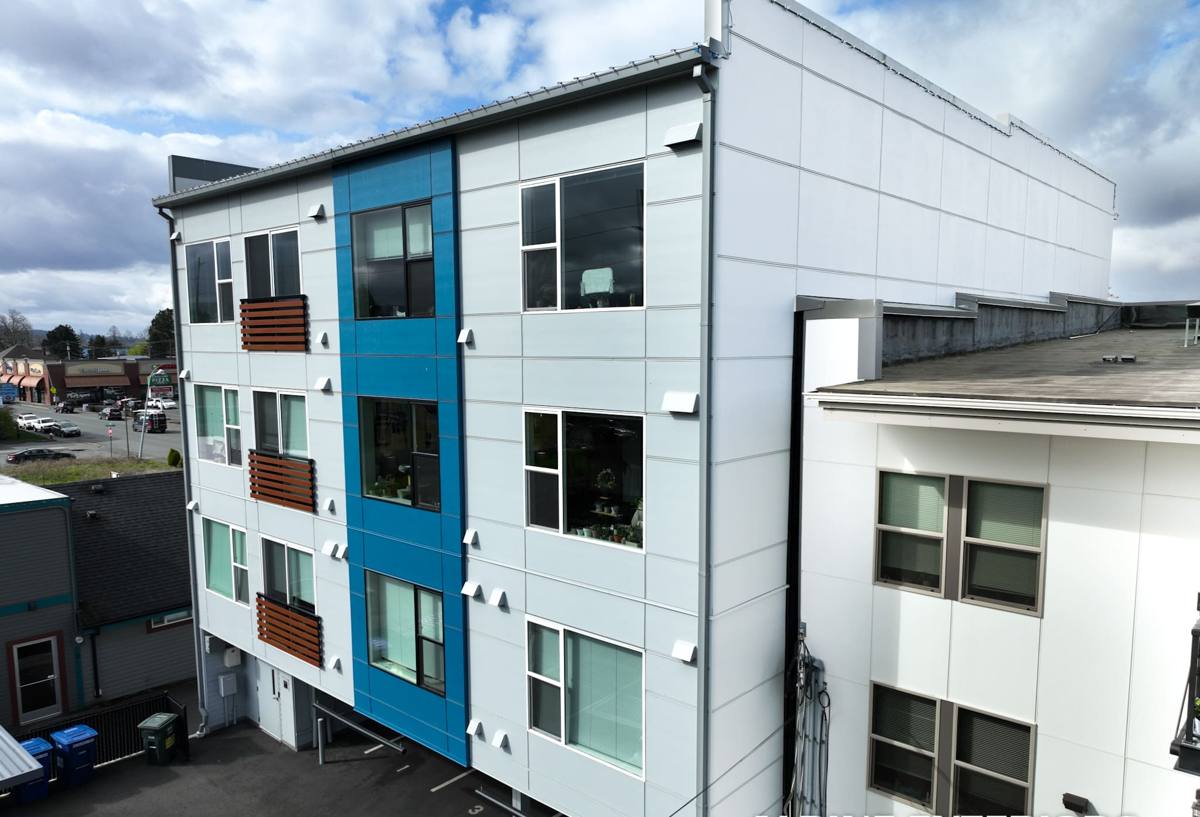
What This Climate Does to Windows Over Time
Shade, Moss, and Slow Drying
A window that never fully dries out between rain events is a window that's slowly failing, even if it looks fine from the driveway. Shaded walls and roof lines in Sudden Valley hold moisture longer than sunnier lots, which is exactly the condition moss and wood rot need. On older wood-framed windows, that shows up as soft or spongy trim, dark staining below the sill, and moss creeping onto the frame itself. On vinyl windows, prolonged dampness doesn't rot the frame, but it can trap water behind poorly sealed trim and rot the wall framing underneath — a problem you don't see until the window is already loose.
Driving, Wind-Driven Rain
Pacific storms don't just drop rain straight down — they push it sideways into whatever the window is facing. A window that was installed with basic caulk and no real flashing plan can handle light weather for years and still leak the first time a storm drives rain hard against that wall. This is the single most common reason we get called out to older Sudden Valley homes: not a bad window, but a window that was never properly flashed against wind-driven rain in the first place.
Temperature Swings and Condensation
Being close to the lake means more humidity in the air than you'd get further inland. Combined with cooler nighttime temperatures under tree cover, that humidity shows up as condensation on the glass and, in worse cases, between the panes on an aging insulated unit — a sign the seal has failed and the window's insulating gas has already leaked out.
Signs Your Sudden Valley Home Needs New Windows
- Fogging or moisture trapped between the panes of a double-pane window — the seal is gone and it won't clear on its own
- Soft, discolored, or moss-covered wood trim around the frame
- Drafts you can feel with a hand near the frame on a windy day
- Windows that are hard to open, close, or lock — frames can swell or warp with sustained moisture exposure
- Visible daylight or gaps around the frame when the window is closed
- Paint or finish failing faster on window trim than on the rest of the siding
- Noticeably higher heating costs in a home with older, single-pane or early-generation double-pane windows
What a Correct Installation Actually Involves
Swapping an old window for a new one is the easy part. What actually determines whether that window lasts is what happens at the rough opening before the new unit ever goes in.
Flashing and Weatherproofing Details
On every install, we're building a drainage path so any water that gets past the exterior trim has somewhere to go besides your wall framing. That means a sloped sill pan so water runs outward instead of pooling, correctly lapped flashing tape at the sides and head of the opening, and a housewrap integration that keeps water moving down and out rather than behind the siding. On a shaded, moisture-heavy lot like most of Sudden Valley, skipping any one of these steps is how a five-year-old window ends up with rot in the wall behind it.
Choosing the Right Frame Material
Frame material matters more here than it would on a dry, sun-exposed lot. We walk homeowners through the real trade-offs rather than pushing one product for every house.
| Frame Material | How It Handles Shade & Moisture | Maintenance | Typical Fit |
|---|---|---|---|
| Vinyl | Won't rot; performs well in damp, shaded conditions | Low — occasional cleaning | Most Sudden Valley homes, especially budget-conscious full replacements |
| Fiberglass | Very stable in temperature swings and moisture; holds paint well if you want a custom color | Low to moderate | Homes wanting a higher-end look with minimal upkeep |
| Wood-clad | Handsome interior wood look, but the exterior cladding still needs to be well-sealed to resist a shaded, wet exterior | Higher — exterior sealant and joints need periodic attention | Homes prioritizing an interior wood finish who are comfortable with upkeep |
We're honest about that last row: a wood-clad window can look great, but on a heavily shaded lot the exterior cladding is fighting the same moisture and moss pressure as everything else on the house. If you want that look, we'll tell you what the maintenance schedule actually needs to be so it doesn't become a hidden problem later.
Our Installation Process
- On-site assessment — we look at the existing window, the condition of the framing around it, and how exposed that particular wall is to shade, wind, and driving rain
- Measurement and product selection — exact sizing, plus a frame and glass package matched to that wall's exposure
- Removal — old window comes out, and we inspect the rough opening for rot or water damage before anything new goes in
- Repair if needed — any soft or water-damaged framing gets addressed before the new window is set; we don't install a new window over a compromised opening
- Sill pan and flashing — the drainage system that determines whether the window stays dry for the next twenty years
- Setting, shimming, and insulating — the window is leveled, squared, and insulated around the frame without over-packing, which can bow the frame
- Exterior trim and sealing — trim is reinstalled or replaced and sealed to shed water, not trap it
- Interior finish and walkthrough — interior trim finished, window operation checked, and a walkthrough with you before we call it done
Common Window Situations We See in Sudden Valley
Sudden Valley has a mix of housing stock — original cabins that have been converted to full-time residences, mid-generation ranch-style homes, and newer builds. Each brings a different starting point:
Older cabin-style homes often have single-pane or early aluminum-frame windows that were fine for occasional use but aren't built for a home lived in year-round. These are usually the highest-priority replacements from an energy and moisture standpoint.
Homes with heavy tree exposure tend to show wear at specific windows — usually north- or west-facing units that get the least direct sun and the most shade-driven moisture — well before the rest of the house needs attention. We can often address just those windows rather than a full-house replacement.
Remodels and additions need windows matched to the home's existing sightlines and, in some cases, to community design expectations. If your property is part of an HOA or architectural review process, it's worth checking on any exterior guidelines before ordering, and we're glad to work from whatever specs are required.
Cost Factors for Window Installation
Every home is different, but the line items that actually move the price are consistent. This isn't a quote — it's what to expect when you're budgeting.
| Factor | Why It Matters |
|---|---|
| Number of windows | Per-window cost drops somewhat with larger jobs, but each opening still needs full flashing work |
| Frame material | Vinyl is typically the most budget-friendly; fiberglass and wood-clad cost more upfront |
| Rot or water damage found at removal | Framing repair is common on older, shaded homes and is priced separately once we can see the opening |
| Window size and type | Large picture windows, bays, or custom shapes cost more than standard double-hung or slider units |
| Glass package | Double vs. triple pane, and low-E coatings, affect both price and long-term energy performance |
| Access | Second-story or hard-to-reach windows take more labor time |
Why Hire a Crew That Already Works in Sudden Valley
Window installation isn't just a product install — it's a weatherproofing job, and the right approach depends on knowing how a specific area behaves in bad weather. A crew that's already worked on shaded, moisture-prone Sudden Valley properties knows to check for rot in the same spots every time, knows which frame materials hold up under tree cover, and isn't guessing at how hard the wind-driven rain hits a given exposure. That local pattern recognition is what keeps a job from turning into a callback two years later.
We're a Bellingham-based crew, and Whatcom County's weather — the shade, the moss season, the driving rain off the Pacific — is the baseline we build every install around, not an exception we have to account for.
If you're dealing with drafty, foggy, or hard-to-operate windows, or you're planning ahead for a remodel, we're happy to take a look and give you a straight, no-pressure estimate. Use the form below to get started.