 Bellingham Siding
 Siding Repair for Sudden Valley Homes
Sudden Valley sits back in the trees along Lake Whatcom, and that setting is exactly what makes siding repair here different from a repair job in downtown Bellingham or out along the flats. Heavy tree canopy, lake humidity, and long stretches of shade keep siding damp for days after a storm passes. Add in the driving rain that rolls off the Sound and up the valley, and you've got a recipe for the kind of slow, hidden damage that homeowners don't notice until a board is already soft. We repair siding throughout Sudden Valley and know what these homes are up against — not in general terms, but specifically for this neighborhood's mix of wooded lots, lake-adjacent moisture, and older siding installations that were never built for this climate to begin with.
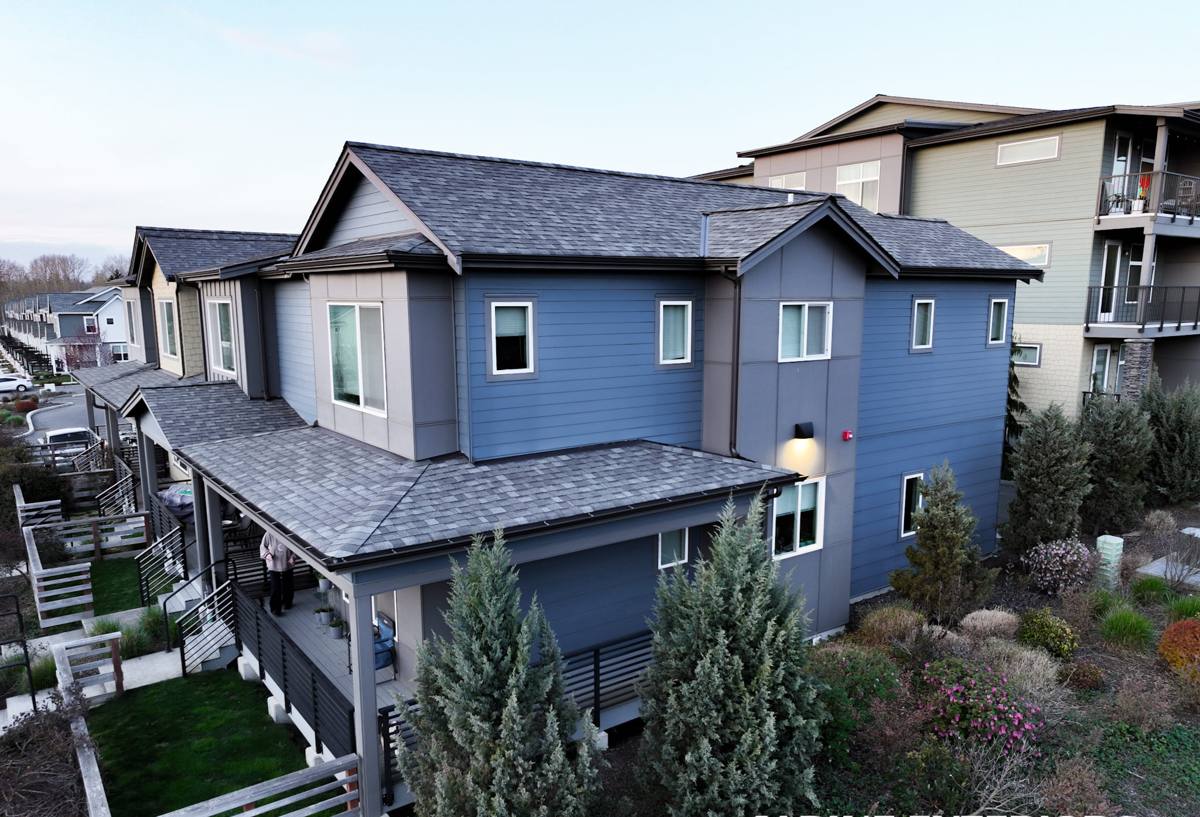
What Whatcom County's Climate Does to Siding Here
Bellingham's siding problems are regional, but Sudden Valley gets a concentrated version of them. Three factors matter most:
- Salt air and driving rain. Wind-driven moisture off the Sound pushes water sideways into seams, corners, and butt joints that were designed for rain falling straight down, not rain being forced horizontally into a wall.
- Extended shade and lake humidity. Lots backed against trees or facing the lake dry out slower than open, sun-exposed sites. Siding here can stay damp long after a rain has stopped, which is exactly the condition mold, moss, and wood rot need to take hold.
- A long moss season. Whatcom County's wet season stretches from fall through spring, and shaded siding can grow moss for most of that stretch. Moss holds moisture directly against the siding surface and works into any gap in the finish or caulk line.
None of this means Sudden Valley homes are somehow flawed — it means the siding on them needs to be installed, sealed, and repaired with this specific environment in mind, not with a one-size-fits-all approach.
Common Repair Issues We Find in This Neighborhood
Moss and Algae Buildup at Shaded Elevations
North-facing walls and siding tucked under mature trees are the first places moss shows up. Left alone, it doesn't just look bad — it traps moisture against the surface and, on wood-based or improperly sealed siding, accelerates rot underneath the growth you can see.
Soft or Delaminating Boards Near Grade and Trim
Older siding — especially wood, hardboard, or improperly installed fiber cement — tends to fail first near the ground, around window trim, and at butt joints where two pieces meet. Water gets behind the surface and the material breaks down from the inside, which is why a board can look fine from ten feet away and be soft to the touch up close.
Caulk and Sealant Failure at Seams
Bellingham's freeze-thaw swings and constant damp/dry cycling break down caulk faster than manufacturers' warranty numbers suggest. Once a sealant joint cracks, it becomes a direct path for driving rain to get behind the siding.
Impact and Storm Damage
Falling branches are a real factor on wooded Sudden Valley lots. Cracked, chipped, or knocked-loose panels need to be addressed quickly — an open panel is an open door for water during the next rain.
What a Correct Siding Repair Actually Involves
A repair that just patches the visible damage and ignores the cause tends to fail again within a season or two. A repair done right includes:
- Finding the actual water path. Damage on the surface often starts somewhere else — a failed flashing detail, a gap at a window head, or a caulk joint several feet away. We trace it before we touch a board.
- Checking what's behind the siding. Damaged siding sometimes means damaged sheathing or house wrap underneath. If the water got that far, the repair has to go that far too, or the same spot fails again.
- Matching material and profile. Replacement boards need to match the reveal, thickness, and finish of what's already on the wall, or the patch will be visible and can create its own water-shedding problems at the seam.
- Sealing and flashing to current standards. Where the original installation skipped or shortcut flashing details, we correct it as part of the repair — not just replace what failed the same way it was installed the first time.
- Finish and color match. Especially with factory-finished products, matching color and sheen matters. A poor match stands out for years.
Repair vs. Replace: How We Help You Decide
Not every damaged wall needs full replacement, but some do. The table below covers the factors that typically drive that decision on Sudden Valley homes.
| Factor | Favors Repair | Favors Replacement |
|---|---|---|
| Extent of damage | Isolated boards or a single elevation | Damage spread across multiple walls |
| Underlying sheathing | Dry, sound wood behind the siding | Soft, stained, or rotted sheathing found |
| Siding material | Fiber cement or sound wood siding | Aging hardboard or wood siding nearing end of life |
| Age of existing siding | Newer install, still under warranty | Original siding is decades old |
| Moss/moisture history | First occurrence, isolated cause | Recurring moss or rot across the home |
We'll walk the whole exterior with you, not just the spot you called about, because a wall that looks fine today can be a repair call next winter if the same conditions caused the first problem.
Why We Repair With James Hardie — Even on Repair Calls
When a repair calls for new boards, we install James Hardie fiber cement, and only Hardie. It's a decision we made for the whole company, not something we improvise per job. Hardie's HZ5 product line is engineered specifically for climates like ours — freeze-thaw cycling, sustained moisture, and coastal exposure — and it's non-combustible, which matters given how many Sudden Valley lots back up to trees. The ColorPlus factory finish also means a repaired section can be color-matched with far more confidence than trying to match field-painted material, and it holds up to moss and algae exposure better than wood or hardboard products that absorb moisture into the material itself. We don't install LP SmartSide, vinyl, Cemplank, Allura, primed spruce, or cedar — not because those products don't have a place in the market, but because after years of doing this work in this specific climate, Hardie is what we're willing to stand behind on our own repairs and warranty.
Our Process for Sudden Valley Repair Calls
Sudden Valley's private roads and setback lots mean a repair crew needs to know the neighborhood layout, not just the address. Our process:
- On-site inspection of the damaged area and a walk of the full exterior, since one problem area often signals a second one nearby
- A written assessment of cause, not just symptoms — what let the water in, not just where it showed up
- A clear repair-vs-replace recommendation with reasoning, not a default toward the bigger job
- Hardie-matched materials ordered to the correct profile, reveal, and finish
- Corrected flashing and sealant details where the original installation was the actual cause
- A final walkthrough so you can see exactly what was done and why
A Quick Homeowner Checklist
Before you call anyone for a siding repair, a quick visual check helps us — and you — understand the scope:
- Look for soft spots by pressing gently on siding near the ground and around windows
- Check north-facing and shaded walls for moss, algae, or dark streaking
- Look at caulk lines at corners and window trim for cracking or gaps
- Note any areas where paint or finish is bubbling or peeling
- Check for boards that look warped, bowed, or separated at the seams
- Note any recent storm or falling-branch impact you're aware of
You don't need to diagnose the cause — that's our job — but knowing what you're seeing helps us prioritize the visit.
Why Hiring a Crew That Already Works in Sudden Valley Matters
Repair work in a community like Sudden Valley isn't quite the same as a standard in-town job. Lot access, tree cover affecting how quickly things dry between visits, and the age and mix of siding types across the neighborhood all factor into getting a repair right the first time. A crew that's already done this work here knows what tends to fail, where, and why — which means less time spent diagnosing and more time spent fixing the actual cause. It also means a repair that accounts for what the next five Whatcom County winters are going to do to that wall, not just what's visible today.
If you're seeing moss, soft boards, or a section of siding that just doesn't look right, we're glad to take a look. Reach out for a free, no-pressure estimate — we'll tell you honestly whether it's a repair or something bigger, and why.