 Bellingham Siding
 Window Replacement Built for South Hill's Conditions
South Hill sits above downtown Bellingham with mature tree canopy, older housing stock, and enough elevation to catch weather that flatter parts of Whatcom County don't see the same way. Homes here tend to be older, many with original or early-replacement windows that were never built for the number of wet-dry cycles they've had to survive. When we replace windows in this neighborhood, we're not just swapping glass — we're correcting decades of moisture exposure that generic window work often ignores.
This page covers what window replacement actually requires for a South Hill home: the climate factors at play, what a correct installation looks like, how our process works, and what to weigh when choosing materials and a contractor.
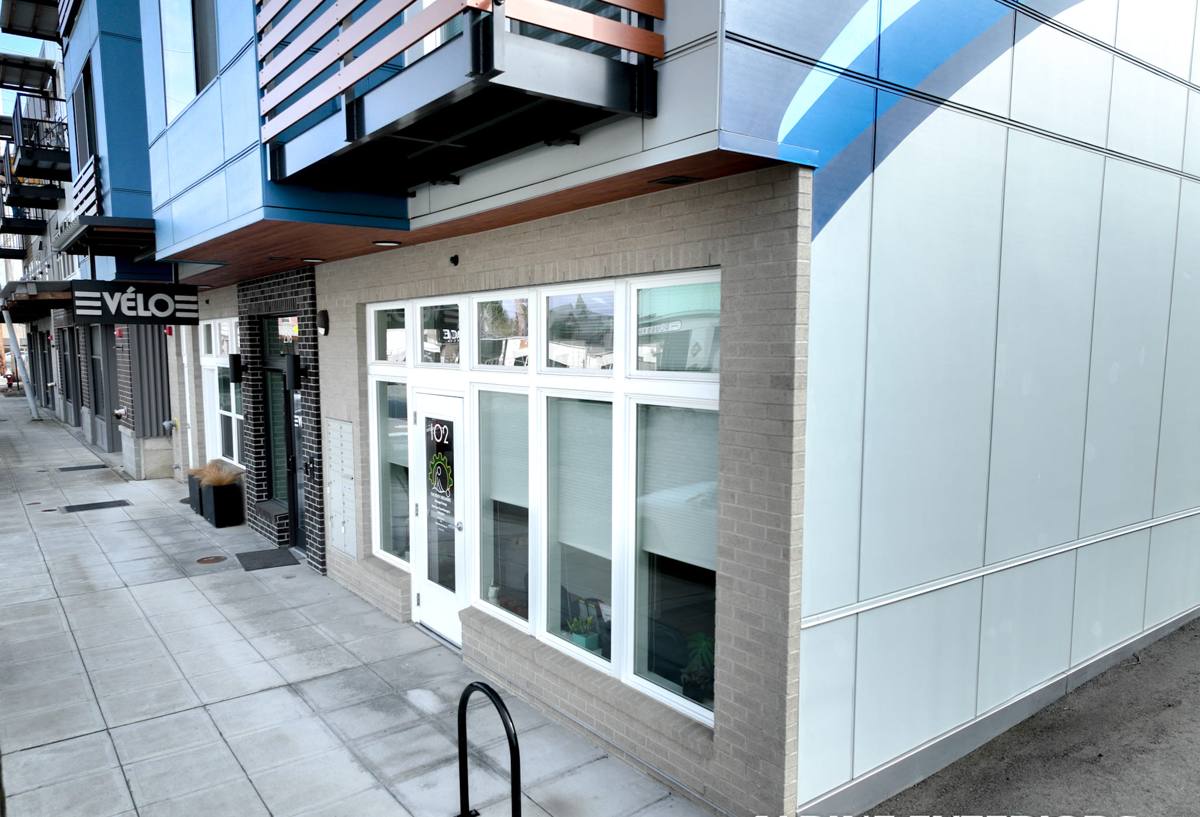
What Bellingham's Climate Does to Windows Over Time
Whatcom County's marine climate is mild compared to a lot of the country, but "mild" doesn't mean easy on building materials. Three things matter most for windows specifically.
Salt Air
Proximity to Bellingham Bay means salt-laden air reaches even homes set back from the water, especially on breezy days. Salt air accelerates corrosion on window hardware — hinges, cranks, balance systems, and screen frames — long before the glass or frame itself fails. It's common to find a window with intact glazing but hardware that's seized or crumbling underneath.
Driving Rain
Storms off the Sound don't always come straight down. Wind-driven rain hits window assemblies at an angle, which pushes water into gaps that a vertical rain would never reach. This is where flashing and sealant quality separates a window that lasts decades from one that starts leaking within a few winters.
Moss Season
South Hill's tree cover means shade lingers on north- and east-facing walls for much of the year, and moss doesn't stay confined to roofs. It creeps into sill trim, window casings, and any wood surface that stays damp. Once moss and the moisture it holds get behind trim or into a wood sill, rot follows — often invisible until the window itself starts to fail.
None of this is unique to South Hill, but the combination — mature tree canopy, elevation exposed to wind-driven weather, and bay proximity — is a specific enough mix that it changes how we approach the work here compared to a newer, more open subdivision elsewhere in Bellingham.
Common Window Problems We See in South Hill's Older Homes
Because a lot of South Hill's housing predates modern window standards, the problems tend to repeat from house to house:
- Single-pane or early double-pane windows with failed seals, showing fogging or moisture between the panes
- Wood sills and casings softened by years of trapped moisture, sometimes hidden under paint that looks fine on the surface
- Corroded cranks, locks, and balance hardware on operable windows, especially on walls that face prevailing wind
- Gaps around the window frame where old caulking has cracked, dried, or pulled away — a direct path for driving rain
- Condensation on interior glass in winter, a sign the window is no longer insulating the way it should
- Wood rot at the bottom corners of frames, often the first place moisture collects and the last place people check
If more than one or two of these apply to your windows, replacement is usually more cost-effective than continuing to patch — repeated repairs on a failing window rarely outlast the next wet winter.
What a Correct Window Replacement Actually Involves
The window unit itself is only part of the job. Most window failures we're called out to fix started with the installation, not the product. Here's what proper installation covers.
Flashing and Water Management
Every window opening needs a flashing system that directs water out and away from the wall assembly, not just a bead of caulk around the trim. That means flexible flashing tape at the sill and jambs, integrated with the home's weather-resistive barrier, so water that gets past the window itself still has a path out rather than a path into the wall cavity. This step matters more in a driving-rain climate than almost anywhere else in the build.
Sill Pan and Sloped Sill
The sill needs a slight slope to the exterior and, ideally, a sill pan that catches any water that does get through and routes it back outside. This is the detail most often skipped in fast, low-cost replacements — and the one most responsible for hidden rot showing up years later.
Sealant Selection and Placement
Not every gap should be sealed solid. Some joints need a weep path so incidental moisture can drain and evaporate rather than getting trapped. Using the wrong sealant, or sealing every seam airtight, can actually trap water inside the assembly — which is worse than leaving a small, intentional drainage gap.
Insulation Around the Frame
The gap between the new window frame and the rough opening needs to be filled with a low-expansion insulating foam or backer rod, not stuffed with fiberglass batting that settles and leaves cold spots. This affects both energy performance and condensation resistance on interior glass through the winter.
Choosing Window Materials for This Climate
Material choice matters as much as installation quality when salt air and moisture are part of the equation. There's no single "best" material for every home — it depends on your budget, the home's style, and how much maintenance you want to take on.
| Material | How It Handles This Climate | Maintenance |
|---|---|---|
| Vinyl | Doesn't corrode from salt air; performs well against moisture with good installation | Low — occasional cleaning |
| Fiberglass | Very stable in wet-dry cycles, resists warping, holds paint well if color changes are wanted later | Low to moderate |
| Wood-clad (exterior clad, wood interior) | Good look for older, character-driven homes; cladding protects the exterior wood from rain exposure | Moderate — interior wood still needs periodic attention |
| Solid wood | Most vulnerable to the driving rain and moss conditions here unless finish is maintained diligently | High — regular refinishing needed |
For a lot of South Hill's older character homes, an exterior-clad wood window is a common middle ground — it preserves the traditional look from the street while putting a weather-resistant material where the rain actually hits. We'll walk through the trade-offs for your specific home rather than push one product across the board.
Hardware and Screens
Given the salt-air corrosion issue mentioned earlier, hardware finish matters more here than in a lot of markets. Stainless or corrosion-resistant hardware costs a little more up front but avoids the seized-crank problem that shows up on standard hardware within a handful of winters.
Our Process for South Hill Window Replacement
- On-site assessment. We look at existing window condition, sill and framing health, and any rot or moisture already present — not just the glass.
- Honest scoping. If we find rot or structural issues behind a window, we'll tell you before work starts, not after we've already opened up the wall.
- Material and product selection. We walk through options suited to your home's style and this climate, with real trade-offs explained, not a single default push.
- Removal and prep. Old units come out carefully to protect surrounding siding and trim, especially on older homes where matching materials can be harder to source.
- Flashing, sill pan, and air/water barrier integration. This is the step that determines whether the window performs for one winter or twenty.
- Window installation and shimming. Set plumb, level, and square, with proper fastening per manufacturer specs — not just "close enough."
- Insulation, sealing, and trim. Interior and exterior finish work completed to match the home as closely as possible.
- Final walkthrough. We check operation, seals, and finish work with you before calling the job done.
Why a Crew That Already Works South Hill Makes a Difference
South Hill's mix of hillside lots, mature landscaping, and older construction means access, staging, and existing-condition surprises come up more often than on a flat, newer lot. A crew that's worked the neighborhood before knows to expect things like tighter driveway access, established trees close to the house, and older wall assemblies that don't match modern construction drawings.
That familiarity also extends to Bellingham and Whatcom County permitting and inspection expectations. Window replacement often falls under standard permitting depending on scope, and a contractor who regularly pulls permits in the city knows the process rather than treating it as a new hurdle each time. We handle that coordination as part of the job, not as an extra you have to manage yourself.
Cost Factors to Expect
Every home is different, and we won't quote a price without seeing the windows in question, but these are the main factors that move a window replacement estimate up or down:
| Factor | Why It Matters |
|---|---|
| Number and size of windows | Larger and more numerous openings mean more material and labor |
| Material selection | Vinyl, fiberglass, and wood-clad windows carry different unit costs |
| Existing rot or damage | Sill or framing repair adds time and material beyond a straightforward swap |
| Access and staging | Hillside lots, tight driveways, or upper-story windows can add labor time |
| Trim and finish matching | Older homes with custom or discontinued trim profiles may need custom millwork |
| Number of openings replaced at once | A whole-house project typically has a lower per-window cost than one-off replacements |
As a broad range, homeowners in this area typically see per-window costs from a few hundred dollars for a straightforward vinyl replacement up into the low thousands for larger, custom, or wood-clad units with complicated trim work. The only way to get a real number is a site visit — we're not going to estimate off a phone call for something this variable.
A Simple Checklist Before You Call Anyone
Whether you call us or shop around, this is worth checking before you commit to a window project:
- Ask whether the quote includes flashing and sill pan work, or just the window unit and trim
- Ask what happens if rot is found once the old window is removed — get that answer in writing if you can
- Confirm who pulls the permit, if one is required, and who's responsible for scheduling inspections
- Ask about hardware finish, especially if your home is on a wall exposed to wind off the bay
- Get the warranty terms in writing for both the product and the labor — they're usually separate
- Walk the exterior with the contractor and point out any windows with visible moss, staining, or soft trim
Get a Free Estimate for Your South Hill Windows
If your windows are fogging, sticking, drafty, or showing soft spots at the sill, it's worth having someone look before another wet season adds to the damage. We'll walk your home, give you a straight assessment of what's going on, and put together a free, no-pressure estimate using the form below.