 Bellingham Siding
 Windows on South Hill Face a Tougher Job Than Most
South Hill sits up above downtown Bellingham with open exposure toward Bellingham Bay, and that elevation cuts both ways. The views are part of why people love living there, but the same open exposure means more wind-driven rain hitting window walls directly, more salt-laden air moving off the water, and longer stretches of shade and moisture on the north and east sides of a house that keep moss and algae established for most of the year. None of that is unique to any one street on the hill — it's the trade-off of elevation and proximity to the water that comes with the territory in this part of Whatcom County.
Older windows on these homes were rarely built with that combination in mind. A lot of the housing stock on South Hill predates modern window flashing standards, and even units that were replaced a couple decades ago are now showing the wear you'd expect: fogged glass from failed seals, swollen wood sashes, vinyl that's chalked and stiffened from UV and salt exposure, and frames that let air whistle through on a windy night. Custom windows here aren't a luxury upgrade — they're often the correct fix for openings that were never standard sizes to begin with, or for a house where matching the existing trim and proportions matters as much as the glass itself.
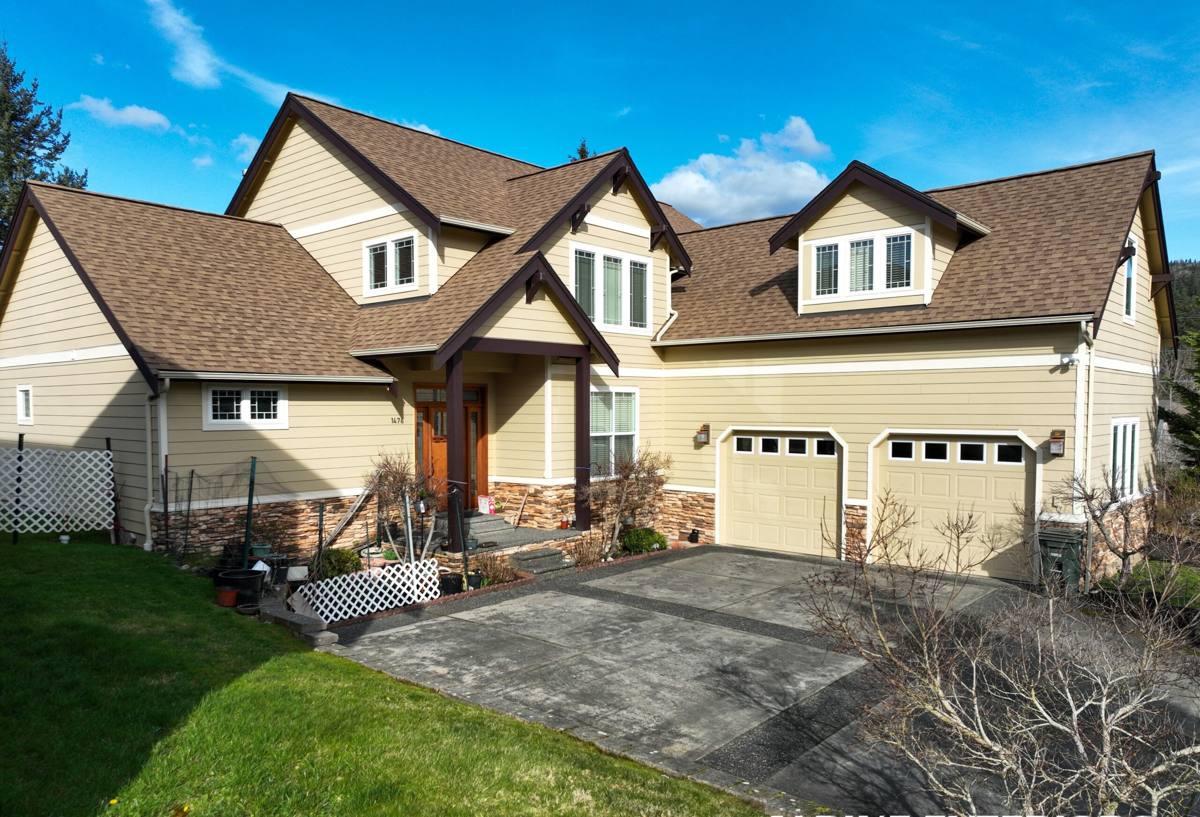
What "Custom" Actually Means for a South Hill Home
"Custom" gets used loosely in this trade, so it's worth being specific. For South Hill, it usually means one or more of the following:
- Non-standard rough openings — common in older homes where the framing predates modern window sizing, so off-the-shelf units don't fit without reframing or expensive trim work
- Matching sightlines and grille patterns to the rest of the house, especially on homes with visible period character where a mismatched window stands out immediately
- Odd shapes — arched tops, transoms, or angled bays that need to be built to the opening rather than picked off a shelf
- Performance upgrades built into a standard-looking frame, like heavier weatherstripping and reinforced corners for a wall that takes rain head-on
A true custom window is measured and manufactured to the exact opening, not force-fit into a close-enough stock size with extra caulk and trim to hide the gaps. That distinction matters more on a hill exposed to driving rain than it does on a sheltered lot, because any gap in the fit becomes a gap in the weather seal.
New Construction vs. Retrofit Replacement
Most of the custom window work we do on South Hill is retrofit — replacing existing windows in an existing opening, keeping the original exterior trim where it's sound and matching new units to it. Retrofit is faster, less invasive, and usually less expensive because it doesn't disturb the siding or interior wall finish. A full-frame replacement, where we remove the window down to the rough opening, is the better call when the existing frame is rotted, when the opening has moved out of square over the years, or when we're changing the window's size or shape. We'll tell you honestly which situation you're in before you commit to either approach.
Frame Materials: What Holds Up in This Climate
Salt air and sustained moisture narrow the field of what we recommend for South Hill compared to a drier inland job. Here's how the common options actually perform once they've been through a few wet Whatcom County winters:
| Material | Moisture & Salt Air Behavior | Maintenance | Best Fit |
|---|---|---|---|
| Vinyl | Good moisture resistance; won't rot, but lower-grade vinyl can chalk and become brittle under sustained UV and salt exposure over many years | Low — occasional washing | Budget-conscious replacements without heavy custom shaping |
| Fiberglass | Excellent — dimensionally stable, doesn't expand/contract with moisture swings, holds paint well if color changes are wanted later | Low | Homes taking direct rain and wind exposure, or where long-term stability matters most |
| Wood-clad | Handles moisture well only if the cladding and flashing details are done correctly; any breach in the exterior clad layer exposes wood to rot risk | Moderate to high, install-sensitive | Homes where matching a historic wood-frame look is a priority and upkeep is expected |
| Aluminum | Conducts cold and can condense heavily in our damp winters; largely fallen out of favor for residential replacement here for that reason | Low | Rarely our recommendation for South Hill houses |
We don't push one material on every job. A lot of it comes down to which side of the house the window is on, how much direct rain and wind it takes, and what the homeowner wants to be doing (or not doing) in terms of upkeep five and ten years from now.
Why Installation Quality Matters More Here Than the Product Itself
We've seen high-end custom windows fail early because of a bad install, and we've seen mid-range windows outlast their warranty because they went in correctly. On a hill that takes wind-driven rain directly, the installation details do more work than the brand name on the frame:
- Flashing sequence — the window flange, house wrap, and flashing tape have to be layered so water sheds outward and down, never trapped behind the siding
- Sill pan — a sloped, sealed pan under the window gives any water that does get past the exterior seal somewhere to drain instead of pooling against the sill
- Backer rod and sealant, not just caulk — gaps around the frame need proper backer rod before sealant so the seal flexes with temperature changes instead of cracking
- Shimming and squaring — a window installed slightly out of square puts uneven stress on the seals and hardware, which shows up as air leaks or a sash that won't latch cleanly within a few years
This is also why we're direct with homeowners about products we don't install: it's not that a given brand or style is bad in the abstract, it's that some window systems are far less forgiving of installation error, or come with warranty terms that put the burden back on the homeowner if the install isn't documented to spec. We'd rather steer you toward a system we can install correctly and stand behind than sell you something that looks better on a brochure.
Our Process for a South Hill Window Job
- On-site assessment — we look at the actual openings, the wall assembly where accessible, and the specific exposure of each elevation (a north-facing window and a south-facing window on the same house often need different specs)
- Measurement and product selection — exact custom measurements, then a straightforward conversation about material, glass package, and trim to match the house
- Manufacturing lead time — custom units are built to order, so we'll give you a realistic timeline up front rather than a vague promise
- Removal and installation — old units come out, any rot or damaged framing gets addressed before the new window goes in (not covered up), then flashing, sill pan, insulation, and sealant go in to spec
- Final check and cleanup — operation, seal, and finish work checked on every unit before we consider the job done
Living With Moss Season and Salt Air After Installation
A correctly installed custom window is low-maintenance, but "low" isn't "none" in this climate. A short seasonal checklist keeps things performing the way they should:
- Rinse exterior frames and glass a couple times a year to clear salt residue and organic buildup, especially on north- and east-facing windows that stay shaded longest
- Check weep holes at the base of the frame each fall so moss and debris haven't blocked drainage before the wet season sets in
- Look at exterior caulk lines annually — UV and temperature cycling will eventually crack sealant, and catching it early is a five-minute fix instead of a moisture problem later
- Keep gutters and downspouts clear above window walls, since overflow during a heavy rain event is one of the more common causes of water intrusion around otherwise sound windows
Why a Crew That Already Works South Hill Makes a Difference
Every neighborhood in Bellingham has its own quirks, and South Hill's are consistent enough that experience there actually changes how we approach a job. We already have a sense of which elevations on the hill take the worst of the wind-driven rain, how older South Hill framing tends to be sized, and what kind of trim detailing keeps a custom window looking like it belongs on the house instead of like an obvious retrofit. That's the kind of thing you only pick up by doing the work in the same conditions repeatedly, not by reading a spec sheet.
It also means we're not guessing at whether a given install approach will hold up through a Whatcom County winter — we've already seen what does and doesn't, and we'll tell you plainly which is which for your specific house.
Getting a Straight Answer on Your Windows
If you're dealing with drafty, foggy, or hard-to-operate windows on your South Hill home, we're happy to take a look and give you an honest read on whether you need full replacement, a retrofit, or just better sealing and maintenance on what you've got. There's no pressure and no cost to have us come out — just a straightforward assessment and a written estimate you can take your time with. Fill out the form below to get started.