 Bellingham Siding
 Building a Deck That Actually Holds Up in Silver Beach
Silver Beach is a shaded, tree-lined part of Bellingham, and that character is exactly what makes deck building here different from a wide-open, full-sun lot. Mature trees hold moisture in the air longer after a storm, shade keeps wood surfaces from drying out between rains, and Whatcom County's long stretch of wet months gives moss and algae plenty of time to take hold on anything that isn't detailed to shed water. A deck built here with generic, one-size-fits-all methods will show problems within a few seasons — soft spots at the ledger, black streaking on rails, boards that stay damp for days after the rain stops. A deck built with this specific site in mind will still look and perform like new a decade later.
This page covers what a Silver Beach deck project actually needs, what correct construction looks like, and how we approach the work from first estimate to final walkthrough.
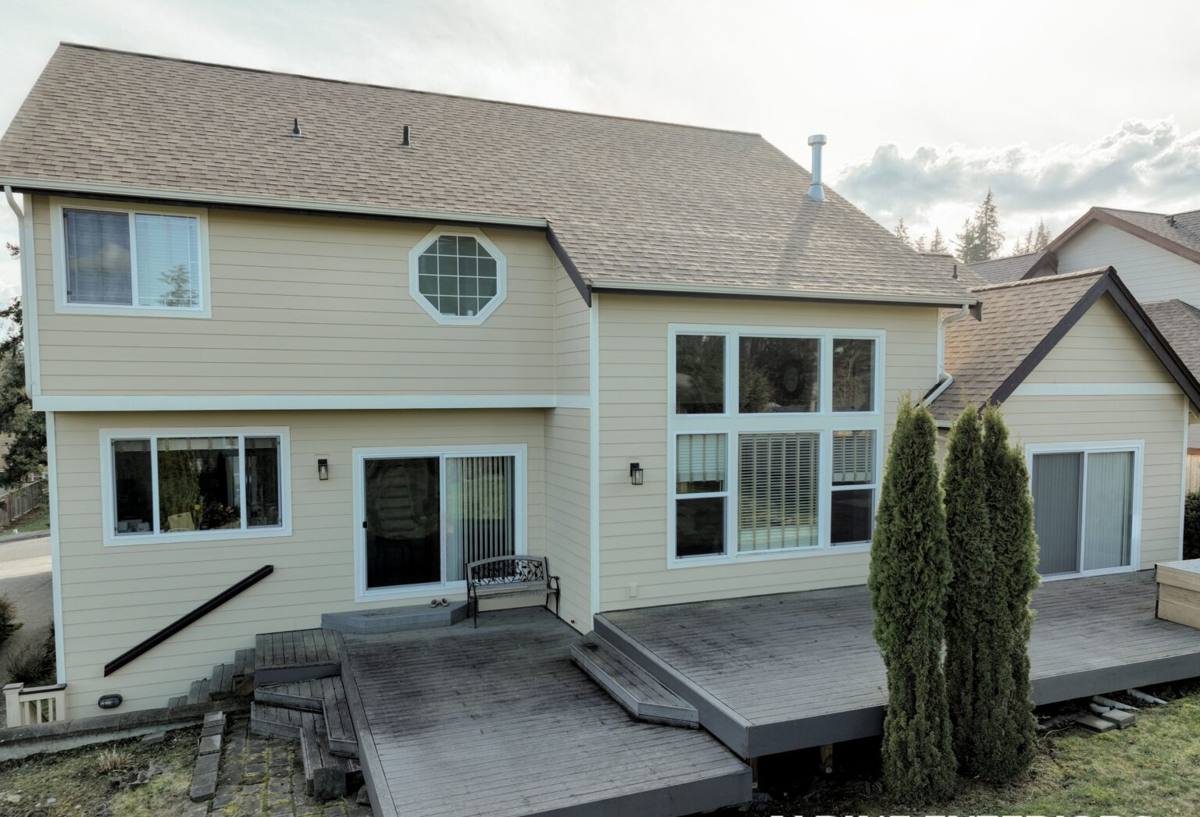
What Silver Beach Properties Demand From a Deck
Every deck we build in this neighborhood has to answer to the same handful of site conditions, even though every lot is a little different.
Shade and Slow-Drying Surfaces
Tree cover is common throughout Silver Beach, and it's one of the neighborhood's biggest assets — but it also means less direct sun to dry off decking after rain or overnight dew. Surfaces that stay damp longer are more hospitable to moss, algae, and mildew, and they put more stress on fasteners and hidden framing over time. Deck orientation, board spacing, and gapping all matter more here than they would on a lot with full sun exposure most of the day.
Sustained Wet Weather
Whatcom County sees long stretches of steady, driving rain rather than short, hard downpours, which means water has more time to work its way into joints, fastener holes, and end grain if a deck isn't flashed and sealed correctly the first time. It's this slow, persistent moisture — not one big storm — that causes most of the rot and hardware failure we see on older decks in this area.
Moss and Organic Growth
A long moss season is simply part of living in this part of Washington. Any horizontal wood or composite surface in a shaded, moist spot will pick up moss and algae eventually. The goal isn't to pretend that won't happen — it's to build a deck that drains well, doesn't trap standing water, and uses materials and finishes that make moss easy to knock back rather than something that eats into the surface.
Choosing Decking Material for This Climate
There's no single "best" decking material — the right choice depends on your budget, how much maintenance you're willing to do, and how the deck sits relative to shade and drainage. Here's how the common options compare for a Silver Beach property specifically.
| Material | Upfront Cost | Maintenance in This Climate | How It Handles Moss & Moisture |
|---|---|---|---|
| Pressure-treated wood | Lowest | Annual cleaning, periodic sealing or staining | Needs regular sealing to resist moisture uptake; moss scrubs off but returns without upkeep |
| Cedar | Moderate | Sealing every 1-2 years to hold color and resist moisture | Naturally more rot-resistant than treated pine, but still needs surface maintenance in shade |
| Composite decking | Higher | Occasional washing, no sealing or staining | Won't rot or absorb water, but moss and algae can still grow on the surface film and need periodic cleaning |
| PVC/capped decking | Highest | Lowest — mostly rinsing | Best moisture resistance of the group; still benefits from occasional cleaning in heavy shade |
We don't push any one product on every job. If a homeowner wants the look and lower cost of real wood and is willing to keep up with sealing, that's a legitimate choice as long as the framing and drainage underneath are done right. If low maintenance is the priority, composite or capped decking makes more sense — but even those materials need a hard-drying, well-drained deck structure underneath to perform the way they're supposed to.
What a Correctly Built Deck Involves
Whether it's a small platform deck or a large multi-level structure, the parts of a deck that determine whether it lasts are mostly the ones you never see once it's finished.
Footings and Framing
Footings need to be sized and set below frost depth and on stable, well-draining soil — something that takes more judgment on sloped or root-heavy lots, which are common throughout this neighborhood. Joists and beams should be sized for the actual span and load, not the minimum the lumber will technically allow.
Ledger Flashing
Where a deck attaches to the house, the ledger board and its flashing are the single most common failure point on wet-climate decks. Water that gets behind an improperly flashed ledger doesn't dry out in this climate — it sits there, and it will eventually rot the rim joist and framing behind the siding. This connection gets flashed correctly on every deck we build, full stop.
Joist Protection and Drainage Gaps
Joist tape or an equivalent protective barrier over the top of every joist keeps water from soaking into end grain and fastener holes, which is where rot typically starts. Board spacing is set to let water drain through rather than pool on the surface — critical in a shaded, high-rainfall setting where standing water simply won't evaporate off quickly.
Fasteners and Hardware
Structural connectors, screws, and post hardware are all corrosion-resistant grades rated for the moisture exposure this climate delivers. Mismatched or budget-grade hardware is one of the most common shortcuts we see on older decks, and it's usually the first thing to fail — streaking rails and stairs with rust long before the wood itself gives out.
Railings, Stairs, and Everyday Wear Points
Railings and stair stringers take a different kind of abuse than the deck surface — they're touched constantly, they're often less shaded than the main deck field, and their end grain and joinery are common spots for water to collect. We detail rail post connections and stair stringers the same way we detail the ledger: flashed, gapped, and fastened with hardware built for wet exposure, not just whatever came in the same box as the boards.
Our Process, Start to Finish
- On-site assessment: We walk the property, check slope, drainage, sun/shade pattern, and existing structure if this is a replacement or rebuild.
- Design and material selection: We talk through material options honestly, including maintenance expectations, so the choice matches how you actually want to live with the deck.
- Permitting: We handle the permit application for the jurisdiction the property falls under, whether that's the City of Bellingham or unincorporated Whatcom County.
- Framing and structural work: Footings, framing, ledger flashing, and joist protection go in first — this is the stage that determines the deck's lifespan.
- Decking, railing, and finish work: Surface material, railings, stairs, and any lighting or finish details are installed and inspected.
- Final walkthrough: We go over the finished deck and basic maintenance expectations with you directly.
Maintenance Checklist for Silver Beach Deck Owners
A well-built deck in this climate still needs some seasonal attention. This is the short list we give homeowners after a project wraps up:
- Sweep leaves and debris off the deck surface regularly, especially in fall — trapped organic matter holds moisture and feeds moss growth
- Rinse or lightly scrub moss and algae off the surface once or twice a year, more often in heavily shaded areas
- Check that drainage gaps between boards stay clear of debris so water can pass through
- Inspect the ledger area and any spots where the deck meets the house for staining or soft wood, which can signal a flashing issue
- Reseal or restain wood decking on the schedule appropriate to the product — don't wait for visible graying or cupping
- Look over railing posts and stair connections yearly for loose hardware or rust streaking
Why Local Experience Matters for This Job
Deck building isn't complicated in theory, but building one that's still solid in ten years in a shaded, wet, moss-prone neighborhood like Silver Beach takes more than following a generic plan set. It means knowing how this specific microclimate behaves — how long surfaces stay damp under tree cover, how driving rain finds its way into unflashed connections, how moss actually establishes and spreads here — and building around those realities from the footings up. A crew that already works in this neighborhood has seen what fails here and why, and builds differently because of it.
If you're considering a new deck, a replacement, or a repair in Silver Beach, we're happy to come take a look and give you a straightforward, no-pressure estimate. There's a form below — fill it out and we'll get in touch to talk through your project and your options.